External Affairs Minister S Jaishankar on Monday said the government remains committed to protecting India’s energy security while ensuring national interests remain the top priority, as geopolitical tensions in West Asia continue to disrupt global oil markets.
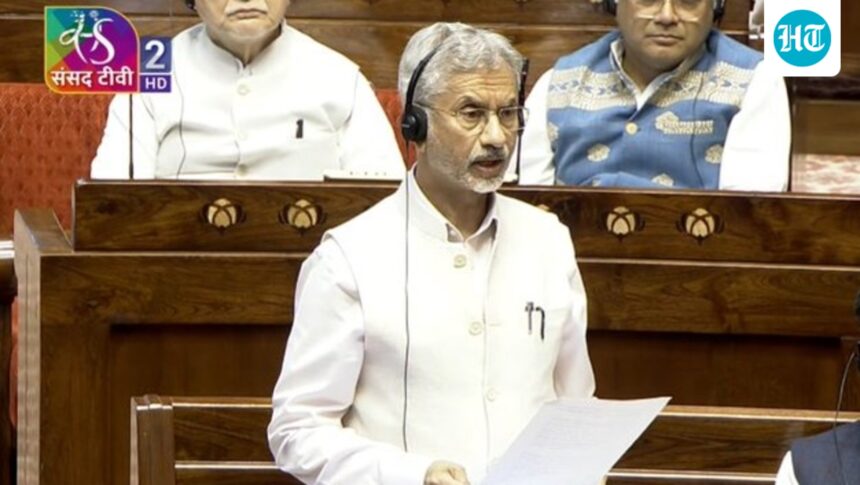
Speaking in the Rajya Sabha, Jaishankar said India’s approach to power procurement will be guided by costs, risks and availability of supplies.
“With regard to energy security, the government remains committed, taking into account costs, risks and availability of sources,” he said.
He stressed that the government will prioritize the country’s interests while overcoming global uncertainty.
“The interest of Indians is the highest priority. Our national interests will always remain paramount,” Jaishankar told the Senate.
The government monitors energy supplies
His comments come amid growing concerns about energy supplies and prices due to the escalating conflict in West Asia, which has affected oil production and shipping routes in the region.
The government has sought to reassure markets and consumers that the situation does not pose a direct threat to India’s energy security. Petroleum Minister Hardeep Singh Puri had earlier said that the country has sufficient reserves to deal with the current situation.
According to officials familiar with the matter, India currently has sufficient crude oil stocks and fuel reserves, apart from the strategic oil reserves held by the government.
The authorities have also set up a 24/7 control room to monitor fuel supplies and stock levels across the country.
The Ministry of Petroleum said in a statement earlier, “At the present time, the government feels reasonably comfortable regarding stocks.”
Reliance on Gulf energy supplies
India imports just over five million barrels of crude oil per day, making it one of the world’s largest energy importers.
Of this amount, about 2.5 million barrels per day typically pass through the Strait of Hormuz, the narrow waterway between Iran and Oman that serves as a crucial route for global oil shipments.
The ongoing conflict in the region has disrupted shipping in the strait and raised concerns about possible supply disruptions.
However, officials say India has diversified its energy sources in recent years, with more than 60% of its supply now coming from producers in North America, Latin America, West Africa and the Asian part of Russia.
India currently imports crude oil from more than 40 countries, which helps reduce dependence on any single region.