Despite the popularity of Mandarin polling, issues around livelihood security and cultural identity remain within the Chinese-Indian community in Kolkata’s Chinatown

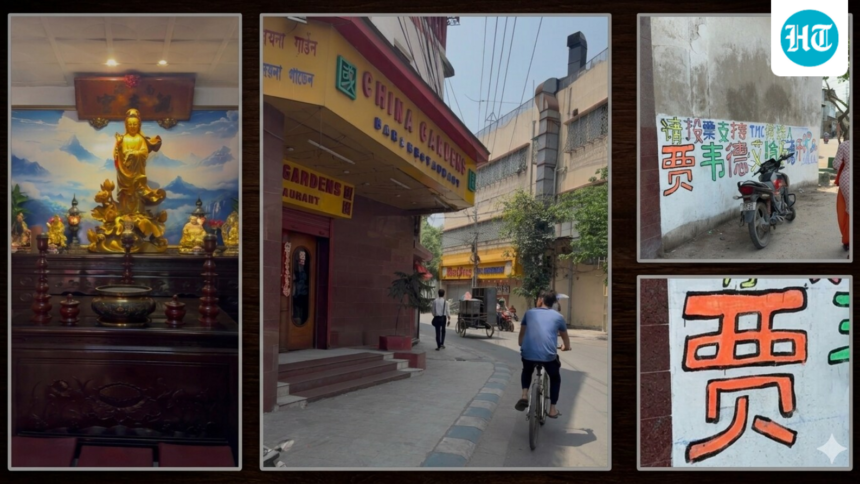
It is not common in India, in any state, to see political messages in a language that is not common there, let alone a foreign language. But in this Kolkata neighborhood called Tangra — home to a small Indian Chinese community — the walls bear messages from parties in Mandarin amid the West Bengal state elections, a display of political groups’ efforts to leave no voter out of their campaign reach.

Tangra, known as Kolkata’s Chinatown, has red lanterns swaying above the narrow lanes. Buddhist symbols appear in restaurants, entrances and along corridors, and Asian grocery stores line the streets, filled with the scent of soy sauce and slow-cooking broth. The Chinese Kali Temple also cannot be left unmentioned.

But during election season, striking images appear on Tangra’s walls: campaign messages written in Mandarin, an unusual sight in Indian electoral politics and a reflection of political parties trying to reach out to one of the city’s smallest but historically significant communities — the Indo-Chinese.
Tangier has long been a symbol of migration and cultural exchange. Once dominated by tanneries run by Indo-Chinese families, particularly of Hakka Chinese origin, this neighborhood is today more known for its restaurants and early morning Chinese breakfast culture.
However, behind the familiar culinary identity lies a community navigating transformation and uncertainty.
Few residents were willing to speak on camera, but lengthy conversations while walking through the area revealed sentiments shaped less by party loyalty and more by structural concerns.
“We don’t get involved in politics,” said a Hakka resident of Chinese origin who wished to remain anonymous. His brother-in-law runs a restaurant there.
Read also: How Kolkata Talks About Bengal Elections In Addas
The area attracts particular interest from vloggers and foodies, and locals say the breakfast vendors, who wrap up operations by 8.30am every day, are more camera-friendly.

Mandarin letters
One longtime resident summed up his view of the election using a metaphor: “The textbook needs to change. Who’s president doesn’t matter,” when asked if he wanted a change in government — a reference to frustration with systems of government rather than individual political leaders.
His life reflects the changing economy of Tangra. While his brother-in-law runs a restaurant serving visitors drawn to Chinatown’s food culture, he has leased out what served as his factory space, reflecting the gradual decline of the industrial activities – mostly leather tanneries – that once operated in the area.
He also talked about the daily challenges that realtors face. While making repairs at his factory, he allegedly faced threats from local strongmen — an experience he described as common and discouraging for residents trying to maintain their businesses or property.
When asked again if he wanted a change in government, he said in a veiled message that “changing the school principal will not help if the textbook does not change.”
Within the neighborhood, another resident expressed concerns about redevelopment and relocation. According to him, the compensation provided for the transfer of businesses or properties is insufficient, and many community members feel increasing pressure that may ultimately lead to their displacement from the area they have inhabited for generations.
These concerns exist alongside clear electoral awareness. The Mandarin campaign’s messaging indicates recognition of the community’s presence, yet conversations suggest that token inclusion does not automatically address deeper concerns about livelihood security, safety and cultural preservation.


No, the standoff between India and China along the Line of Actual Control does not affect people of Chinese origin here in any way.
“We were afraid when the Galwan clash happened [about facing unwarranted sentiments from locals]But Didi was very strict, said one of the Tangra residents mentioned above, noting that the Prime Minister did not allow any negativity in the area.
For many in Tangra, the election is not just about political outcomes, but also about whether the neighborhood’s unique identity — forged over more than a century of Chinese-Indian history in Kolkata — can endure amid economic change and urban transformation.
Voting across Bengal is scheduled to be held in two phases on April 23 and 29, while the results will be announced on May 4.

Nayanika is a Senior Content Producer at Hindustan Times, based in New Delhi, with over six years of experience in the digital media industry. It specializes in providing clear, in-depth coverage across public, national and international events, with a strong focus on breaking news and in-depth explainers. Known for her ability to decipher complex developments, she enjoys deconstructing multi-layered political and policy issues into accessible, reader-friendly narratives that deliver information without distraction. She previously worked in India’s leading newsrooms, including India Today, News18 and Outlook, where she has been tracking news, covering major events for the last six years and leading teams. Nayanika holds a Master’s degree in Political Science and has a keen interest in international relations and world affairs. Her academic foundations shape her analytical approach to stories, enabling her to connect the dots between local events and broader geopolitical currents. She is particularly drawn to stories that require context, nuance, and clarity—turning complex topics into compelling reads. Outside the newsroom, Nayanika is a passionate gourmet who loves to cook and share meals with her loved ones. When she’s not writing or keeping up with the latest headlines, you can often find her exploring local markets for the freshest ingredients, looking for inspiration for her next culinary experiment.Read more