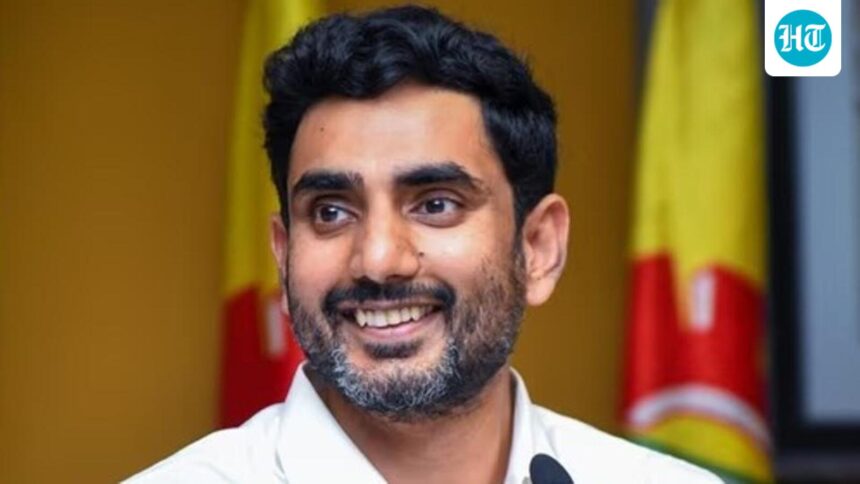
Telugu Desam Party (TDP) president and Andhra Pradesh Chief Minister N Chandrababu Naidu on Wednesday announced his son and state IT Minister Nara Lokesh as working president of the TDP, a party statement said.

For the first time in 44 years of its founding, the TDP will have a working president. “Till now, Lokesh has been serving as the party’s national general secretary, though he has been effectively controlling the affairs of the party since his return to power in the state in June 2024,” a party official said.
Naidu also announced the revamp of the 29-member Politburo, 31-member National Committee and 185-member State Committee of the party.
As part of the restructuring, Union Civil Aviation Minister K. Ram Mohan Naidu to the post of National General Secretary along with MP Bairidhi Shabari and senior leader Rajesh Kilaru, a close associate of Lokesh.
Read also:CM Naidu celebrates legal recognition of Amaravati as capital
While Bala Srinivas Rao will continue as the president of the Andhra Pradesh unit of the party, Naidu’s son-in-law and prominent Tollywood actor Nandamuri Balakrishna has been retained as a member of the politburo.
According to the party’s statement, new committees are being formed to achieve a balance between experience and new leadership, while also taking into account social representation.
The party leadership stated that loyalty, hard work and experience are the basic criteria in appointing positions. Leaders who did not receive nominated positions were accommodated through organizational roles.
“Naidu personally supervised the restructuring process and carefully weighed the political, social and regional equations,” a party official said.
The revamped national committee of TDP includes three general secretaries, 18 vice-presidents and 10 spokespersons. Likewise, the state committee has seven general secretaries, 16 vice-chairmen, 14 spokespersons, 10 district coordinators, 50 executive secretaries and 77 secretaries.
Of the 185 state committee members, 50 are women, while also ensuring significant representation in the Politburo and national committees. Likewise, 122 members belong to disadvantaged sections, including 77 other backward classes, 25 scheduled castes, seven scheduled tribes and 13 minorities.
The party said that the committees were formed based on demographic proportions, in addition to social and regional considerations.