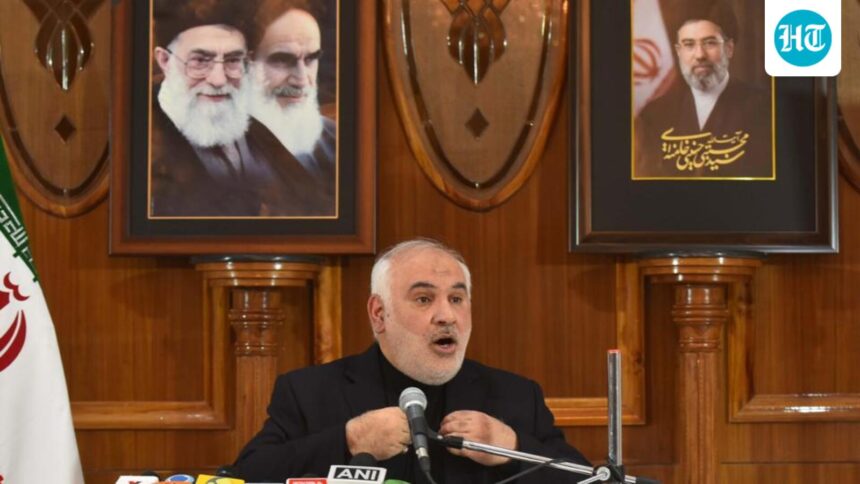
Iranian Ambassador Mohammad Fateh Ali said on Monday that Iran is ready for another round of negotiations with the United States provided that there are no “illegal demands,” although Tehran is fully prepared for “all options” if Washington goes ahead with its blockade of Iranian ports.

The first direct talks between Iran and the United States in 47 years, held in Islamabad over the weekend, ended without any progress. US President Donald Trump has imposed a naval blockade on ships entering or leaving Iranian ports as part of efforts to pressure Tehran amid a two-week ceasefire.
He added: “If you want to advance any diplomatic process, [both] sides [should be] Ready for negotiations. “They should avoid illegal demands,” Fathali said at a press conference at the Iranian embassy. “Our high-level officials said we are ready for peace, and we are ready for negotiations.” But you should know that Iran is also ready for war.”
Fath Ali said that the Iranian side revealed some “basic points” during the negotiations held in Islamabad, including the nuclear issue, war reparations and sanctions relief. “But I think they are [the US] “They have some illegal demands,” he said.
When Fathali was asked about the American blockade of Iranian ports, he said that the American side “is well aware of our capabilities and capabilities.” He added: “Our high-level officials said they were prepared for all options. You can see how in our response and response.”
While Fathali stressed Iran’s faith in international law and freedom of navigation, he emphasized that the Strait of Hormuz – which has been effectively closed since the conflict began on February 28 – is part of “Iranian territorial waters.” He added that Iran would soon announce a mechanism for using the waterway, but he declined to say whether Indian ships would have to pay fees for passing through the strait.
Iran announced that the Strait of Hormuz is open [part of] The territorial waters of Iran and Oman, and we said that in the near future we will announce the mechanism for passage through this strait.”
Meanwhile, External Affairs Ministry spokesperson Randhir Jaiswal said in a separate press conference that India is closely monitoring developments in West Asia, including those related to the Strait of Hormuz.
“As we have consistently advocated earlier, de-escalation, dialogue and diplomacy are essential to achieving an early end to the conflict. We expect unhindered freedom of navigation and the flow of global trade in the Strait of Hormuz,” Jaiswal said.
Fathali said the success of any further negotiations depends on the United States avoiding “illegal demands” and recognizing Iran’s “legitimate rights and interests.” He added that the future of the ceasefire “depends on the way they handle these negotiations.” The Iranian side officially declared that “if they accept our condition, we should expect that we will have another condition.” [round of] Negotiations,” he said.
The envoy also said that Iran agreed to join the latest negotiations despite its experience of being attacked by Israel and the United States even during the ongoing negotiations last year and early 2026. Military strikes launched by Israel and the United States killed 3,753 people, including 887 women and 221 children under the age of 18, and injured more than 30,000, including 4,989 women and 1,979 children, Fathali said, citing official figures.
He added: “They wanted to end the war in three or four days, but the duration, scope and geography of the war are under our control. You can see this situation after the war that lasted 42 days.”
Fathali said that the Iranian side maintained “good communications” with the Indian government amid the conflict, referring to phone calls between the leadership of the two sides. He said: “I believe that Iran and India have common interests… and… a common destiny in the region.”