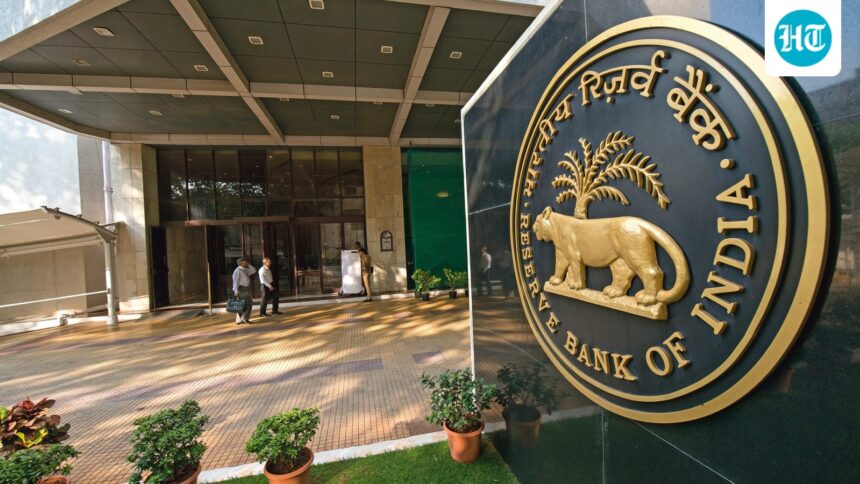
The Reserve Bank of India (RBI) released its semi-annual financial stability report on Tuesday, citing exchange rate volatility, energy price shocks and inflationary pressures due to the ongoing West Asia crisis.

The report said that India’s financial stability remains resilient despite risks to global financial stability amid the ongoing conflict. However, the economy remains vulnerable to energy price shocks and supply chain disruptions due to its dependence on imported oil.
The report also added that the conflict in West Asia and the resulting increase in global uncertainty has affected emerging market economies like India through the financial channel.
Fundamentals are strong, and the economy is vulnerable to energy shocks
The Financial Stability Report said that the Indian financial sector remained resilient amid a challenging global environment, supported by sound capital ratios, comfortable liquidity spreads, and non-performing asset ratios at multi-decade lows.
Also Read: India must prepare workforce for emerging sectors, traditional fields: Jaishankar
He said the country’s sound macroeconomic fundamentals put India in a stronger position than many of its peers and provide greater resilience to external shocks.
However, the report added that the Indian economy remains vulnerable to energy price shocks and supply chain disruptions given its high dependence on imported oil and other commodities.
The global uncertainty caused by the conflict in West Asia has affected emerging market economies (EMEs) like India through the financial channel.
“The exchange rate has been under persistent depreciating pressure due to weak capital flows and high hedging demand from importers and investors. Despite ongoing fiscal consolidation, government bond yields, especially at the longer end, have come under pressure mainly reflecting geopolitical tensions and rising energy prices,” the report said.
Read also: “More millionaires than ever before” But India is among the countries with the highest levels of inequality. What the main report reveals
Despite the challenges, India remains the fastest growing major economy supported by domestic demand, the report said, adding that inflation remains within target.
The Reserve Bank of India (RBI) report indicates the exchange rate
The RBI report also pointed to depreciation of the Indian rupee due to weak capital inflows and higher precautionary demand from importers and investors.
“Despite ongoing fiscal consolidation, government bond yields, especially at the longer end, have come under pressure mainly reflecting geopolitical tensions and rising energy prices,” the report said.
With growing optimism about West Asia and the measures taken by the Reserve Bank of India and the government, the report said that pressure on the exchange rate and bond yields has eased.
The impact of conflict in West Asia has diminished
In recent months, the Indian economy has witnessed poor performance by Indian stocks, with many stocks hitting new lows and heavy selling by foreign portfolio investors (FPIs). The sell-off factor partly had to do with potential threats from artificial intelligence and the country’s exposure to a supply shock.
Also Read: Digital India turns 11: UPI becomes world’s largest real-time payment system with Rs 24,000 crore transactions in a year
The report said that after the sharp correction in stock markets, the economy showed increasing resilience.
He stressed that sound macroeconomic fundamentals provide sufficient reserves to deal with external shocks.
However, it warned that despite the easing of tensions with the interim US-Iran peace deal, the Indian economy and financial system remain vulnerable to geopolitical tensions and associated shocks.
“A sharp correction in global stock markets, especially if driven by a reassessment of corporate earnings growth and higher valuations for AI-related stocks, could spill over into local markets,” the report added.