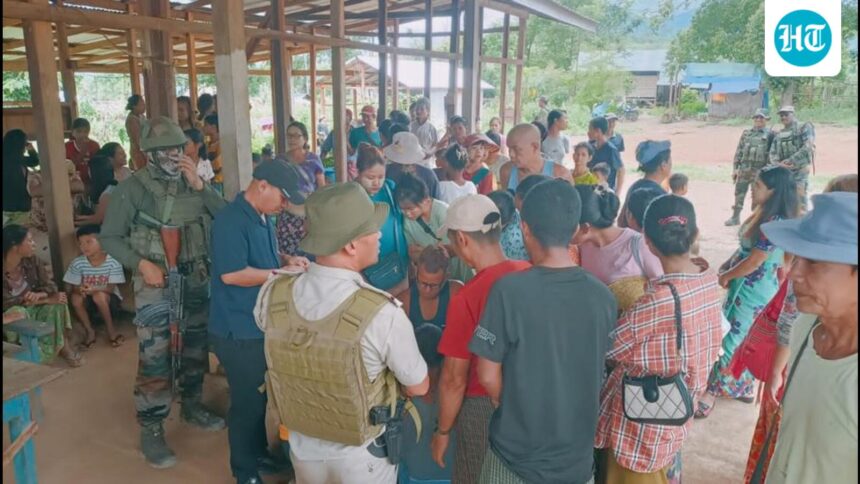
It said in a statement on Tuesday that it launched an identification, verification and biometric registration campaign for displaced Myanmar citizens on Monday, in coordination with the civil administration, police and medical department in Kamjong District, to strengthen border management and security.

Kamjong is a district in Manipur along the border with Myanmar, on the northeastern side of Imphal.
The Assam Rifles statement said the documentation operation was conducted in Phaikoh, Changhalok and Aloyu villages, where displaced Myanmar nationals who fled instability in their country took temporary shelter.
Under the directions of the district administration, a joint team of 40 civilian officials and security personnel carried out identity verification, biometric registration and demographic documentation of the refugees. Nearly 500 personnel were covered during the exercise, creating a centralized and documented database to support management planning and security monitoring.
The verification campaign constitutes the second phase of Operation Anchor, an organized civil-military initiative aimed at balancing national security requirements with organized humanitarian assistance along the Indo-Myanmar border.
According to officials, the second phase builds on the achievements of the first phase, which focused on enhancing border security through enhanced electronic surveillance, intensified patrols, and the establishment of targeted border fencing to prevent illegal cross-border movement and infiltration.
Moving into the second phase, the focus shifted from securing the border to ensuring accountability within the interior by maintaining comprehensive records of individuals granted temporary asylum.
“The biometric database eliminates anonymity, helps the civil administration streamline essential medical and humanitarian relief with transparency, and provides the Union and state governments with reliable records to make informed policy decisions regarding border management and internal security,” Assam Rifles said.