Economic security, including creating resilient supply chains for semiconductors, energy security, strengthening cooperation in artificial intelligence and greater focus on defense and security, are expected to top the agenda of the annual India-Japan summit this week, people familiar with the matter said.

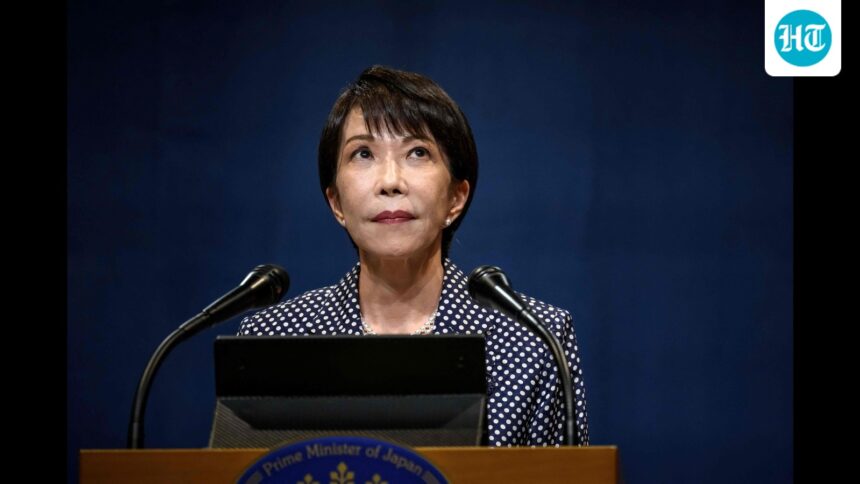
Japanese Prime Minister Sanae Takaishi will visit India from July 1 to 3 with a delegation of more than 100 businessmen to hold talks with Prime Minister Narendra Modi and participate in a joint economic forum. The India-Japan summit, which began two decades ago, is scheduled to be held on July 2.
Besides the Joint Declaration on Economic Security Cooperation and the Joint Statement on Artificial Intelligence Cooperation, the two sides are expected to finalize about 10 agreements and understandings in areas ranging from upstream oil and gas development and exploration of critical minerals to medicines and next-generation mobility systems, said the source, who requested anonymity.
This will be Takaishi’s first visit to India since she became Prime Minister last October. The two sides meet at a time when Japan is focusing on forging closer ties with like-minded regional players such as India, Australia, South Korea and ASEAN countries against the backdrop of severe geopolitical turmoil. Japan considers India an “indispensable partner” in developing Takaichi’s updated version of the “Free and Open Indo-Pacific” vision, the sources said.
Besides jointly promoting the promotion of a free and open global order based on the rule of law, the two sides should promote economic growth through investments, innovation and stronger cooperation in economic security, including building resilient supply chains in critical areas such as semiconductors and critical minerals, the two officials said.
The two sides aim to deepen strategic coordination, based on synergies between Japan’s updated vision for a free and open Indo-Pacific region and India’s Mahasagar vision, and expand defense and security cooperation, with a focus on maritime security, maritime domain awareness and cooperation in defense equipment and technology, the two sources said.
The sources said that the Japanese side is also examining the possibility of using Indian naval facilities for maintenance, repair and refurbishing of Self-Defense Forces ships.
In April, the Takaishi administration eased restrictions on exports of defense equipment and technology, a move that benefits India, one of 17 countries with which Tokyo has concluded equipment and technology transfer agreements, making it eligible to export weapons systems. The two sides are currently negotiating the ‘Unicorn’ project of a ‘Unified Complex Radio Antenna’ or a common radar mast for Indian warships, which will involve transfer of equipment and technology.
In the context of energy security, the two sides will focus on diversifying energy sources, especially against the backdrop of challenges arising from the conflict in West Asia, enhancing cooperation in the field of biogas, and setting up a large-scale green ammonia production project in Odisha, the people said.
The proposed agreements on upstream oil and gas development and exploration of critical minerals will include the Japan Minerals and Energy Security Organization, a state-run body active in Asia and Africa.