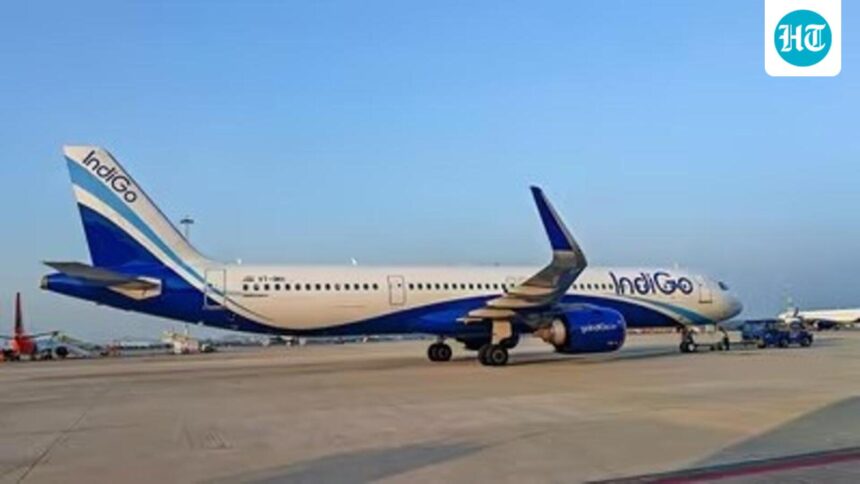
Indian airlines will operate about 3,000 fewer flights per week in the upcoming summer schedule starting March 29, compared to last year, as airlines cut capacity amid rising costs and uncertainty caused by the West Asia crisis, people familiar with the matter said.

Government officials have not issued any official statement regarding production capacity cuts yet.
Indian airlines operated 25,610 weekly flights in the summer schedule last year, up from 24,275 flights in 2024. The number is now expected to come down to around 22,600 weekly flights in this summer schedule which comes into effect from March 29 and will continue until October 31.
An official familiar with the developments said: “About 12% fewer flights will be operated this summer compared to those that were operated on the same schedule last year.”
The official added that airlines are reducing capacity due to high operating costs, especially fuel and foreign exchange, and fears that travel demand may weaken if geopolitical tensions in West Asia continue.
In a statement, IndiGo, the country’s largest airline, said, “IndiGo intends to begin its domestic summer schedule with approximately 2,000 daily flights in April. IndiGo’s international schedule is planned at similar levels to the winter, but the scope of the deployment will of course vary based on the ongoing conditions in the Middle East. It should be noted that there is a very tangible escalation in operating costs, with fuel and foreign exchange related costs expected to continue to increase very significantly, on top of what is already an escalation.” Rising cost environment.”
“While we have introduced fuel surcharges to offset some of this cost, these and other required price increases will have an impact on demand. This is a highly fluid operating environment that the airline will monitor closely and recalibrate accordingly both domestically and internationally,” an airline spokesperson said.
Industry executives said airlines may also raise prices from April and could ground planes if aviation turbine fuel (ATF) prices continue to rise.
“There is a feeling that passengers, including those booked for leisure travel, may postpone their plans due to the West Asia crisis. If load factors are weak, it makes sense to cancel flights, consolidate them or ground the aircraft in a worst-case scenario,” an aviation industry official said.
Meanwhile, the Ministry of Civil Aviation withdrew temporary caps on prices for domestic flights that had been in place since December, saying the situation that led to the controls had been stabilized – but warning airlines that excessive pricing would call for the controls to be reintroduced.