On April 14, India celebrates the 135th birth anniversary of one of its greatest sons, Babasaheb Ambedkar, the eminent economist, jurist, social reformer and chairman of the committee to draft its constitution. This day holds special significance for Dalits, who have fought a lifelong battle for their rights.

One of his important victories was the inclusion of reservation policies for Scheduled Castes and Scheduled Tribes in the Constitution.
While the constitutionalization of affirmative action by Babasaheb was a landmark moment for the new nation, the idea of caste-based reservations had been around for nearly 70 years, with the princely state of Mysore featuring prominently in the story.
As early as 1882, the social activist and educationalist Jyotiba Phule, who founded the Satyashodak Samaj, a society advocating equal rights for the lower castes, gave impassioned testimony to the Hunter Commission, set up by the then Viceroy, Lord Ripon, to review the state of education in India. Phule urged the committee to give priority to free and compulsory primary education for lower castes and women in the vernacular languages, and suggested appointing teachers from lower caste communities, rather than Brahmins, who he believed would not be willing to undertake the task.
To the committee’s credit, nearly all of Bean’s recommendations were included in the final report, largely because they accorded with the personal beliefs of its secretary, Benjamin Lewis Rice of Bangalore, who was then Mysore’s director of public instruction.
In 1902, the progressive ruler of Kolhapur, Shahu Maharaj, inspired by the Satyasudhak Samaj, made a landmark announcement when he realized that all his efforts to provide education to the lower castes had not resulted in students opting for higher education. Having carefully concluded that lack of employment opportunities was the cause, he decreed that at least 50% of government appointments should henceforth be reserved for backward classes.
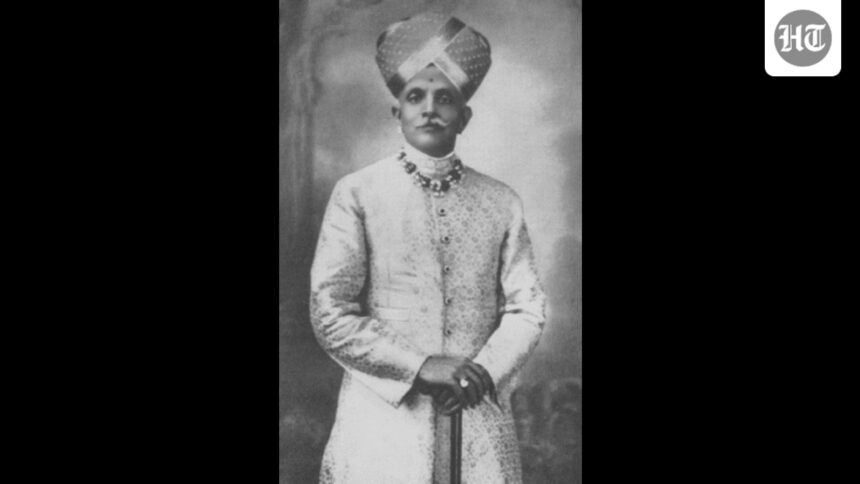
In parallel, in the south, rumblings of discontent began among non-Brahmins in the British-ruled Madras Presidency when they realized that minority Brahmins held a disproportionate number of government posts. As senior positions in neighboring Mysore, including the Dewan, were held by British appointees who were always from Madras, discontent inevitably spilled over the border, where it turned into a “Mysore for Mysoreans” movement. In 1912, Maharaja Nalvadi Krishnaraja Wadiyar bowed to pressure and appointed the pride of Mysore, Sir M. Visvesvaraya, a Brahmin, as his Diwan.
In 1916, non-Brahmin leaders in Madras created the South Indian Liberal Federation (which became the famous Justice Party) and set them free. Non-Brahmin statementWho called for community representation in public services. Few would have expected that this would mark the beginning of a powerful Dravidian movement in Tamil Nadu.
Inspiring non-Brahmin leaders in Mysore – Sahukar Chinnaya, M. Basavaiah, Muhammad Abbas Khan, A. V. Nanjendashetti – formed an organization Praja Mitra Mandali To defend the rights of backward classes – primarily Vokkaligas, Lingayats and Muslims.
the MandaliNalvade’s continued advocacy bore fruit in 1918 when Nalvade set up a committee headed by the Chief Justice of the Mysore High Court, Sir Leslie Miller, to investigate the matter. The report recommended, based on the 1911 census, that over the next seven years, the proportion of members representing the backward community, as long as they possessed the prescribed qualifications, should be increased to 50% in all state departments.
Nalvadi was ready to implement the recommendations of the Miller Report when he encountered stiff resistance from a completely unexpected source – his own poetry! Sir M.V. had nothing against non-Brahmins, but he strongly believed that a government without merit could never serve the best interests of its people. The détente led to Sir M. V.’s resignation from office in 1919.
By 1921, Mysore’s revolutionary reservation policy had radically changed the administrative composition of its government, laying the foundation for a more equitable state.
(Rupa Pai is a writer who has had a long-lasting love affair with her hometown of Bengaluru)