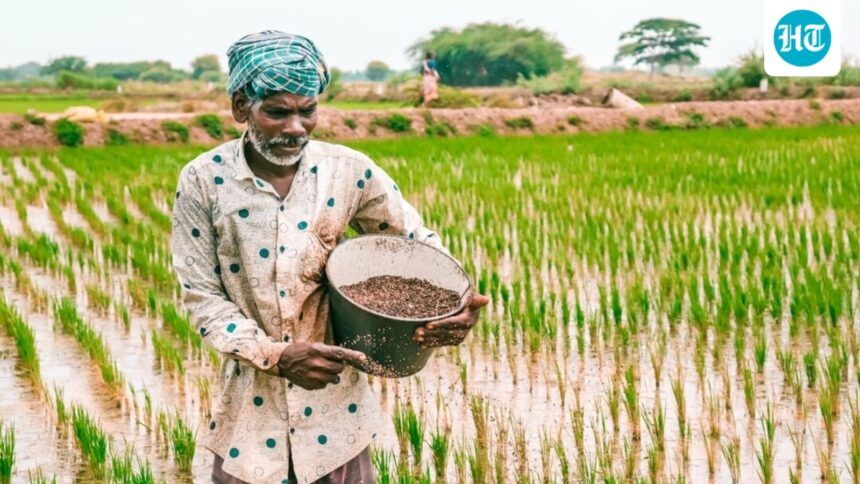
The Union Cabinet headed by Prime Minister Narendra Modi approved the approval on Wednesday $41,534 crore to support nutrient-based fertilizers for the summer planting season, increasing it by $4,317 crore, an almost 12% jump over the previous crop cycle, to offset higher costs and support farmers amid supply disruptions due to conflict in West Asia.

The higher subsidy, which includes chemicals for mixed crops, is intended to keep the price of 50kg packages of diammonium phosphate at a constant level. $1,350 despite the rise in import prices.
“The conflict in West Asia has had an impact on fertilisers. There is no problem with their availability in India. Some people have started hoarding them, which is not a good thing,” Information, Radio and Television Minister Ashwini Vaishnaw told a press conference.
The nutrient-based subsidy system provides fertilizers to farmers at below market prices based on their phosphate and potassium content, which aims to discourage overuse.
Food security in the world’s most populous country is closely linked to the availability and affordability of key fertilizers, as farmers prepare for the summer planting season.
The government provides 28 grades of P&K fertilizers, which are also covered, to farmers at subsidized prices through manufacturers and importers. They are sold by manufacturers at a discount, and then reimbursed by the government.
Fertilizer manufacturers say the ceasefire announced by Iran and the US has come as a breather, which will help boost availability. “The ceasefire is a positive and timely development as it is expected to improve the availability of LNG from the Gulf and support uninterrupted fertilizer supply ahead of the kharif season,” said PS Goliath, Managing Director, Indian Potash Limited. “This will help stabilize domestic production, ease import-related cost pressures, and curb speculative price increases.”
The country depends on imports of fertilizers such as urea, diphosphate, and muriate of potash, in addition to liquefied natural gas, which is used to operate plants that feed crops. The latest increase in support relates to a category of crop nutrients that is highly dependent on imports. The rising shipping costs and supply crunch came just two months before the kharif season, which accounts for half of India’s annual food supply.