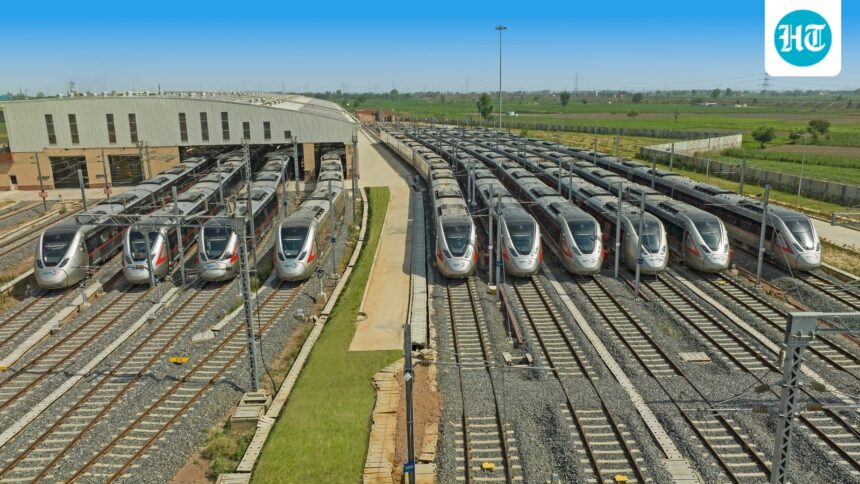
The Union Cabinet, headed by Prime Minister Narendra Modi, on Wednesday cleared the Jaipur Metro Phase 2 project, a 41-km north-south corridor from Prahladpura to Todi Maud, at a cost $13,037.66 crore, Union Minister Ashwini Vaishnao said during a press conference after the meeting.

The 50:50 joint venture between the central state, which will be implemented by Rajasthan Metro Rail Corporation Limited (RMRCL), is expected to be completed by September 2031.
“Jaipur has emerged as a major hub for tourism, conferences, healthcare and education, and its proximity to New Delhi adds to its importance. Keeping all these factors in mind, the second phase is being initiated,” Vaishnau said.
The corridor will span 36 stations – including 34 elevated and two underground – and will connect high-traffic areas such as Sitapura Industrial Area, VKIA, Tonk Road, SMS Hospital, Stadium, Ambabari and Vidhyadhar Nagar. The MRT stations near Jaipur Airport will make it easier for passengers to reach.
The corridor will connect with the 11.64 km east-west operational Phase 1 line from Mansarovar to Baddi Chaupar through interchanges and feeder services. The first phase currently registers around 60,000 riders per day. The second phase is expected to boost the use of public transport and cater to the growing population expected to reach one crore in the coming years.
“Jaipur is ready for a major infrastructure upgrade. The Cabinet’s approval of Jaipur Metro Phase 2 is an important step towards sustainable urban growth. It will expand connectivity, reduce congestion and enhance ease of living,” Prime Minister Narendra Modi said in a post on X.
In line with Rajasthan’s Transport Oriented Development (TOD) Policy 2025, the project aims to reduce traffic congestion and emissions in the Jaipur urban region, according to a PIB statement. The project is expected to help relieve road congestion by reducing an estimated 2.4 thousand vehicles by 2055.
According to the statement, the project has an economic internal rate of return (EIRR) above the 14% threshold, indicating strong social and economic feasibility. It will be financed through equity support from the Centre, state, subordinated debt and multilateral financing as per the Metro Rail Policy 2017.
In another major decision, the Cabinet approved two major hydropower projects in Arunachal Pradesh. The 1,720 MW Kamala Hydropower Project will be developed on the Subansiri River at a cost of $The project is expected to be completed at a cost of Rs 26,070 crore in 96 months and generate about 6,870 million units of renewable energy annually.
“This 1,720 MW project will not only strengthen India’s energy security, but will also drive infrastructure development, create employment, and improve livelihoods across Arunachal Pradesh, especially in remote areas,” Arunachal Chief Minister Pema Khandu wrote on X.
Kalay-2 hydropower project with a capacity of 1200 MW with investment $The Rs 14,106-crore development will take place in the Lohit basin in Angau district and is expected to be completed in 78 months, generating about 4.853 million units annually. “With a capacity of 1,200 MW, this project on the Lohit River will enhance power supply, support grid stability, and provide infrastructure, employment and development opportunities in the region,” Khandu wrote in another post.
Both the projects will be implemented through a joint venture between THDC India Limited and the state government.