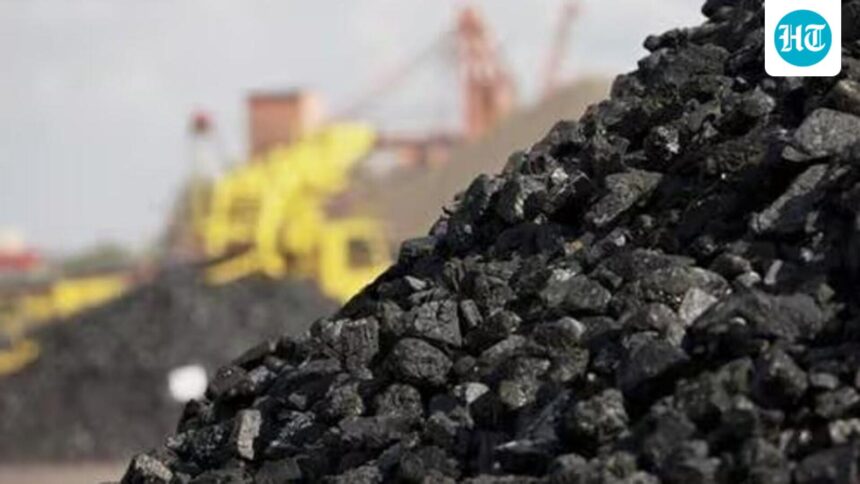
The Expert Appraisal Committee of the Union Environment Ministry has refused to grant exemption to minimum depth limit for underground coal gasification (UCG) projects in view of the environmental impacts.

The Ministry of Coal has sent a letter to the Union Environment Ministry seeking relaxation of the minimum depth condition (>300 metres) previously prescribed for Underground Coal Gasification (UCG) pilot projects, specifically in relation to the UCG R&D pilot project in Kasta (West) Block of Eastern Coalfields Limited (ECL), Jharkhand, according to minutes of the Expert Appraisal Committee meeting on February 23.
“The Coal Ministry sought to abolish the requirement stipulating a minimum depth of 300 meters for pilot R&D projects, citing 36 pilot studies conducted in nine countries, with a particular focus on the Podzemgaz UCG plant in Uzbekistan, which has been operating since 1961 at a depth of about 150-200 meters and producing synthetic gas,” the meeting said.
The committee noted that the critical criteria governing the environmental safety of underground coal gasification vary significantly across coalfields in India and are not directly comparable to global UCG projects.
Moreover, “given the heterogeneity of Indian conditions and variation in hydrogeological and geomechanical environments from region to region, international precedents cannot be treated as directly comparable standards. In view of the precautionary principle and the need to ensure long-term environmental safeguards, the Committee concluded that exemption from the prescribed minimum depth standard of 300 metres” could not be granted.
Read also:Demand for coal in India will rise by 3% annually in four years
The ministry had earlier granted an exemption to UCG pilot projects.
This issue was previously discussed by the EAC at its meeting of 1 September 2025 when it recommended that UCG pilot projects not involving commercial production may benefit from exemption from environmental prior clearance subject to safeguards including a minimum operating depth of more than 300 metres, aquifer protection measures, groundwater monitoring and submission of environmental and geomechanical assessment.
Some important criteria taken into consideration by the EAC are: (1) depth and extent of the water table; (2) Permeability and hydraulic conductivity of the layers separating the aquifer from the coal bed, which are necessary to prevent possible contamination of groundwater.
Coal gasification is a key focus area for the government, with the aim of exploiting the country’s vast coal reserves efficiently and sustainably, according to the Ministry of Coal.
The coal gasification mission launched in 2020 aims to reach 100 million tons by 2030.
“India’s vast coal reserves, estimated at 378 billion tonnes with around 199 billion tonnes classified as ‘proven’, offer significant opportunities for energy production. Currently, around 80% of Indian coal is used in thermal power plants. As the country embraces clean energy solutions and renewable sources gain momentum, the Coal Ministry is proactively working to ensure sustainable use of coal,” the Coal Ministry said in 2024 when the ministry announced the key features of the scheme.
The mission document states that setting up a coal gasification plant is a capital-intensive undertaking and will require a minimum of 48 months of time.
Coal gasification is a thermochemical process that converts coal into a synthetic gas consisting of carbon monoxide and hydrogen.
HT reported on July 28 last year that India has witnessed a boom in oil and gas exploration, especially in offshore areas, and among these, nearly 1 million sq km of previously “no-go” offshore areas will open for exploration in 2022, opening vast new frontiers, especially in deep waters and frontier areas such as the Andaman-Nicobar offshore basin, the Ministry of Petroleum and Natural Gas told the Rajya Sabha.
Moreover, HT also reported that developers of non-coal mining projects will no longer have to show proof of land tenure as a prerequisite for environmental clearance, as per the recent change made by the Union Environment Ministry. This step aims to accelerate the approval process for offshore and onshore oil exploration and production, oil and gas transportation pipelines that pass through environmentally sensitive areas, highway projects, and mineral extraction.
In December last year, the Union Environment Ministry had directed states and Union Territories to authorize the Divisional Forest Officer or Deputy Conservator of Forests to grant permission for proposals related to surveying and exploratory drilling in forest areas, so as to ensure speedy processing and disposal of proposals related to surveying and exploration.
With the significant expansion of renewable energy projects, various policy measures have been taken to tap into local energy reserves. Of the total installed capacity, capacity based on non-fossil fuels now stands at 52.25%, according to the data.
Energy analysts said disruption to oil supply chains due to the ongoing conflict with Iran and high capital costs would require a more cautious approach.
“Investing in clean electricity yields immediate results in terms of energy security. For example, accelerating the adoption of electric vehicles reduces dependence on imports. Investing in fossil fuels for energy security may risk locking up capital for uncertain outcomes,” said Dattatreya Das, Asia Energy Analyst at Ember.