The digital mapping exercise for the 2027 Census began in the New Delhi Municipal Corporation (NDMC) and Delhi Cantonment areas on Thursday, with over 700 officials deployed for the process. The authorities said that the initiative marks the beginning of the country’s first technology-based census operation and will continue until May 15 in these areas.

The groundwork for this process has already been completed, including the self-census phase from April 1 to 15, officials said. During this phase, more than 5,000 residents submitted their details online via the census portal.
The digital mapping and list of houses phase begins
The current phase began with digital mapping and listing of houses on Thursday. Census takers are now verifying the areas assigned to them by matching the locations with the digital maps provided to them. Door-to-door data collection is scheduled to begin on April 19.
Read also | Census 2027 process in Haryana: CM Saini launches self-enumeration facility
According to officials, NDMC and Delhi Cantonment areas have been divided into 10 tolls for administrative purposes. A total of 569 enumerators and 98 supervisors were deployed. Each enumerator is allocated one cluster of households, covering approximately 180 to 200 households.
In New Delhi Cantonment, the first phase (House Listing and Housing Census) has begun, covering 473 sets of house listings under the supervision of nine officers of the New Delhi Sub-Division and 96 sets under the supervision of one in-charge officer of the Delhi Cantonment Sub-Division.
Read also | Self-enumeration begins at Ggm, and the option is open until April 30
During the first three days, from 16 to 18 April, all 569 enumerators, along with their supervisors, began visiting their assigned House List Blocks (HLBs) to check their areas and prepare layout maps to ensure that no building was missed or counted twice. The census will start from April 19.
Households were asked to answer 33 questions during the survey
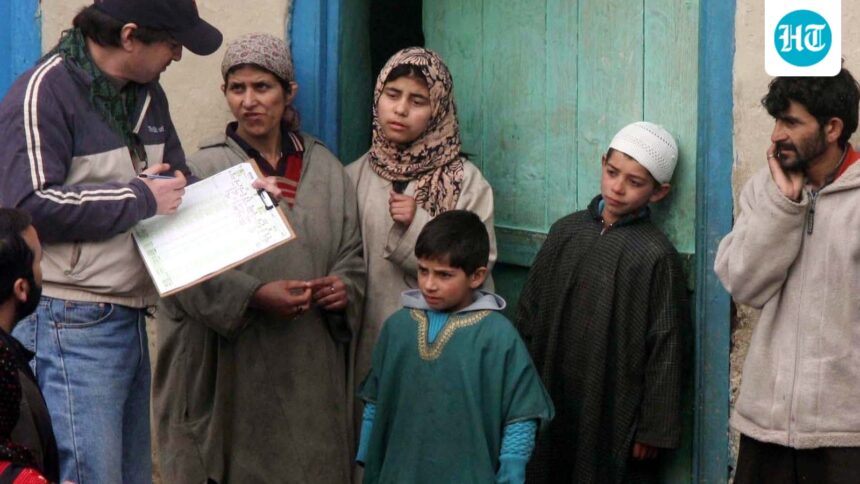
During the visits, census takers will number households and collect data by asking the head of each household a set of 33 questions.
The enumerators are mostly teachers from NDMC schools, and they participate in the exercise after completing their regular duties, officials said. He will receive all the counter $9000 for house listing stage and $16,000 for the census phase.
Officials added that residents who have completed the self-count should keep their Self-Counting ID (SE ID) ready and share it with the enumerator during the field visit to speed up the process of listing homes.
“There are 150 enumerators to supervise. We have tried to allocate areas to the enumerators close to their schools. Each supervisor has been given six enumerators. While the enumerators will be on the ground, the supervisors will also make rounds of the area,” said Hari Singh, the official in-charge of Chanakyapuri.
He added that preparations have also been made to meet the challenges caused by the summer heat.
“This process is being conducted during the summer. While the enumerators got packets of ORS and candy in their kits, we have also sensitized dispensaries in the area to address medical concerns, should they arise,” Singh said.
Each counter was provided with a kit containing a bag, notebook, pen, cardboard, ORS packets, candy, identification card, and appointment letter. Officials said all census takers underwent a three-day training program in March.
A senior district official said that instructions have been issued to census takers to maintain a patient and polite approach while interacting with residents. “They have to first take people into confidence and then ask questions,” the official said.
Another supervisor, a teacher at an NDMC school in Chanakyapuri, said, “Since this census is done digitally, it is very easy for the enumerators. Our bags are smaller. We don’t have to carry large files or huge piles of paper. Earlier, we had to write down the data manually, but now we just have to enter the data. We have got the HLO app on our phones.”
Officials said that the census includes systematic and non-systematic settlements. Regular settlements have proper addresses, while irregular settlements lack fixed addressing systems. In NDMC and Delhi areas, informal settlements such as slum clusters and unauthorized colonies account for less than 10% of the total.