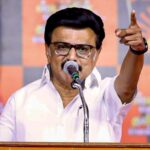
The elevation of Andhra Pradesh IT Minister Nara Lokesh as working president of the Telugu Desam Party (TDP) signals a transition of leadership from party president and Andhra Pradesh Chief Minister N Chandrababu Naidu to the next generation ahead of the next general elections in 2029, according to political analysts.

This decision is of historical significance: for the first time in its 44-year history since its founding in 1982, the TDP has created the post of working president. While Lokesh was National General Secretary, he had already exercised significant control over organizational affairs since the party returned to power in June 2024.
“While this is not an unexpected development – there have been open demands from within the party to elevate Lokesh as working president – the new appointment given to him on Wednesday formalizes that power, making him the party’s second-in-command and chief executive officer,” said Ramesh Kandola, a senior political analyst.
According to him, the move is part of a long-term succession strategy. Naidu, who continues to lead the government, is understood to be gradually delegating party responsibilities to Lokesh to focus on governance and administration.
“By 2029, it will be Lokesh who will take the reins of the party completely, calling the shots in selecting candidates and chalking out campaign strategies, though the party will go to the next elections under the leadership of Naidu who will be close to 80 years old by then,” Kandola said.
In fact, there have been indications within the party over the past year, of Lokesh’s elevation as the party’s working president. Lokesh himself declared several times that no leader should hold the same office for more than three consecutive terms or six years. “Lokesh was already holding the post of national general secretary of the party for the last six years. At the party’s conclave in Mahandu in May last year, there was talk of elevating him to a higher level,” said a senior TDP leader, who declined to be named.
Outstanding political stress test
A management graduate from Stanford University and a former Heritage Foods executive, 43-year-old Lokesh entered active politics in 2014 when Naidu took over as chief minister of Andhra Pradesh.
His early years were marked by doubt. Despite being appointed to the Cabinet as an MLC with key portfolios like IT and Panchayat Raj, critics dismissed his entry as a “back” route to power. His limited oratory skills, lack of legislative experience, and reliance on his father’s political legacy reinforced perceptions of him as a reluctant or unprepared leader.
According to Kandola, Naidu was in no hurry to promote his son and declare him his heir apparent. “He was not sure about his son’s leadership abilities in the initial stages, especially after Lokesh lost the Assembly elections to Mangalagiri in the 2019 Assembly elections. Therefore, he waited for his son to grow independently as a leader and earn his position in the party,” he said.
Between 2019 and 2024, Lokesh became a frequent target of political attacks and public ridicule from rivals, who used to refer to him as ‘Babu’, further testing his political resilience.
The five years he spent in opposition became a critical phase in the reinvention process. Lokesh underwent a definite transformation – physically, politically and organisationally. He improved his public speaking, developed a stronger understanding of policy issues, and built deeper interaction with party cadres.
This development culminated in the ambitious 226-day Yuva Galam, which covered over 3,100 km across nearly 100 constituencies. This march not only enhanced his visibility but also enabled direct interaction with diverse social groups, helping him reposition himself as a popular leader rather than a backroom strategist.
The Padayatra was also a political stress test. When Naidu was arrested in the alleged skill development case, Lokesh put his career on hold and took complete operational control of the party.
“It was Lokesh who re-established the TDP’s connections with the BJP, from which it parted ways in 2018. He became closer to the BJP high command including Prime Minister Narendra Modi and Union Home Minister Amit Shah, with whom he still maintains a hotline,” said another political analyst Tilakapalli Ravi.
He coordinated the protests, led Politburo deliberations, and engaged legal teams in New Delhi, demonstrating crisis management capabilities that dramatically changed perceptions within the party.
After Naidu’s release and completion of the Padayatra, Lokesh emerged with an enhanced stature. “He began playing a crucial role in key organizational decisions, including candidate selection and strategic planning. His involvement in the appointment of political strategist Prashant Kishor underscored his growing influence in shaping the party’s electoral roadmap,” the LDP leader quoted above said.
“Today, Lokesh is widely known within the TDP as the de facto chief minister. Senior leaders, many of whom have been associated with the party since its inception, have increasingly aligned themselves with its leadership, indicating a consolidation of power that extends beyond formal appointment,” Ravi said.