The Delhi High Court on Tuesday issued notice in the Enforcement Directorate’s (ED) petition quashing the observations made by the lower court against the agency while removing former Delhi Chief Minister Arvind Kejriwal, former MP CM Manish Sisodia, and 21 others for any wrongdoing in the Delhi excise policy case investigated by the Central Bureau of Investigation (CBI), even as it said the observations were general in nature and had no connection with the present case.

Bench Justice Swarana Kanta Sharma noted that Special Judge Jitendra Singh of the Ross Avenue Court, who passed the release order on February 27, may have given the remarks because he felt the CBI investigation was “unfair”.
However, the judge sought responses from the CBI, Arvind Kejriwal and the 22 others.
She also noted that the ED’s petition would be decided alongside the CBI’s appeal challenging the release order issued on February 27, noting that the ruling was already under appeal before the court.
“This shows that whatever the judge said, he was not saying it in the context of this case, but he felt that this (the CBI investigation) was an unfair investigation and therefore he made observations… These are general observations made by some judges, including me. Now these are general observations and have nothing to do with the case. This entire judgment is anyway under appeal. When I will decide this case also, I will read these (observations against ED) as well. We will decide both the cases (CBI) and Justice Sharma said: “Appeal and Petition ED) together I will issue notice.”
Read also: Delhi tax policy case: BJP says acquittal is not proof of innocence, India bloc hails ruling
This was after ED’s counsel, Additional Solicitor General SV Raju, along with Special Counsel Zoheb Hossain, contended that though the observations in 18 paragraphs, which the agency had sought to strike out, were general in nature, the judge had “convicted” the agency without allowing them to be heard.
To be sure, the trial court, on February 27, while releasing the accused and withdrawing the CBI, observed that investigations by the State Police, the CBI or the Executive Directorate cannot be initiated or continued solely on the basis of allegations of irregularities in election financing and overspending and the criminal law, particularly the exceptional and coercive regimes of the Criminal Police Act and the Prevention of Money Laundering Act, cannot be used as an alternative to legal remedies for elections or as a tool to convert political accusations into triable crimes.
Special Judge Jitendra Singh of Ross Avenue Court also observed that in several cases the ED initiated prosecution complaints primarily to avoid the legal consequences of default bail without the investigation of the scheduled offense reaching conclusion. She was herself a witness to a case in which the money laundering proceedings reached the final stage of pleadings related to the charge. In contrast, in the original crime, the investigation was still ongoing to determine whether the crime had been committed at all.
The legal official added that the matter included allegations against the agency to which it was not a party, and the proceedings were strictly limited to the case investigated by the CBI and it was not within the jurisdiction of the court of first instance to make such observations.
The legal official added: “These are direct allegations against the CEO in a matter in which the CEO is not a party, in which the CEO is not involved, and where the CEO’s case is a separate and distinct crime. In some matters involving third parties, when the CEO is involved, it is not the court’s jurisdiction to make such observations. Public allegations also affect us. The CEO is convicted without a hearing.”
Respondents N Hariharan and Vikram Chaudhary opposed the petition. While Chaudhary maintained that the remarks were made on an objective basis and not personal remarks, Hariharan said the paragraphs quoted by the ED were out of context.
During the hearing, the legal officer urged the court to make clear that the lower court’s observations would have no impact on the proceedings pending before any other court, which was opposed by counsel for the accused, who said that the lower court’s observations were not treated as binding precedent and requested time to file a response opposing the petition. However, the court said it had not yet issued an interim order, adding: “No one can stop me from making an order. No one can dictate to me which order should be passed. I will make the order I want to pass and what I think is right… Just look at how much pressure you are putting on the judge.”
This case is scheduled to be heard on March 19.
On Monday, the Supreme Court, while hearing the CBI’s appeal against the February 27 order, observed that the observations of the lower court were prima facie wrong. The judge also stayed until March 16 the lower court’s February 27 order directing administrative proceedings against the investigating officer of the CBI and the observations against him, stating that the statements “were prima facie misconstrued especially when they were made at the accusation stage itself.” Justice Sharma also asked the court to adjourn the money laundering case filed by the Enforcement Directorate that arose out of the CBI case, and await the outcome of the CBI’s appeal against the February 27 ruling.
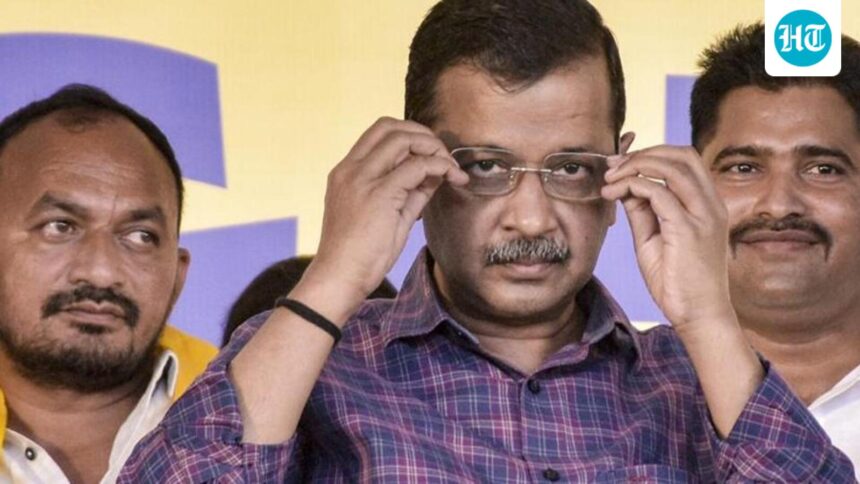
Kejriwal, Sisodia and former Rajya Sabha member Sanjay Singh were among the prominent AAP leaders arrested in connection with the tax policy, with the federal agency alleging that kickbacks were paid.
The CBI filed five indictments, while the ED investigated related money laundering allegations under the Prevention of Money Laundering Act.