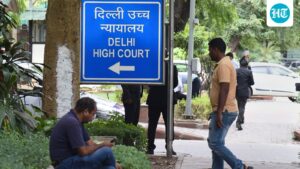
The Delhi High Court on Friday refused to urgently hear a plea seeking directions to the police to implement crowd control measures at all major entry points, including the airport and Metro stations, ahead of a proposed protest planned by satirical political group Kokruche Janta Party (CJP) at Jantar Mantar in Delhi on June 6.

The petition filed by Save India NGO’s lawyer, Umesh Sharma, was filed before a leave bench of Justices Saurabh Banerjee and Amit Sharma. The lawyer urged the court to hear the petition on Friday itself. However, the court rejected the request.
The protest, announced by CJP founder Abhijit Debki, seeks the resignation of Union Education Minister Dharmendra Pradhan over the National Eligibility Test Papers (NEET-UG) leak controversy. Under current rules, applications seeking permission for public protests generally must be submitted at least seven days in advance, excluding the day of the event.
Although the event was publicly announced days ago, the CJP said it would only seek permission on June 6, the day the protest was scheduled to be held.
Read also: CJP protest: Delhi HC rejects urgent hearing on crowd control plea
The NGO alleged in its petition that a massive mobilization campaign has been launched, calling on millions of people to gather at Jantar Mantar, and the call has been actively amplified by public figures, potentially posing a serious threat to public safety, critical transportation infrastructure and national security. The NGO also alleged that some videos circulating online contained operational instructions urging participants to disrupt airport operations and purchase items such as pepper sprays and wooden sticks to resist or counter crowd control measures by law enforcement.
The NGO said it had lodged representations with the Delhi Police Commissioner and other administrative authorities demanding preventive measures. However, in the absence of any publicly notified enforcement measures or specific preventive guidelines, it has approached the Delhi High Court for appropriate directions.
“The open agitation, which systematically draws structural parallels with recent violent coups and regime collapses in neighboring countries such as Sri Lanka, Bangladesh and Nepal, poses a direct threat to the internal stability of the Union of India, creating an urgent and alarming risk of rioting, public quarreling and complete breakdown of law and order,” the petition said.