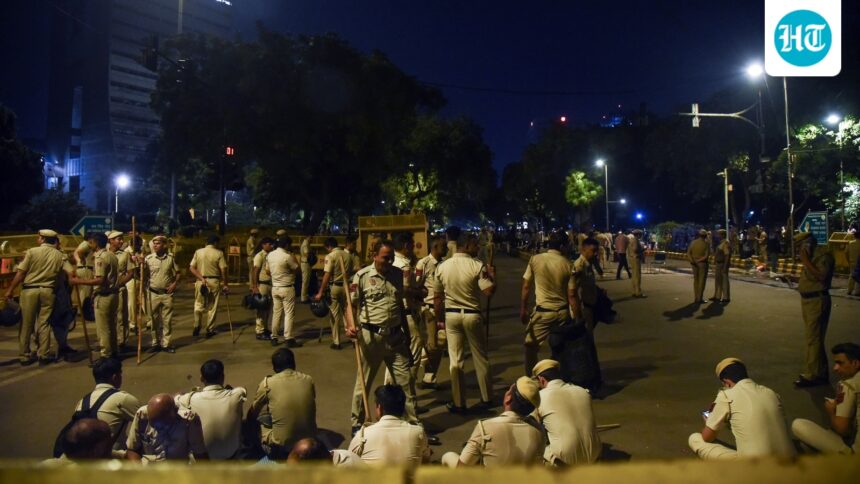
Hours after Union Education Minister Dharmendra Pradhan resigned, and the government assured the Cockroach Janta Party (CJP) that First Information Reports (FIRs) registered in connection with the protest and related violence would be withdrawn, the Delhi Police said it would wait for official communication from the government to take further action.
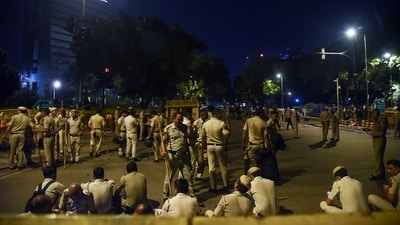
“As of now, we will wait for any official communication from the government on how to proceed with the cases already registered in connection with the July 20 violence and other cases registered on July 22,” a senior police officer, requesting anonymity, said.
Union Minister JP Nadda said discussions with the RJD included cases registered during the agitations, compensation for affected families and the RJD’s broader charter of demands.
Read also | What’s ‘pending’ after Dharmendra Pradhan’s resignation: CJP lists updated demands
“We discussed these issues in detail. After the discussion, the first point was that no action should be taken and no FIR should be lodged. If any FIR has already been registered, whether by Delhi Police or in BJP-ruled states, it will be withdrawn,” he said.
However, a second officer clarified that FIRs are never “withdrawn” and the term is only used for clarification to the public. The officer said that the FIR is an official record. “There are only three ways in which an FIR can be dealt with. The first is to file a chargesheet and prosecute further. The second is to file a closure report or quash it after investigation. The third is for the state to withdraw the case,” the officer said.
The officer said that when the government officially informs them of the withdrawal of the prosecution, no investigation will be conducted.
A CJP spokesperson said they would get the same in writing on Tuesday.
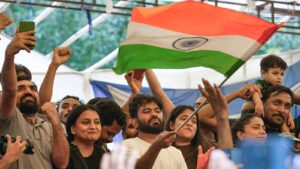
Police, until Friday, had described the events of July 20 as a “larger conspiracy.” The Delhi Police, as of Friday, had registered 15 FIRs related to the violence that accompanied the ‘Chalo Sansad’ rally organized by the CJP between July 20 and 23. Police said clashes on July 20 left at least 129 security personnel and more than 60 protesters injured, while 11 officers were injured in subsequent clashes.
Read also | Faces of the CJP movement who led the big change: Boston graduate, IITian, JNU scholar, investigative journalist
One of the FIRs, seen by Hindustan Times, was registered at Kartavia Path police station on the complaint of an inspector and includes Section 109 (1) of the Bharatiya Nyaya Sanhita (attempt to murder) Act, along with charges related to rioting, unlawful assembly, assault on public servants, mischief causing damage to public property and disobeying prohibitory orders.
According to the complaint, the officer was posted near C-Hexagon on Kartavya Path from 5 am on July 20 in view of the proposed protest. At around 11:30 am, after receiving radio messages that protesters were marching towards Parliament, he and his team moved to the barricades near Rail Bhawan on Ravi Marg.
Despite repeated announcements that prohibitory orders under Section 163 of the Bharatiya Nagarik Suraksha Sanhita were in force, the protesters ignored directions to disperse, made “inflammatory speeches”, attempted to breach barricades leading to Parliament, assaulted police personnel, pelted stones and caused damage to public and private property, the FIR said. It was reported that the police resorted to using “light cartridges” and tear gas shelling to disperse the crowd.
Separately, senior officers said four more FIRs were subsequently registered, taking the total to 15, while the Special Cell took charge of the first FIR to investigate what police described as a “larger conspiracy” behind the violence.
Investigators said they were examining more than 15 terabytes of video footage, scrutinizing speeches delivered from the main stage at Jantar Mantar, and probing the role of alleged “handlers” and social media influencers suspected of coordinating the protests. Police also claimed to be investigating alleged funding channels, logistical support and the distribution of an alleged “toolkit”, instructing participants to carry pepper spray, chili powder and blunt objects.
Read also | Abhijit Debaki reacts to Dharmendra Pradhan’s resignation amid CHP uproar: ‘Just the beginning’
The officers confirmed that intelligence initially estimated the number of participants to be between 10,000 and 15,000 people, but the participation rate was much higher, as the groups approached Parliament from multiple directions. According to the police, these circumstances formed the basis of the investigation into the conspiracy.