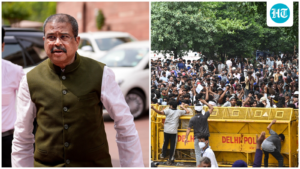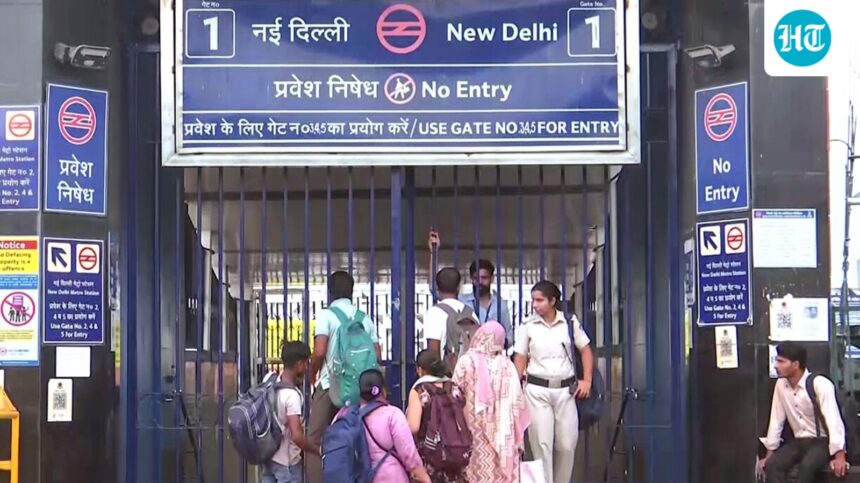
In a relief to commuters, the Delhi Metro Rail Corporation (DMRC) announced on Sunday morning that all stations of the network are now open and operational. This comes as student protests, led by the Cockroach Janata Party (CJP), ended in the national capital on Saturday evening following the resignation of Dharmendra Pradhan.
In a post on X (formerly Twitter), DMRC said, “All stations of Delhi Metro network are open (entry and exit) for passenger services.”
The stations affected over the past four days included Lok Kalyan Marg, Rajiv Chowk, Patel Chowk, Ramakrishna Ashram Marg, Barkhamba Road, Supreme Court, Siva Tirth, Janpath, Mandi House, Central Secretariat, ITO, New Delhi, Delhi Gate, Jor Bagh and more.
Read also | Fear of losing Generation Z, BJP poll calculations forced Dharmendra Pradhan’s resignation
About 17-18 stations were closed almost every day as the CJP protest escalated into a massive movement over the past week. Although the interchange facilities remain operational, the closure of entry and exit to these stations in central Delhi has affected many commuters.
Dharmendra Pradhan resignation
Dharmendra Pradhan resigned as Education Minister days after student protests in the national capital. He announced his resignation, saying that the developments of the past ten days “saddened” him greatly and that the issue was “not a matter of personal prestige.”
Read also | CJP withdraws its protest, and the government agrees to drop all police cases against students
The Justice and Development Party withdraws its protest
After Pradhan’s resignation, Abhijit Debke’s Sarsour Janta Party called off its protests and announced that the government had accepted his other demands, including withdrawal of FIRs against protesters and compensation to families of students who allegedly died by suicide after NEET paper leak.
The CJP has been staging a protest at Jantar Mantar for over a month, demanding Dharmendra Pradhan’s resignation over alleged irregularities in competitive exams, especially NEET.
The protests began at Jantar Mantar in Delhi on June 20. Activist Sonam Wangchuk joined the protest on June 28 and began an indefinite hunger strike. Late on July 23, Wangchuk ended his fast after the center contacted him.
Read also | The new paper leakage bill stipulates a two-month period for rapid investigations and trials
New paper leak bill
A new draft law against paper leaks aims to toughen penalties and increase the minimum prison sentence and the amount of fines. It also promises speedy trials by establishing fast-track courts.
According to the proposed law, any individual who resorts to “unjust means and crimes” shall be punished with imprisonment for a term not less than “five years but which may extend to ten years and with a fine up to fifty thousand rupees.”