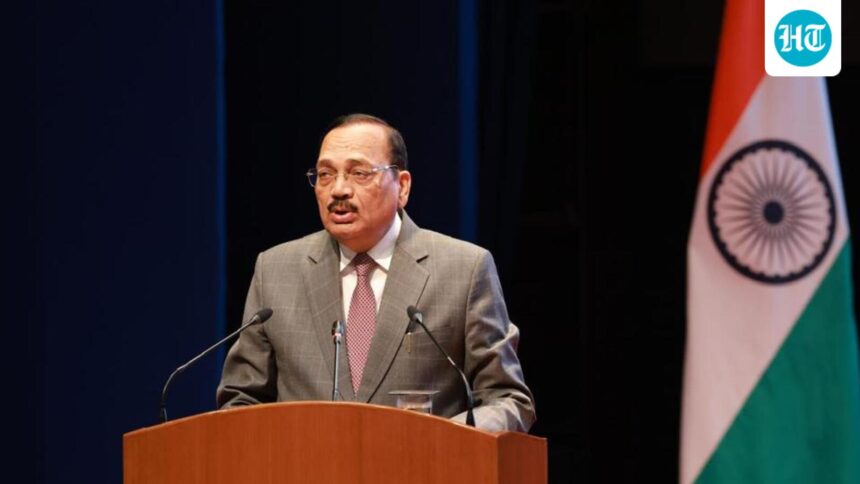
Chief Justice of India, Surya Kant, on Friday said that the doors of the Supreme Court remain open to every citizen, assuring the country’s youth that the judiciary will protect their rights and address every legitimate complaint within the framework of the law.
The CJI’s confirmation came amid the ongoing nationwide student protests and controversy over alleged police excesses during the July 20 crackdown in Delhi.
The CJI said Hindustan Times That the Supreme Court shall hear grievances in accordance with the law and judicial procedures and make every effort to ensure justice where warranted.
“I would like to assure every citizen, especially the youth of the country, that if any injustice is done to anyone, the Supreme Court will hear the grievance within the limits of the law and established judicial procedure. Wherever possible, we will ensure that justice is done. The judiciary is always ready to address the problems and sufferings of the people,” the ICJ said.
Without commenting on the merits of the ongoing protests led by the Sarwar Janata Party (CJP), the CJP said it was incorrect to suggest that the Supreme Court had refused to hear the matter.
He said, “I do not wish to comment on the merits because the case was presented to the court and mentioned this afternoon. But it is incorrect to say that the Supreme Court had earlier refused to hear the matter.”
Stressing that access to justice remains central to the institution, the CJI added: “The doors of the Supreme Court are open 24 hours a day for every citizen. The court will not allow injustice to prevail.”
The CJI explained that there was no petition properly filed before the court when the controversy first arose. “Only a letter or representation has been filed while seeking urgent hearing. This is not a procedure recognized by law. The petition has to be filed in accordance with the rules and procedures prescribed by the Supreme Court,” he said.
The ICJ stressed that once petitions are properly submitted and mentioned before the Court, they are accepted for inclusion in the list. He added: “When the petitions mentioned before us were later submitted, we agreed to include them, and they will now be dealt with in accordance with the law.”
The remarks assume significance against the backdrop of criticism leveled at the Supreme Court after it on Wednesday refused to entertain an oral request by a lawyer seeking automatic recognition of alleged police brutality during the July 20 ‘Chalo Sansad’ rally organized by the CJP.
Earlier on Friday, while presiding over a bench with Justices Joymalia Bagchi and V Mohana, the ICJ also clarified in open court that no writ petition had been filed before the Supreme Court as of Friday morning, and criticized what it called “reckless” reports that the court had refused to list the matter.
Hours later, senior advocate Gopal Sankaranarayanan mentioned two newly filed petitions alleging police excesses during the protests. After informing the bench that the petitions had now been allotted daily numbers and were formally filed, he sought an urgent hearing, citing continuing allegations of excessive use of force against the protesting students. The CJI directed that the petitions be listed for hearing on Monday.
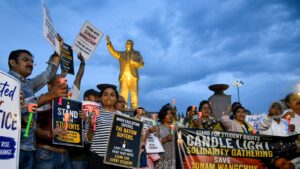
The controversy arose from the Chalo Sansad rally on 20 July, during which thousands of protesters attempted to march towards Parliament to demand the resignation of Union Education Minister Dharmendra Pradhan over alleged leaks of examination papers and broader reforms to the examination system. Police used tear gas and lathi after protesters tried to breach barricades, while Delhi Police maintained that force became necessary after parts of the crowd turned violent and resorted to stone pelting.
Separately, the Delhi High Court ordered authorities to retain CCTV footage and other records related to police actions while hearing petitions challenging the crackdown.
Judicial developments coincided with political communication between the center and the protest leaders. A CJP delegation held talks with Union ministers on Friday after activist Sonam Wangchuk ended his 26-day hunger strike following assurances from the government. While describing the discussions as constructive, protest leaders stressed that the agitation will continue until their main demands, including accountability for policing and reforms to the examination system, are addressed.