Dear reader,

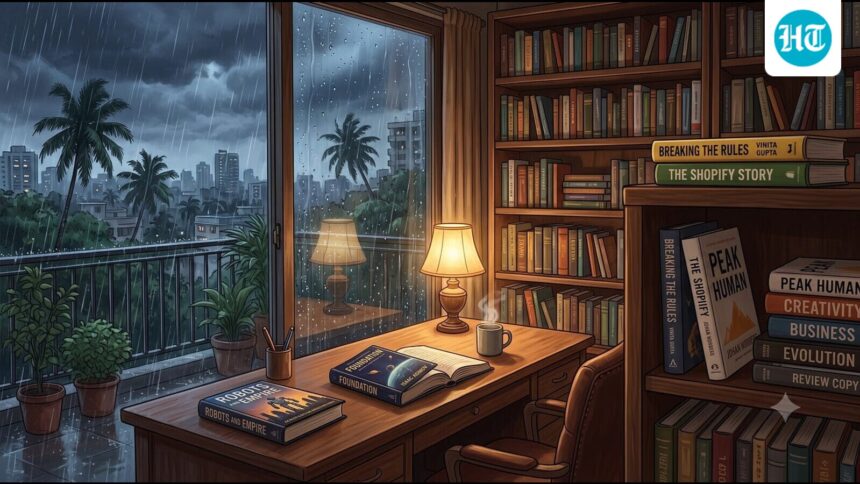
The best part of returning to Mumbai, apart from the monsoon rains, is returning to my bookshelves. Plus, there are always new arrivals waiting: bags of titles another reader has bought, mostly about creativity, business, and evolution, along with review copies of new books.
This week, the book Breaking the Rules by Vinita Gupta caught my attention. A woman who built a business in Silicon Valley, then took it public and then bought it back – that should be a story. I was also drawn to a little book called The Shopify Story.
I stumbled upon Shopify a few years ago. I was looking for software to design a website for a custom book subscription service, and Shopify was incredibly easy to use. Within a few hours, I had uploaded images, copy, integrated payments, and built a website where anyone in the world could sign up. I’ve been a fan ever since.
Unfortunately, both trade books were disappointing. I won’t say much about the Shopify story because I’m still going through the early parts. But I insisted until the end on breaking the rules. After getting about halfway through, it became an interesting exercise for me in how not to tell a story.
The book is a missed opportunity because Vinita Gupta’s story has many dramatic twists and turns. Yet she scrolls through these moments, as if she chose not to share the information with us. This, of course, is her prerogative, but if you are shy about telling your story, you should not write a book. If you want to capture the reader’s attention, you must be willing to share your story.
So, if your business partner walks away saying “I can’t stand you anymore,” we need to understand that conflict – the what, where and why. We need details. When characters appear in your story, whether your parents or your sisters, we are invested in them and don’t want them to just disappear without any explanation. If you are the subject of lawsuits and class actions, we want to know more. Instead, each episode is told with roughly the same emotional register. Victories, setbacks, lawsuits, and betrayals have roughly equal weight, so nothing lands as hard as it should. I also didn’t understand the people and places, perhaps because there weren’t many scenes, although some stand-alone chapters were devoted to family and nannies.
But what saved my weekly reading was rereading.
I’ve been reading the book Peak Human in which Johan Norberg analyzes the rise and fall of the world’s great empires, everything from the Greeks and Romans to the Abbasid Caliphate and the Chinese Song dynasty. My fictional counterpart to this study was the Asimov Foundation series and Robots.
And I can’t get over that.
The story of the rise and fall of an empire, the chaos in between, the policies of openness, immigration and the use of technology – it is strangely relevant today. Asimov gives me what my book lacked: a willingness to dramatize conflict, nuance in characters, and allow ideas to breathe through the scenes.
In Robots and Empire, for example, our heroine Gladia is not given birth citizenship on the planet she chose to live on and this causes complications for her. When a strange visitor arrives on her doorstep with disturbing news, she finds herself analyzing his motives and debating her future course of action after deep consultations with her robots about geopolitics, human psychology, and the larger forces that shape empires.
The scene is strangely modern – Gladia might as well be writing claims for her LLM! This is the sheer joy of science fiction, and how it enables us to better understand our world and its politics through storytelling.
As the monsoon rains pounded on my windows and the wind whipped the palm trees outside, I put aside the stories of my recent work and read instead about the collapse of one galactic empire and the rise of another in its place. It feels good, in this age when everyone is bemoaning the death of reading, to return to my bookshelves and have an old classic that explains the world to me so skillfully.
And you, dear reader, what are you reading to understand the world this week?
(Sonia Dutta Chowdhury is a Mumbai-based journalist and founder of Sonya’s Book Box, a personalized book service. For all questions on life and literature, email sonyasbookbox@gmail.com.)