ANI’s file photo
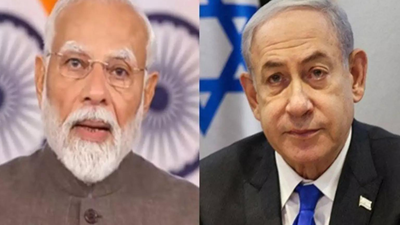
Israeli Prime Minister Benjamin Netanyahu highlighted Prime Minister Narendra Modi’s upcoming visit to Israel during a Cabinet meeting on Monday.He described the relationship between the two countries as “an axis of countries committed to stability and progress,” stressing their partnership in innovation, security, and common strategic goals.
Netanyahu links Modi’s visit to Israel to an “alliance against extremist axes,” and describes India as a “global power.”
“This morning, at the opening of our cabinet meeting, I spoke about the historic visit of my dear friend, Prime Minister @NarendramaModi, to Israel next Wednesday. The bond between Israel and India is a strong alliance between two global leaders. We are partners in innovation, security and a shared strategic vision. Together, we are building a hub of countries committed to stability and progress,” Netanyahu said in a post on X.
Netanyahu also stressed that the partnership between Israel and India is expanding, to include areas ranging from artificial intelligence to regional cooperation.Earlier on Sunday, the Israeli Prime Minister hailed India’s growing global influence ahead of Prime Minister Modi’s visit. Speaking about the close ties between New Delhi and Tel Aviv, Netanyahu tweeted that the visit “will express the special relationship” that has been established in recent years between Israel and India, and between him and Prime Minister Modi.
On the diplomatic front, Netanyahu shared his vision for building a regional network of alliances, describing it as a “hexagon” that includes India, Arab and African countries, Mediterranean countries such as Greece and Cyprus, and selected Asian countries. He said he intends to present the framework in a more detailed and structured manner in the future.This will be Prime Minister Narendra Modi’s second visit to Israel, after his historic trip in 2017, which made him the first Indian Prime Minister to travel to the country.The visit comes amid developments related to the Peace Council meeting held on February 19, an initiative that emerged from former US President Donald Trump’s 20-point ceasefire plan in Gaza that was approved by the UN Security Council.Since then, the initiative has expanded in scope, with officials saying about 35 countries have committed to joining and inviting about 60 countries. Trump suggested that the body would eventually take over some of the tasks currently carried out by the United Nations.