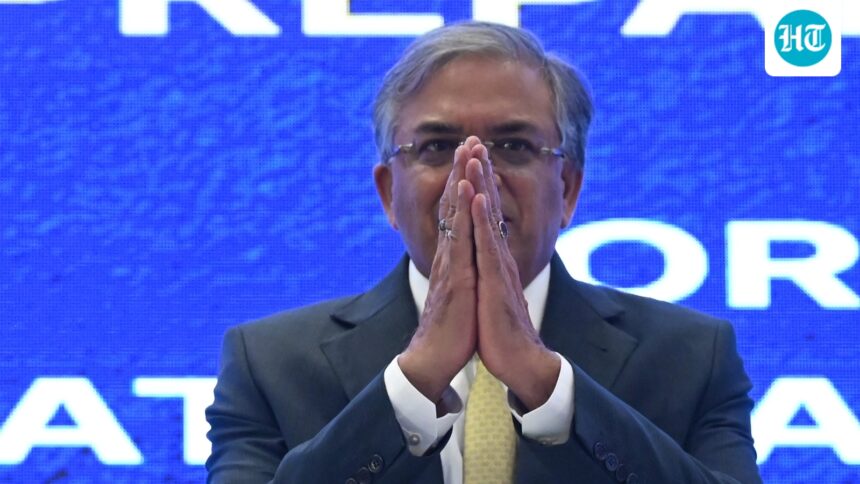
An impeachment notice for Chief Election Commissioner (CEC) Ganesh Kumar, who is led by the Trinamool Congress, will be tabled in both houses of Parliament, a senior opposition leader privy to the details said on Wednesday. At least 120 Lok Sabha MPs and 60 Rajya Sabha legislators have signed the notification.

Read also:
Led by the Trinamool Congress, which has been at war with the Election Commission of India over the SIR exercise in poll-bound West Bengal, two separate versions of the notice will be submitted to the Lok Sabha and Rajya Sabha by Friday, this person, who did not wish to be named, added.
The opposition parties will list seven specific charges against Kumar, including “partisan and discriminatory behavior in office”, “deliberate obstruction of election rigging investigation” and “mass disenfranchisement through SIR”, according to the leader, a non-Congress MP from the Rajya Sabha.
Removal of the Central Electoral Commission or Electoral Commission is governed by Article 324 of the Constitution which states “…the Chief Electoral Commissioner shall not be removed from office except in the same manner and on the same grounds as a judge of the Supreme Court…” The Inquiry Act, which provides for the process of removal of judges says, “If notice is given in the House of Representatives, by not less than one hundred members of that House; (b) If notice is given in the House of Representatives, by not less than fifty members of that Council; and thereafter, the President of the Council, or its Chairman, as the case may be, may, after consultation with such persons, if any, as he thinks fit and after considering such materials, if any, as may be available to him, either accept the proposal or refuse to accept it.
Even if the notice is filed this week, it could take months — if the notice is accepted — for the discussion to take place. By then, elections in West Bengal, Tamil Nadu, Kerala, Assam and Puducherry, expected to be held early this summer, will have concluded. Commenting on the move, Trinamool Congress Rajya Sabha leader Derek O’Brien said: “Our political and legal battle continues inside and outside Parliament.”
The plan to isolate the CEC unified the opposition politically, but also isolated the three parties: Biju Janata Dal, BRS and YSRCP. A second senior opposition leader said: “We did not reach out to these parties. On previous occasions, we asked for their support but they chose to vote otherwise. This time, we did not reach out to these parties.” The India bloc also did not reach out to AIMIM president and Lok Sabha MP Asaduddin Owaisi.
But it received support from some lawmakers from the Aam Aadmi Party, which severed ties with the bloc in July 2025. “Not all AAP MPs supported us. But we got a few leaders to sign the notice,” a third opposition leader said.
The Opposition has been at loggerheads with Kumar over SIR, which it believes is an exercise aimed at disenfranchising its supporters. Analysis of HT data, based on the revised lists that have been published, shows no such pattern, and suggests that many exclusions were due to migration. The slew of what the Election Commission calls logical inconsistencies in West Bengal has certainly raised the specter of legitimate voters being disenfranchised, but the Supreme Court has already intervened to protect their interests.