Director Rachel Mason — who previously documented her parents’ adult bookstore business in West Hollywood in 2020 Circus of books – Returns to this world with My brother’s killerwill premiere this week at SXSW.
But when Mason and her editor and producer Dion Labriola looked into a 1990s murder within the Los Angeles gay porn scene, their research began to intersect with cold case investigators, amateur sleuths, and a host of archival materials—ultimately helping to identify the suspect and elicit an on-camera confession to a brutal murder long thought unsolved.
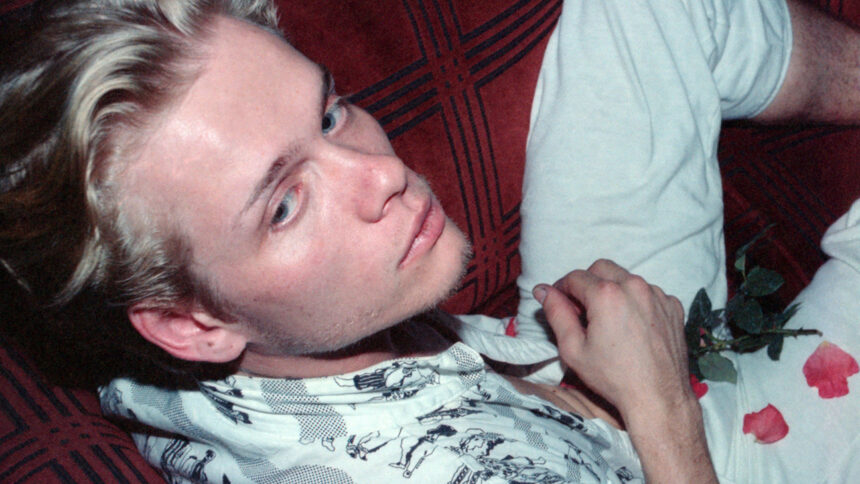
The film follows the murder of Billy London, a blond Midwesterner who moved to Los Angeles and briefly appeared in the gay adult industry before being killed in a horrific attack, in which his head and feet were discovered dumped in a dumpster in a WeHo alley.
Ahead of the film’s world premiere in Austin, Mason spoke Hollywood Reporter About how the pornography archive became a major investigative tool, why the LAPD worked with them and the disturbing psychology behind the case. [Spoiler warning: This interview reveals the identity of London’s alleged killer.]
She described the murder in the film as a “lesbian Black Dahlia.” What attracted you to the story?
I kept hearing this phrase – that Billy London was the “gay Black Dahlia.” It was terrifying. Once you get to know Billy through his family, his hair, and the people who loved him, it becomes even more disturbing. No one deserves this kind of ending. The story first came to mind when I was researching my previous film. Circus of books. A gay porn archivist named Mickey Ski had a file of material, and inside was an old defends Article about Billy’s murder. I was stunned. It happened here in Los Angeles, and yet almost no one seems to know about it.
Were you actually a real criminal?
Honestly, no. I am more of a cultural documentary filmmaker. I’m interested in personalities and subcultures. But while making Circus of books. I started to realize that gay porn is actually a form of history. Before the 1980s, you didn’t see gay life represented on television. Porn was one of the only places where that life existed visually. So I started thinking: There must be amazing stories buried in this world. Billy’s story turns out to be one of them.
When you started the film, did you think there was any chance this case would actually be solved?
Not real. My goal was simply to humanize Billy and tell the story of a victim whose murder was never solved. But while searching, I discovered that there is a podcast called Show dinner party It reopened interest in the case. At that point I thought: If more interest helps generate new leads, why not contribute? Cold cases are often solved because someone looks at the evidence from a different angle.
The investigation in the film becomes almost collaborative – with all the detectives, researchers and the LAPD involved.
exactly. It was this strange convergence of people who each had a piece of the puzzle. One of the investigators, John Lamberti, was incredibly helpful. He began his career in television news production before becoming a homicide detective, so he understood how media exposure could generate leads. Then there was Clark Williams, who was doing independent research, and a man named Kevin Clark who knew someone connected to the case. Each person contributed something small, but together they began to reveal a bigger picture.
At some point, archival porn footage becomes evidence.
That was surreal. There is a video of a memorabilia award show from the gay adult industry in the early 1990s. It’s basically a time capsule of that era. In that footage you see someone who later became the suspected killer walking on stage. It’s chilling.
Eventually, she began communicating with the suspected killer, who was now a transgender woman named Daralyn Madden. What was your reaction when you learned that?
It was complicated and painful. My partner is trans, so hearing this information was like a knife to the heart. The last thing you want is for a case like this to be used to reinforce harmful stereotypes about transgender people. At the time of the crime, this person was living as Darrell. Later in life she moved on and now lives as Daralyn. None of this justifies crimes.
I eventually interviewed her in prison. How was that experience?
It was intense. We were transferred to a high security unit. She came out in double handcuffs and there was a guard standing close behind her. But what struck me most was how attractive it was. The detective who interviewed her said the same thing – she’s very charming, very funny. Someone you can easily imagine having a conversation with over a beer. This makes it even more worrying.
Do you think she feels guilty?
I honestly don’t know. When I talk to her, it’s like I’m entering a different psychological space. She talks about violence with a level of familiarity that is deeply disturbing. She asked detailed questions about the killings because Billy’s family wanted answers. These details matter to them. But understanding a person like this really requires psychological experts.
The film finally clears up the suspicions that have been hanging over Billy’s former partner for decades.
Yes. That was very important to me. Mark Rabins, Billy’s partner, lived in doubt for years. The Billy family had no real ending. After watching the film, they told me they finally felt like they had answers. This means more to me than anything else.
The film also links the crime to extreme violence and skinhead culture.
This connection is very real. The killer spoke about his involvement in gay bashing and white supremacist activities in Los Angeles during that era. There is a direct line between those movements and the violence we still witness today. This history has not disappeared.
What do you ultimately hope people take away from the film?
First and foremost, Billy London was a human being. It wasn’t just a horrific crime story. He was a young man who came to Los Angeles with dreams and a creative life ahead of him. If the movie helps people remember him as a person — and maybe helps prevent something like this from happening again — then it’s worth it.