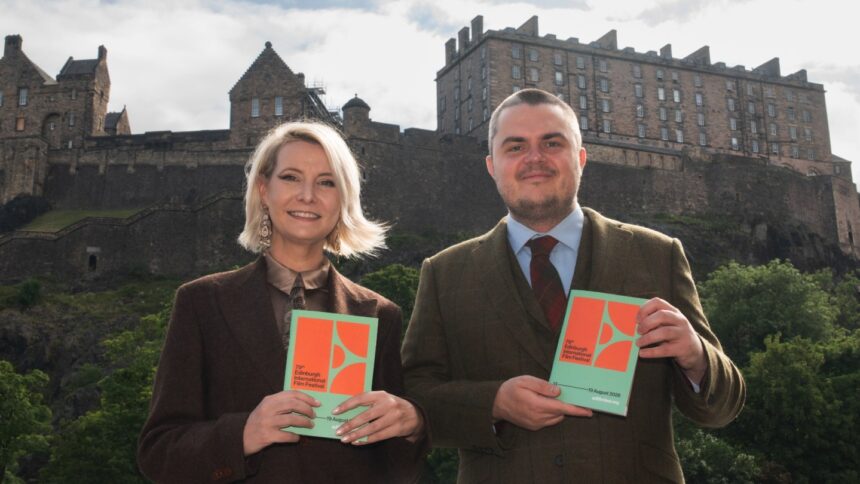
The 2026 Edinburgh International Film Festival line-up has arrived, and director Paul Reed believes it is their biggest competition line-up since the event was restarted three years ago. “I was very proud of everything we did in 2024 [and] “2025,” Reid begins Hollywood Reporter. “But I think it’s kind of over the top.”
It’s already his and festival producer Emma Boa’s third year at the helm of this ship, and it’s safe to say they’ve sailed into uncharted waters. In an unstable industry where intellectual property, nepotism and perhaps even artificial intelligence are now king, Reed and Boa have doubled down on emerging filmmakers with original stories.
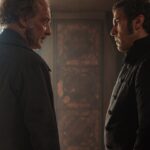
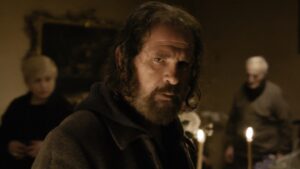
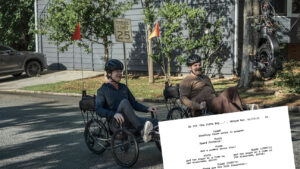
A busy competition schedule suggests this modus operandi: There’s Lindsay Ryan’s comedic debut He turned overstarring Rhys Ifans, about a houseboat vacation that turns into chaos; First appearance of Tom Longshoff The first area Where a woman navigates a flooded and desolate post-apocalyptic landscape; Psychological portrait of Paul Wright a task With George MacKay; Simon Rennink Collection 1999 there Starring Michael Sheen, who joins a gang of misfits to uncover a UFO conspiracy in, among other cities, a sleepy Welsh town.
That’s a lesson she learned from Sundance, Reid explains THR – From the late, great Robert Redford himself, in fact. “Anyone comes out of it [would be] “I’m moved not only by his death, but also by the tremendous legacy he left with this festival,” says Reid, who heads to Park City, Utah, every year in search of some promising feature (he came out this January with Lewis Paxton’s The Celebrity Film Festival). newcomerThis year’s edition is scheduled to open on August 13).
There’s also, as always, a huge selection of world premieres, UK premieres, Midnight Madness films, live-action shorts and animated shorts on the cards: Gregg Araki’s I want your sex With Olivia Wilde and Cooper Hoffman, Her own hell From Nicolas Winding Refn and its Cannes premiere Sheep in the box Among them is Hirokazu Kore-eda. Ewan McGregor will appear to celebrate his 30th anniversary Discover trainsKenneth Branagh will impart wisdom, as will American producer Christine Vachon at separate In Conversation events.
It’s another chaotic year for Paul Reed, but he’s confident that Edinburgh will also cement its place on the festival circuit as a guaranteed launching point for up-and-coming directors, while also providing the array of Hollywood faces needed to generate some buzz. Below, he catches up THR About this year’s lineup, why mania It was a spark of genius from TIFF’s festival programmers, and his take on the ever-increasing burden of confronting global politics at film festivals: “We live in a very difficult, brutal, conflicted world, so naturally the art that emerges from that world should reflect it, refract it, and engage with it — and we want to be that platform.”
I wanted to start by asking about your opening statement in the lineup booklet, where you said that Robert Redford and Sundance are the north star of Edinburgh. Can you explain that? impact?
I think anyone who was at Sundance last January, as I was lucky enough, was a witness to some of the events, the memorials around Redford… Anyone who comes out of that [would be] He was affected not only by his death, but also by the tremendous legacy he left with this festival, which is also going through a period of transition as the city changes. For us, obviously new to this, this is the third year for our rebooted version of the festival – the festival has a decades-long history, and is one of the oldest film festivals in the world. But in terms of what we’re trying to do, I think the inspiration for Sundance for us, with everything it’s done for independent filmmakers, emerging voices, new talent, and getting that talent out into the world and giving it this commercial, as well as the curatorial launch pad, has always been an aspiration for what we want to do [Edinburgh]. This speaks to the DNA of who we are. So, getting the Sean Connery Award for Excellence in Feature Filmmaking, getting the Therma Schoonmaker Award for Short Films, it’s all about finding those new voices, these new and emerging filmmakers that we can give a proper global release to and then hopefully open up some possibilities for them to move forward, whether that’s for the films they’re pitching or the films they want to make.
We had a really strong success rate last year, just out of the 10 films we had in competition. Seven of these films were distributed in the United States, the United Kingdom, or both. But when Sundance first started, when it first launched, it was discovered Sex, Lies and Videotape And all those great films of the 90s that turned the festival into a huge launching pad for the industry, that’s the direction of travel that I hope we’re heading towards.
Is it fair to say, then, that when you go to these festivals and check out potential films for the Edinburgh lineup, emerging voices and lesser-known filmmakers are prioritized more than the UK premieres of stars?
It’s a mix. For us, a lot of our discoveries are through the submission process – films that are sent to us for consideration from filmmakers or producers – [and] A lot of that happens through all the networking that we do with these producers or sales agents. When we talk specifically about films that have been shown at other festivals, like our editorial, newcomer, Or the winner of the Berlin Prize, Queen at sea With Juliette Binoche, or Nicolas Winding Refn’s film[[Her own hell]I think she’s trying to find that balance between almost UK premieres [serve as] A gateway for some audiences to access the films we show in competition or out of competition – the ones that are having their world premieres, which don’t necessarily include those big names. Any festival will always be looking for a mix, but for us, yes, the building blocks of what we’re trying to achieve, and the way we’re trying to live up to that title of being the home of independent cinema in the UK, is fundamentally tied to those new and emerging voices.

newcomer It performed well at Sundance. When did you know you wanted to open for Edinburgh? How important is it that it’s a Scottish story?
I think we knew from the moment we saw it that we wanted to screen it at the festival, and I think having this opportunity to open is perfect, because the film itself is a unique vision and has a unique voice. There is no set goal for us to always open or close with a Scottish film. first year, Overtaking Opened last year Sorry my dear From the wonderful Eva Victor. I think what unites these three editorials is that they are fierce, independent voices, and they embody something exciting.
I’m so glad we’ll be opening with a Scottish film and closing with a Scottish film this year. It’s a great moment for Scottish cinema, but there are so many other Scottish works out there. This year has been a huge boon for Scottish films at festivals, and for us, we’ve seen film premieres Bill and Borges and I and Douglas Gordon Written by Douglas Gordon and Teaching Jane CanningAll of these things speak to how exciting Scottish filmmaking is at the moment. I think you will love it newcomer. It feels like the most crowd-pleasing film we’ve opened to date.
I’m fascinated. Do you think this is a breakout year for Scottish film? Why is this?
I think this reflects all the great work being done across Screen Scotland, but also on the wider infrastructure. It’s an exciting time now for Scottish film production, and Scottish TV is a great moment at the moment… everyone As Scottish acts coming to our festival, it just speaks to the fact that there’s a lot of exciting acts happening now, and I think that’s all the work that’s been done in the last few years to grow that talent.
I know you have to be diplomatic when it comes to your competition lineup, but across the roster as a whole, what are you excited about? What best embodies the spirit of Edinburgh?
I feel very confident that we have got our best competition lineup yet. I’ve been very proud of everything we’ve done in 2024 and 2025, but I think this event is kind of beyond expectations. It’s great that we have really great films, in my view, to celebrate Discover trains With a great cast, Q&A crew, and a great DJ night with[[Discover trains Novel writer]Irvine Welsh and [English DJ] Darren Emerson. This is really exciting. If you’ve only picked two films out of the competition, this one kind of embodies what we’re all about… There’s a really beautiful short film out of competition called Without Kelly This is amazing. He only lives with me. Then there’s Greg Araki’s film I want your sex. I’ve been a huge fan of Greg Araki since day one. So to have this movie is nice. But I don’t want to nitpick too much, because I don’t want to give any specific bias to anything! I feel very confident that each film has a compelling reason for being on the show.
Which Discover trains The slot with Ewan is a great opportunity. Kenneth Branagh, and Ken Burns too. What work goes into getting these names on stage, or are they surprisingly happy to do so?
Every conversation is different. Ewan has recently returned to Scotland and has clearly made a major commitment to supporting Pitlochry [Festival Theatre] And participate with us and do a lot of things. He has come home in many ways, and is clearly celebrating Discover trainswhich is a very compelling reason to be at the festival, given that this was his breakout role. Then with Kenneth, we always wanted to have someone interdisciplinary at the festival, someone who had worked in theatre, someone who had worked in film, someone who had worked in adaptation. When you think about that huge body of work, it’s a celebration – even in terms of the one screening we’re doing with Kenneth of his film. village Film – I think this reflects our ambition to not just be a film festival that showcases films, but also relates to the other arts happening in Edinburgh and August. So I’m sure all theater lovers will take this opportunity to see and hear Kenneth Branagh.
And then people like Christine Vachon, she’s one of the hottest producers in the world right now. Being able to secure her presence and talk about her amazing career is great, but they’re all very different conversations, and they all have different potential elements. Some of it could be related to things that are in the program, some of it could be conversations we had a number of years ago about making it easier for people to come, but everyone, when you mention Edinburgh and when you mention everything that’s happening in Edinburgh in August, I think a lot of these people are excited to be there, not only to support us, but just to see everything else going on. August is the largest arts festival in the world [here]This is a very convincing draw.
And the UK Film Conference, is that a new edition this year?
Yes. So we’ve been organizing industry workshops over the last two years, doing amazing sessions with top producers and commissioners and filmmakers, but the film conference itself, which is on Saturday, [is new]. It begins with a long conversation between Ben Roberts, Chief Executive of the BFI, and Claire Baines, Creative Director of Picturehouse. This will really set the tone for that day, which is now being planned, to really engage in a conversation that will be open to industry pass holders, press and the public to talk about the future of independent film. [It’s] Such a complicated thing right now. We were thrilled to see the success of things like mania and Back roomsbecause it gives you a little support for the sense that independent films, new voices, and non-IP works have potential.
Is the success of movies like mania and Back rooms Does it spark your interest in the horror space a little more?
Yes. Genre is a big part of what we do, whether it’s in Midnight Madness, out of competition or even in competition [lineups]. When you look at the success of someone like Ken Parsons or a film director mania, Carrie Parker, what you’re looking at is not just the success of non-IP originals, but also filmmakers coming out of a different kind of space, a different tradition of working through YouTube and coming up with content that way. We look at that as an incredible boost for audiences who want to come and engage with this work in cinema, and any news that a big independent film is doing well in cinema is good news for us. But just looking at how these films were made and how they were developed is an interesting new horizon for us.
You have those British names, but also the Hollywood touch with Christine [Vachon]Martin Scorsese doc, or I want your sex. Why is it important to keep this thread connecting Edinburgh to the United States tight? Does it help in developing the profile of this festival?
naturally. All you have to do is look at Christine’s roster as a producer to see the type of international filmmakers she works with, so to have someone at our festival meet and mingle with the filmmakers who emerge through our program is very exciting for us. In terms of this explicit connection to the United States, obviously we are an international film festival, and it is in our name, so it behooves us and benefits us to engage with the international industry. This is not just the United States, but the rest of the world [too].
As the director of an international film festival, what is your reaction to the studio sit-in in Berlin and Cannes?
Obviously, we cannot talk about the priorities or outcomes of major film festivals or any other film festivals. This is their concern. Coming out of Cannes, I was very encouraged by the quality, the breadth, the scope, even the high quality of the official competition, and even the stuff in the sidebars as well. I didn’t feel like there was a huge impact in terms of overall quality and you still have great American films like James Gray’s[[paper tiger]. That conversation about whether or not studios are hesitant to engage with festivals or don’t see them as useful launching pads…it’s a much larger conversation about how studios approach release strategy, how they approach film criticism, how they position a film. But from our perspective, we did not face any opposition from any of the major distributors we worked with. I think there’s still clear value in what we can do as a starting point for films being distributed in the awards conversation and in that distribution strategy. So we don’t feel that burn at all.
I mean, we just talked maniaAnd we just talked Back rooms – These are two examples of a very different approach. mania It was born from a film festival. mania It was an acquisition that came out of Toronto, and Toronto is the gold standard of the genre when it comes to Midnight Madness – all credit to Peter [Kuplowsky, Midnight Madness programmer at TIFF] And this team for everything they do to support him maniaand then getting the distribution deal that led to this huge global phenomenon — which I have to admit, I didn’t see it coming. It’s amazing how well it’s done.
In Berlin, talents were constantly asked about their political opinions at film press conferences. It caused great controversy, as we all know. What is your position on whether or not films should be political, and talent should answer geopolitics at film festivals?
Well, I don’t want to talk about the details of Berlin, because all I can say is that I’m very excited about what Tricia did [Tuttle, Berlinale director] Next will come and what you will do next year. Obviously it was a very complex and difficult situation for a lot of different people involved in the festival, and Tech And that moment is the dominant thing at this festival, when there were so many films and so many amazing political works that could have been the subject of more conversation… For it to become about one area of focus for journalism seems like a great shame, because that’s not helpful in terms of how we approach things.
Essentially, as a film festival, like Edinburgh, we are a platform for action. We are not a mouthpiece, so we are always that platform and not the position of the mouthpiece. We will always want to show work that reflects our current situation, engages with politics, deals with different situations, and perhaps offers different perspectives on different issues and different contexts and narratives. It is the nature of the world we live in. We live in a very difficult, brutal and conflicting world, so naturally the art that emerges from that world will reflect it, refract it, and engage with it, and we want to be that platform.
Finally, Paul, with the big news out of the TV festival, I have to ask: Isn’t there a world in which you’ll be moving to Manchester any time soon?
(He laughs.) Absolutely not. I moved to Edinburgh at the beginning of 2024 with the sole purpose and vision of working with the team, and I am part of a much larger infrastructure in terms of all the different teams working tirelessly to deliver this festival… I find Edinburgh beautiful and exciting; [the] The largest art festival in the world. We are closely connected to what is happening in Edinburgh all year round, but particularly in August, because there is an opportunity for interaction between audiences. [with the Fringe]…The idea of moving the film festival from this cradle of creativity would be crazy to us.