See Paris and die! See Paris Paris And see the world differently!
The title of the first feature film by Belgian writer and director Isabelle Tolinaire (Battles, Victoria(, which has its world premiere on Tuesday 7 July as part of the Proxima Competition program of the 60th Karlovy Vary International Film Festival (KVIFF), hints at what awaits the audience in the drama about homeland, the idea of homeland and displacement.
Repetition as a means of keeping the memory of homeland alive, for example. And the fact that there’s also a Paris, of sorts, in China — Tianduqing, a massive housing project in Hangzhou, Zhejiang province that mimics the buildings, streets, fountains of the French capital and even a 354-foot-tall replica of the Eiffel Tower.
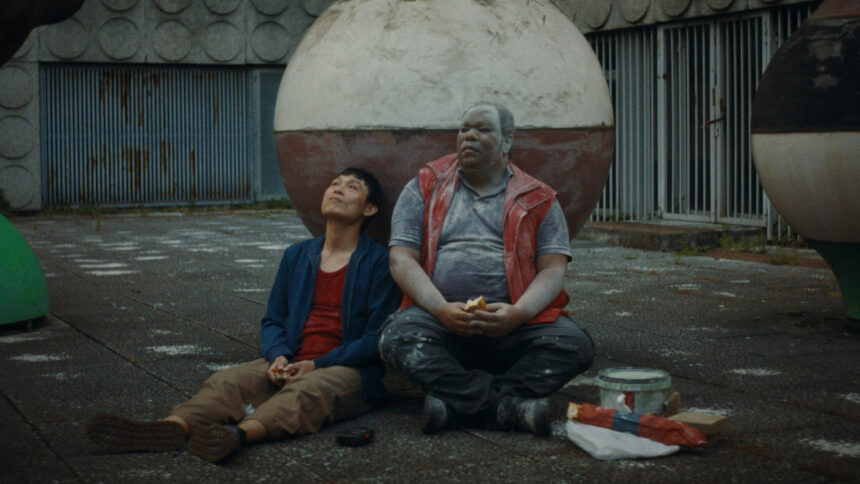
Paris Paris It follows three men, Yi En from China, Junior from the Democratic Republic of the Congo, and Hamza from Palestine, who are illegal immigrants and share an apartment in a seemingly abandoned building in Paris. They share the experience of displacement, life in exile, and the transient nature of possessions and relationships, where the existing safe space is threatened by external forces.
KVIFF’s website describes the film as “an allegory of search, loss, displacement, and the discovery of new meanings and commonalities.” The film takes place in “one of the great cities of Europe and in a replica of Paris built in China – a metaphor for the old immigrant dream of life in a new homeland and its gradual transformation into a new dream about their old homeland.”
Tollenaere was also liberated Paris ParisIts cinematographer is Thomas Vereke. The cast is led by Yi In Chen, David Mutamba, and Mahmoud El Bashtawy. Square Eyes is handling international sales for the film from producers Bo de Group and Hans Everaert of Menuetto.
Given her background in documentaries, you might wonder if it was her documentary work that prompted Tolnier to do so Paris Paris. In 2014, she first read an article online about a replica of Paris in China, and “I was immediately fascinated by it,” the director recalls. “It stirred up so many ideas, and almost immediately I had the idea of doubling the same city in one film, what this could entail, what this could happen, what this could mean, and how I could connect these two places, along with their identical appearance.”

It also led her to spend three months in China. “I was based in Shanghai, which is not far from Tianducing,” she says. THR. “I experienced this massive construction fever, unlike anything I’d ever seen before. And then there seemed to be demolitions happening everywhere I looked, and so I started delving into this radically changed landscape and environment. I heard testimonies of people saying that, if they had left home for a while, when they came back, they couldn’t recognize the place anymore, or couldn’t find their way home anymore. And that’s where the themes of loss and disappearance and memory and the instability of the home start to emerge for the first time.”
Originally, Tolnier considered depicting a Chinese community in Paris, France, but her approach gradually shifted to a story featuring three protagonists, each of whom comes from a very different place in the world.
How did you cast the characters? It all started with Yi-En. “We were at the same artist residency in 2018. He’s a dancer and choreographer, and I met him there,” Tollnier says. THR. “At first, I didn’t think about casting him for the movie. I really liked him, we hung out, and after a while I realized he would be really great for the movie, so I asked him. He had no acting experience. But from that moment on, I kept writing the movie with him in mind.”
She met the other two “much later, when I organized the casting for the film,” says the director. “But I wanted to cast people with similar experiences as the characters in the film, and Yi-En was the exception to that. Coming from a documentary background, I have always welcomed people who help shape the film. So there are many elements that come from the actors that I was allowed to include in the script.”
How foreign was it to write a foreign feature film as opposed to making a doc for Tuliner? “I had always made nonfiction films before. They were always hybrid films and involved fiction, but they stayed more on the documentary side of things, so I never really had any intention of making a fantasy film,” she recalls. “There were some reasons for this shift along the way, and it happened gradually. For example, some of the topics I was dealing with were not easy to access.”

The director had the title Paris Paris From the beginning. “Normally, I have a job title that’s always changing, but with this job title, it’s been there from the beginning,” says Tuliner. THR. “The film is clearly about the two baristas. But also, repetition is used throughout the film as a means of remembering, so the title is very much connected to the theme of memory. The driving and opposing forces in the film are remembering and forgetting, repetition and disappearance.”
Language and its power is also a recurring theme in Paris ParisDue to its connection to the concept of “homeland”. “When you leave your country and speak your mother tongue, it gives you a very strong feeling of coming home,” the writer-director explains. “The characters return home in different ways in the film — through language, through memories, through objects, because if you carry personal things with you from the place you call home, it’s as if you’re carrying a part of that with you.”
Paris Paris It shows characters learning French, a new language, which has almost the opposite effect of creating a sense of home. “Since the vocabulary is very limited in this language, and the phrases they learn in the language course are very general and full of cliches for the new country, they become somewhat meaningless,” Thulnier highlights. “This really underscores their status as newcomers and their uncomfortable situation and experience of alienation and alienation.”
Given the themes and topics covered in Paris ParisYou might wonder if the director considers it a political film. “Yes, for me, it’s very much a political film,” Tollnier says. THR. “First of all, you have three protagonists who are illegal immigrants, and you see their struggles and the difficulties they face. I think the film is very political, but it’s not an in-your-face statement. That’s not my style.”
What about Hamza being Palestinian? “At first, it was just a coincidence, because the actual nationalities were kept open in the script,” says the writer-director. “When I cast Mahmoud for this role, the fact that he was Palestinian became part of the film. It started as a coincidence, but I’m really happy about it because this is a pressing topic that we need to continue to address. It’s something that touches me very much, and makes me feel very helpless. So, I’m really happy that it became part of the film, and even though it’s not the main topic, we have to address it.”

Tollenaere returned to China with a small crew to shoot the Chinese film in Paris. “We were only there for a week, and I think we shot for four or five days, because we only shot the exterior scenes,” she recalls.
Aside from the visuals and characters, the Belgian creator focused on getting the feel of the movie Paris Paris right. There is drama, there is comedy, there is warmth and all kinds of other feelings. “I was really striving for that balance between tragedy and comedy, or heaviness and lightness,” Tollnier says. THR. “It’s political, but there’s also a lightness in the film. That was very important to me, because even if we’re sad and facing a very difficult situation, there’s always humor. We need humor to survive and to function. Especially with this kind of subject matter, it’s easy to show people only in their misery, but I really wanted to show them also in their strength and humanity. They are human beings in an inhuman situation, and I wanted to show their resilience and hope.”