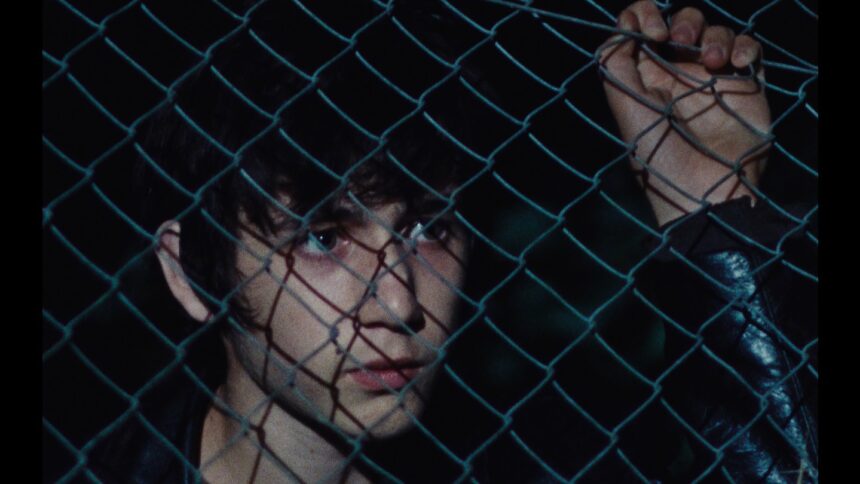
Goodbye, cruel world (Goodbye cruel world). Title of the directorial debut of French actor Felix de Givry, who you may know as the lead actor in Mia Hansen-Løve. Aden As an Oscar-nominated producer Arcoalludes to a person suffering and suffering from his surroundings.
The opening moments of the closing film of the 65th edition of Critics’ Week, and the sidebar that runs alongside the main Cannes Film Festival, confirm this immediately, beginning a cinematic journey that at times feels like a love letter to the history of cinema.
So, what’s up? “Otto Vidal, aged 14, disappeared after writing a farewell letter to his classmates,” reads the synopsis for the film, which will have its world premiere on Wednesday, May 20. There are rumors that Otto at least attempted to die by suicide. “While everyone thinks he is dead, Lena, a girl from his high school, discovers him one night wandering the city streets.”
The film stars Milo Machado Graner, known for his breakout performance in Justin Tritt Anatomy of a falland Jane Beaver. Other main cast members include Françoise Lebrun, who is the narrator, Maya Sandoz, Emmanuelle Destremau, and Erwan Quibois Vallée.
The film is directed by De Jeffrey, who wrote the screenplay with Marie-Stéphane Imbert, photographed by Tara Jay Bangalter and edited by Sanabel El-Sharkawy. Arnaud Toulon dealt with the music. Producers are Manon Messant of Iliade et Films and Ugo Bienvenu of Remembers and de Givry. Playtime is responsible for international sales.
THR A clip from can now be exclusively revealed Goodbye, cruel worldWhich provides the first visual and audio taste of the film. The film shows Lena going for an evening walk with her dog, only to make a surprising discovery. Watch the exclusive clip from Goodbye, cruel world Here and then read what its director and young star shares about its themes and production.
Machado Graner and De Jeffrey spoke THR on Goodbye, cruel worldAnd his inspirations and how the film represents a return to another period in the history of cinema.
Felix, what was the inspiration? Goodbye, cruel world?
Felix de Jeffrey The starting point was my personal experiences during my childhood and teenage years. When we were writing the script, the idea was to start with these heavy themes of biography and character and put fantasy into them, and even magic at some points.
The idea was to get rid of this heaviness and try to let it go, like a memory regaining its color. We have something heavy and dark and then we bring brightness and light back to it.
Were you bullied as a child?
De Jeffrey Yes, for three or four years, it was very intense. But I wanted to portray this differently. In cinema, there was a lot of bullying, and you usually see a child’s head being put in the toilet, or other images, which, to me, are very fake. Of course, the violent aspect of bullying is very important, but it’s also about language and the fact that people don’t talk about it – Omerta on bullying. In fact, the worst thing about bullying is not the guy who is bullying, but all the people around him who don’t want to be bullied, so they don’t say anything and are kind of complicit.
How big is the bullying issue in France?
Milo Machado Graner Yes, in France, it’s a really important topic. Since my childhood, there have always been prevention campaigns about this in school, and politicians say they will stop it. But I’m not sure things have really changed. You have to address this problem while also thinking about the economic issues and problems [overall] Conditions of existence. I wasn’t a victim of it, but yes, I know people who were bullied. We are all well aware of this topic in France.
You mentioned wanting the film to bring light into the darkness, which is part of the film’s visual evolution. How early did you decide?
De Jeffrey And that was there from the beginning. I showed our director of photography a film called… Four nights of a dreamer by Robert Bresson, which is very important to me, because it’s a film that really showcases the night. I think we have forgotten about night and darkness in cinema and we don’t see them much anymore. So, I really wanted to start from a dark place, and then the light and the sun will come, even when Lena arrives.
When and how did you come up with the idea of using a narrator?
De Jeffrey This came too late. We didn’t have a lot of money to produce the film, so we cut the planned scenes because they were too expensive. So the sound came from an idea he put forward [or stitch] story together. I also liked that it adds a feeling of “did it happen, didn’t it happen?” If the story really happened, there is suspense about how it will end.
Milo, how was this role different from your previous work?
Machado Graner This person is very romantic in the straight sense. He is very demanding with people, wanting them to be exactly like his ideal. He grows up and realizes that reality doesn’t work that way. This affected me very much.
You and Jane have chemistry that seems so natural. How did you and Felix build that?
Machado Graner We met in Paris to see how it would go. I think I met three girls to see who might be a good fit. With Jane, it was automatic. She’s intense in the way she speaks, and I think that works well in the contrasts between the two characters.
We rehearsed, but we also spent some time getting to know each other in Paris. We also watched a lot of movies together, movies about relationships between a young man and a young woman, but they are very different. Regarding each film, Felix said: “The part I like about it. Watch this side!” We saw Buffalo ’66, Splendor in the grass, Licorice pizzaThese are the three that I liked the most, and others. I also had to read Salinger’s book the Catcher in the rye. And so we were really prepared when we started shooting.
There is a recurring musical theme, which makes the music feel like it has its own character. Can you talk a little about the role you envision for music?
De Jeffrey Movies today have forgotten this relationship with music, where you actually have a theme that sums up the whole story and its complexities. Nowadays, music in movies sometimes shows what you should be feeling at this moment in that scene, whether it’s feeling happy, feeling sad, or something else.
What I loved about film music from the 1960s, through the 1930s, was that it was closer to the film program. When the melody returns, whether it is a happy scene or a dark one, the story returns. For me, even in the opening titles, the music is a bit like when you go to the theater or the opera. He – she [helps you with] Suspension of disbelief. “Oh, I’ll watch the story.” So, I feel like the music in the opening titles had this mission to put you in the mood of entering the fantasy.