For more than six decades Dharmendra was not just a star, he was an emotion that India carried in its heart. With a rare combination of down-to-earthness and charming good looks, coupled with raw masculinity and surprising gentleness, he became the man women adored, men admired, and children emulated.
His death marks the end of an era in which fame came not from PR machinery, social media, or curated image building, but from pure charisma, screen presence, and the love of the audience. Social media users honor the legend of the Bollywood star, who was in fact the first national heartthrob, as Dharmendra bids farewell to his loved ones and fans today. He was a man whose smile made hearts skip a beat, whose integrity felt personal, and whose simplicity felt like home.
Dharmendra: The dreamer from Punjab who became India’s favorite hero
Long before he became the nation’s star, Dharmendra Singh Deol was a young boy from Huhnwal, Punjab, who never wanted to go to school because of his strict father, who was also a teacher at his school. However, he had a dream that reached as far as the horizon. His rise was cinematic in itself: he won a talent search competition in 1960, packed his suitcase, and traveled to Bombay with nothing but courage, hope and a photograph to take with him everywhere.
Dharmendra dies at the age of 89; Bachchans, Aamir Khan and Salman Khan pay their last respects
His debut in Dil Bhi Tera Hum Bhi Tere (1960) didn’t shock the box office, but it did introduce a new face with striking modesty and incredibly good looks. The industry took notice, and audiences, particularly women, found a new reason to return to the theater.
More Read

A star loved by co-stars and fans alike
The co-stars admired his kindness, the directors praised his commitment, and the producers trusted in his box office success. But the fans loved him in a way that was unparalleled.
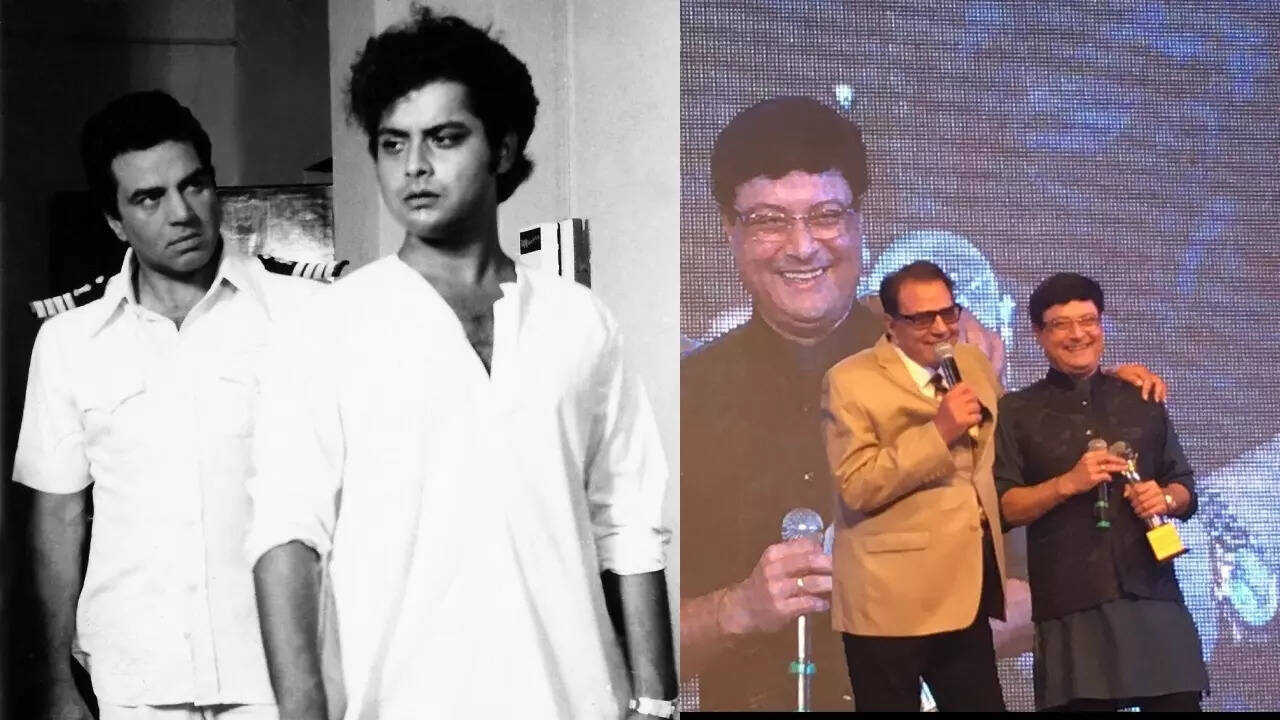
Fan club newsletters from decades ago described him as “the most beautiful man India has ever produced.” Many families kept his photo in albums reserved only for gods and relatives. For women he was the safe fantasy; the ideal boyfriend for men. When Yamla Pagla Deewana hit theaters decades after its heyday, nostalgia erupted in theaters across North India. Grown men danced in the aisles and shouted, “Dharam paaji aa gaya! ”Sachin Pilgaonkar: “Dharam ji was not only the most handsome actor but also one of the most humble personalities I have ever met. The very first time I worked with him, I was just nine years old. It was for the film ‘Majhli Didi’ (1967) directed by Hrishikesh Mukherjee, where I played Meena Kumariji’s younger brother and Dharam ji played her husband.
Since Dharamji could never say no to Hrishida, he accepted the role even though it had limited significance. I remember seeing this incredibly handsome man on set, speaking gently and respectfully to not only his co-stars but also to every single technician on set. “Resham Ki Dori (1974), where I played the younger version of Dharam ji and acted together again, was followed by Sholay and later Dil Ka Heera, in which he played a customs officer and I played his younger brother. At this point we were already very familiar, and we also worked in “Krodhi”.
More Read
Years later, it was an honor and privilege to direct him in Aazmayish. As a director, I like all my actors but directing Dharam ji felt really special.” he added. “I would also like to share an anecdote from the late 90s. I had registered the film title “Yamla Pagla Deewana” with IMPPA (Indian Motion Picture Producers Association). One day a producer called me and asked for the title, but I declined. A few days later I received a call from Dharam ji himself.
I asked him, “How are you, Dharam ji?” He spoke with such gentleness and warmth. Then he said, “Sachin, I wanted to ask you something…you have a film title ‘Yamla Pagla Deewana’ with you.”
‘ I replied, ‘No, I don’t have it.’ Dharam ji laughed softly and said, “But the producer told me that you rejected it.” I told him, “It was just mine until you asked.” Now it’s no longer mine – it’s yours.” I asked him if he needed anything else. Because what can we give back to a man who gave so much to Indian cinema? His legacy will always remain,” concludes Sachin.
Aruna Irani: “We worked in many films. The death of Dharm ji is the saddest news that Indian cinema can receive. I am at a loss for words. He was fun-loving, and no moment with him was dull. He always spoke softly and lovingly…he often said, ‘Bahut pyaari hai tu.’ Whenever there was a break on set, we played cards together. “Kabhi zyada nahi jit-te the woh – he was never particularly good at it,” he laughed. “Dharam Ji was actually pretty bad at cards, but we had so much fun.
Ranjeet ji won most of the time. A gentle, loving person. His loss is irreplaceable.”
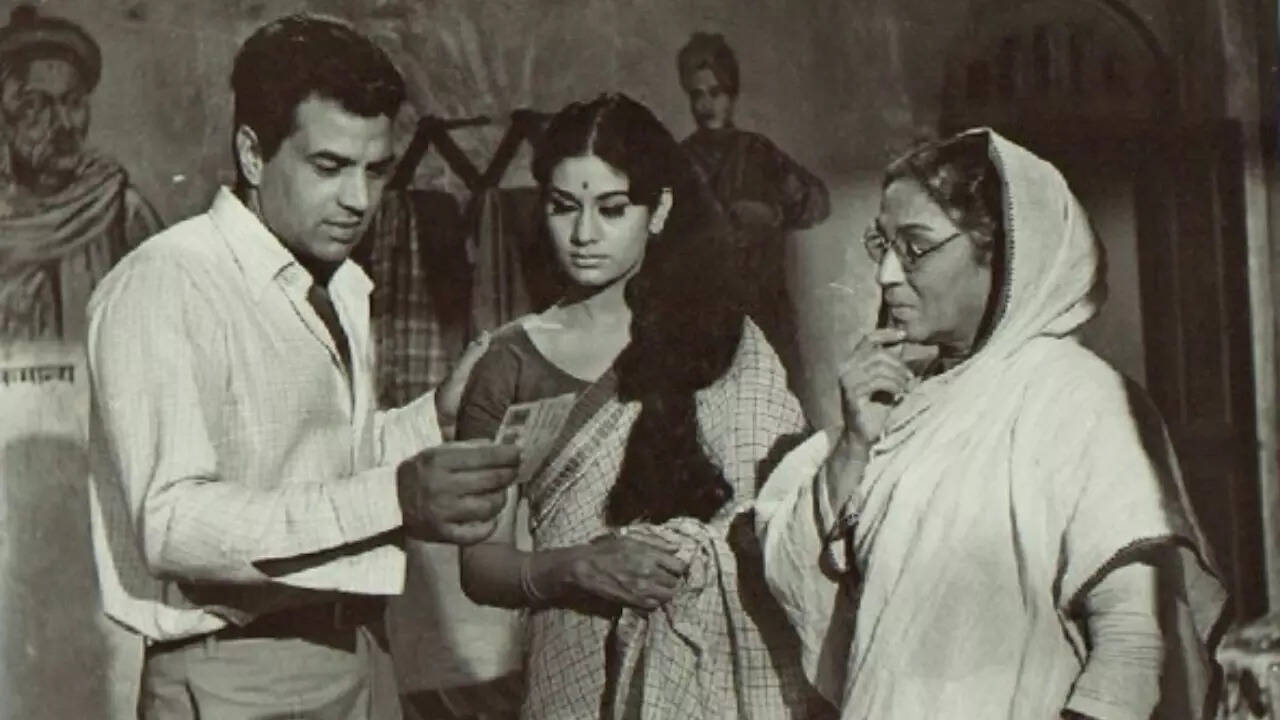
R. Balki calls Dharmendra a “great personality”
Filmmaker R Balki said, “He was an IMAX man, even when the screen was far less than 70 mm. Truly a great personality!!!”

The romantic hero who redefined beauty
In the early 1960s, Dharmendra emerged as the new face of romance. Films like Anpadh, Bandini, and Aye Din Bahar Ke made him the poster child of gentle, dignified love. His eyes did half the acting; his silence spoke louder than dialogue; His screen presence even made the Si
Get the latest updates on Global India Broadcast News your trusted digital destination for breaking headlines, entertainment buzz, lifestyle trends, health and fitness tips, technology insights, business developments, political updates, world news, and exclusive interviews from India and around the globe.