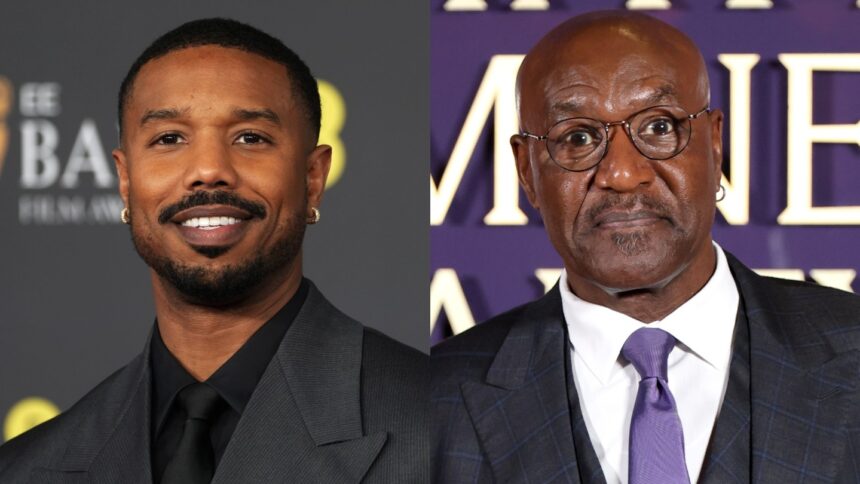
BAFTA has issued a full apology after a man with Tourette’s Syndrome shouted racial slurs at Michael B. Jordan and Delroy Lindo as they presented the Best Visual Effects award on Sunday night.
“Our guests heard extremely offensive language that carries unparalleled trauma and pain for many,” the statement began. “We want to acknowledge the damage this has caused, address what happened and apologize to everyone.”
Headlines of Britain’s biggest cinema night focused on the traumatic moment when John Davidson, a Tourette’s campaigner, was heard shouting the “N” word at a Tourette’s campaigner. Sinners Michael B. Jordan and Delroy Lindo take to the stage to present the BAFTA Film Awards. The BBC apologized for the “strong and offensive language” and for not removing racist language from its latest broadcast, which was broadcast after a two-hour delay.
Davidson is the inspiration behind Kirk Jones’ BAFTA nomination I swear. The film follows a man, played by Robert Aramayo — who, in a real surprise, won Best Actor for his performance in the film opposite the likes of Leonardo DiCaprio and Timothée Chalamet — through his struggle with Tourette Syndrome. The condition is characterized by sudden, involuntary, repetitive movements or sounds, called “tics.” It can manifest itself in the form of loud expletives or other outbursts, which BAFTA attendees were warned about before the show on Sunday night.
The Scot left the room about 25 minutes after the show started (of his own volition, Hollywood Reporter understand), after various outbursts, including slurs and “shut up” when BAFTA chair Sarah Bott made her introductory remarks. Hollywood Reporter I delved into how events unfolded on the night here.
Following a series of online backlash over Davidson’s seizures and negative press attention surrounding the neurological condition, British charity Tourette’s Foundation issued a statement on Instagram in defense of the activist, stressing that his statements were “not a reflection of a person’s beliefs, intentions or character.” “The backlash from certain parts of the media has been extremely sad, especially considering how hard John works to raise awareness and understanding,” they wrote.
After hours of silence until Monday, BAFTA asked THR To run their statement on the matter in full. see below.
At last night’s BAFTA Film Awards, our guests heard deeply offensive language that carried unparalleled trauma and pain for many. We want to acknowledge the damage this has caused, address what happened and apologize to everyone.
One of our guests, John Davidson MBE, suffers from Tourette’s Syndrome and has dedicated his life to educating and campaigning for a better understanding of the condition. Tourette syndrome causes involuntary verbal tics, which the individual cannot control. Such tics in no way reflect the individual’s beliefs and are not intentional. John Davidson is the executive producer of the BAFTA Award-nominated film, I Swear, which is based on his own life experience.
We take our duty of care to all of our guests seriously and start from a position of inclusion. We took measures to make attendees aware of tics, and announced to the audience before and throughout the concert that John was in the room and that they might hear strong language, sounds, or tics during the concert.
Early in the party, several people in the room heard a loud noise in the form of a very offensive term. Michael B. Jordan and Delroy Lindo were on stage at the time, and we apologize to them and everyone affected unreservedly. We would like to thank Michael and Delroy for their incredible dignity and professionalism.
During the ceremony, John chose to leave the room and watch the rest of the ceremony from a screen, and we would like to thank him for his dignity and consideration for others, on what should have been a night of celebration for him.
We take full responsibility for putting our guests in a very difficult situation and apologize to everyone. We will learn from this, and keep inclusion at the core of everything we do, while maintaining our belief in film and storytelling as an important channel for compassion and empathy.