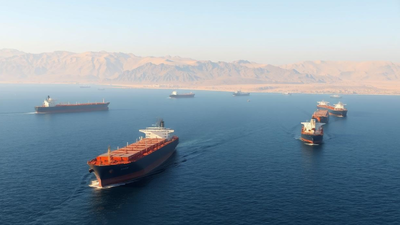
As the war in the Middle East has continued for more than a month, energy prices have risen sharply, sending ripples around the world. Iran’s control of the Strait of Hormuz has led to higher fuel costs, harming energy supplies to major economies.
The impact is visible across multiple sectors in India, where rising costs of fuel and petrochemical products fuel daily operations. From infrastructure projects to aviation and hospitality, industries are being forced to adapt to the rapidly changing cost environment. The impact is evident through higher project expenses, increased operating costs and increased pressure on margins. While some sectors are absorbing part of the burden, others are considering reviewing rates or recalibrating plans, highlighting the extent to which energy costs influence business decisions.
He watches
Amid tensions in Strait of Hormuz, Iran calls India a ‘cherished partner’ as ships transit safely
Infrastructure
Rising bitumen prices and fuel shortages have led to higher road construction and maintenance costs in Himachal Pradesh, with costs per kilometer increasing across projects, and maintenance expenses also rising. The state estimates the cumulative burden at around Rs 100 crore and is exploring funding support and project modifications while maintaining quality.“Shortage of light diesel oil and bitumen will impact road construction costs and construction costs,” Public Works Minister Vikramaditya Singh said.
“There is no doubt that global inflation is impacting India as well. Rising prices of LPG, petrol, diesel and other petrochemical products have directly impacted bitumen and hence road construction costs,” he added.“We may postpone some goals depending on the international situation, but we will ensure that quality standards are maintained,” Singh said.
Aviation
Aviation turbine fuel prices have risen sharply, with prices crossing Rs 2 lakh per kiloliter for some carriers.
While domestic airlines were partially protected by a staggering increase, costs continued to rise, putting further pressure on an industry where fuel accounts for about 40% of operating expenses.“Due to the closure of the Strait of Hormuz and the exceptional situation in global energy markets, the price of ATF in local markets was expected to rise by more than 100% on April 1,” the Ministry of Oil and Natural Gas said.“In order to insulate domestic travel costs from the significant increase in international prices, the PSUs under the Ministry of Petroleum, in consultation with the Ministry of Civil Aviation, have passed on only a partial and intermittent increase of 25% (just Rs 15 per litre) to airlines. Foreign routes will pay the full increase in ATF fares in line with what they pay in other parts of the world.
“Civil Aviation Minister Rammohan Naidu Kinjarapu said: “This thoughtful approach will help protect passengers from sharp price increases, ease the burden on domestic airlines, and support the continued stability of the aviation sector at this critical juncture. It will also benefit the broader economy by ensuring the smooth movement of goods and maintaining vital air connectivity for trade and logistics.”
hospitality
Rising commercial LPG prices have added to the challenges faced by hotels and restaurants, where operating costs have already risen by about 20% amid the conflict in West Asia.
As turnover declines and expenses rise, organizations are now considering increasing menu prices to offset increasing financial pressures.“The recent rise in commercial LPG cylinder prices has added another layer of pressure on already compressed margins. Given this scenario, hospitality establishments may now have no choice but to consider an upward revision of menu prices to partially absorb the escalating cost burden,” HRAWI spokesperson Pradeep Shetty said.
reconnaissance
How do you feel about the potential rise in the number of projects postponed due to rising costs?
At the same time, the government has repeatedly emphasized that the country has sufficient energy supplies. Earlier this week, the Center said there was no shortage of LPG in the country and that it was prioritizing pipelined natural gas, adding that it had adequate supplies of diesel and petrol.