

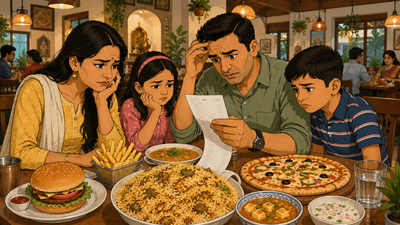
Your biryani, burger or that delicious dessert may soon cost you quite a bit. As fuel prices rise, restaurants and delivery apps in India are gearing up to make food prices 5-10% higher from next week, as an industry already reeling from LPG shortages, rising gas costs and staff stress add another cost to the list.With concerns about LPG supplies already putting pressure on the food industry, restaurants and delivery platforms are now bracing for another blow. After fuel prices rose on Friday, food prices are expected to rise by 5-10% from next week as businesses grapple with rising costs. The hike in petrol and diesel prices by state-run oil companies is likely to lead to higher menu prices, delivery charges and overall food costs, industry executives said, citing ET.
For many restaurant chains, the increase now seems inevitable.“Rising fuel prices will lead to an increase in transportation, packaging, material and input costs; we are left with no option but to increase prices,” said Vikrant Batra, founder of Delhi Heights Café, which runs 50 outlets in 17 cities.“The ripple effect is that the cost of living for our employees will also go up.” These price increases come as the conflict in the Middle East has continued for more than 75 days, causing global crude oil prices to rise from about $70 to more than $100 per barrel.
Since the United States and Israel launched joint strikes on Iran, Tehran has tightened its grip on the vital Strait of Hormuz, a key route for the world’s oil, choking off energy supplies, disrupting markets and sending fuel prices sharply higher around the world.
Restaurants are rethinking their annual rate plans
While some brands are expected to start reviewing prices within days, others are planning a gradual increase throughout June and July.The timing has disrupted the usual pricing cycle for many operators.
Restaurant companies, which often review prices annually around September, are now forced to act early, said Sagar Daryani, president of the National Restaurant Association of India (NRAI).Daryani, one of the founders of Wow! Momo.The latest fuel revision is the first major hike in nearly four years, raising petrol prices in Delhi to Rs 97.77 a litre, and diesel to Rs 90.67.
The impact extends beyond fuel tanks, affecting transportation, supply chains, packaging materials and food inputs, industry executives said.Restaurants, many of which are already dealing with nearly 60% higher LPG costs, say there is little room left to absorb further shocks internally.“I don’t think the market has the capacity to withstand further shocks,” said Saurabh Khanejo, managing director of the Killin restaurant chain.
“We’ll have to see how much impact we can make; our raw material costs will go up.”
Delivery costs, discounts and dining out are all under pressure
For food delivery platforms, rising logistics costs are expected to reshape customer spending patterns as well. According to a senior executive at a leading delivery company, consumers may soon face higher delivery fees, lower discounts and lower minimum order amounts.At the same time, Prime Minister Narendra Modi’s call for work from home has created a divisive impact across the sector.
While more households staying home could support demand for delivery, restaurant operators said dining out, especially office lunches and Friday group outings, would likely suffer.“Morale was low after the Prime Minister’s announcement on work from home,” Khanijo said.Industry leaders also cited concerns over potential increases in commissions or channel partner fees from delivery platforms like Zomato and Swiggy, warning that such a move would further complicate efforts to balance margins without raising consumer prices sharply.
Can restaurants absorb heat?
Despite the pressures, many operators remain cautious about aggressive increases, aware that consumers are already battling inflation across core categories.“Although some gradual price corrections across dining out and demand in May become inevitable if the situation persists, I believe many responsible restaurant brands will first try to absorb a significant portion of the impact through operational efficiencies, tighter cost controls and alternative energy solutions rather than immediately passing it on to guests,” Zorawar Kalra, managing director, Massive Restaurants, told ET.“However, some consumers can expect certain price increases especially at smaller players and those with thin profit margins.”Restaurant owners say survival now depends on a careful pricing strategy rather than sudden changes.“We can’t do this overnight. We’re going to have to do menu engineering in a way that helps us stay competitive and in a way that doesn’t put too much pressure on consumers,” Batra said.
The size of the crisis
Data from an internal NRAI survey has highlighted the depth of the crisis. Of its more than 500,000 members, 10% of restaurants closed temporarily last month, while 60-70% switched to induction or alternative fuels, shortening menus or reducing opening hours as LPG shortages pushed many towards buying on the black market at inflated prices.Using 2024 as a baseline, the association estimates that the sector could face losses of Rs 2,650 crore per day and Rs 79,000 crore per month this year.“Inconsistent service (menu reductions, delays, reduced hours) led to decreased frequency of visits, discretionary spending, and decreased frequency of dining,” the survey said.The pressure is not limited to restaurants alone. Raw material costs are already rising, with milk prices rising after Amul and Mother Dairy raised their prices by Rs 2 a liter this week.Executives warned that higher transport costs would also likely push up the prices of vegetables, fruits and basic goods, pushing inflation deeper into household budgets.As fuel, logistics and raw material costs continue to rise, the impact is expected to trickle down from restaurant menus and delivery apps directly to kitchen tables across the country.