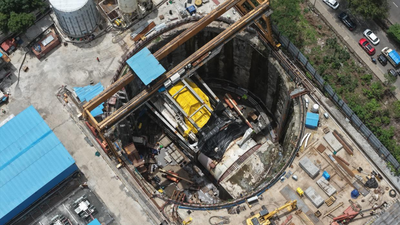
India’s first undersea railway tunnel moved a step closer to reality, as a giant tunnel boring machine (TBM) began its journey down Thane Creek on Saturday for the Mumbai-Ahmedabad bullet train project.
The launch of the second machine marks the beginning of excavation work on a 7-kilometre stretch under the sea, the first of its kind for any railway corridor in the country. The second tunnel boring machine has started digging tunnels from Sauli (Ghansoli) towards Vikhroli in Maharashtra. The subsea section forms part of a 10km tunnel, 7km of which is below Thane Creek.The Mumbai-Ahmedabad bullet train project includes a 21-km underground tunnel, of which 16 km between Sauli (Ghansoli) and Bandra Kurla Complex (BKC) will be dug using tunnel boring machines.
Work is already underway on another stretch after the first tunnel boring machine began its 6 km journey from Vikroli towards BKC on 5 July 2026. The remaining 5 km of the underground section has already been completed using the New Austrian Tunneling Method (NATM).
One of the largest tunnel boring machines in India
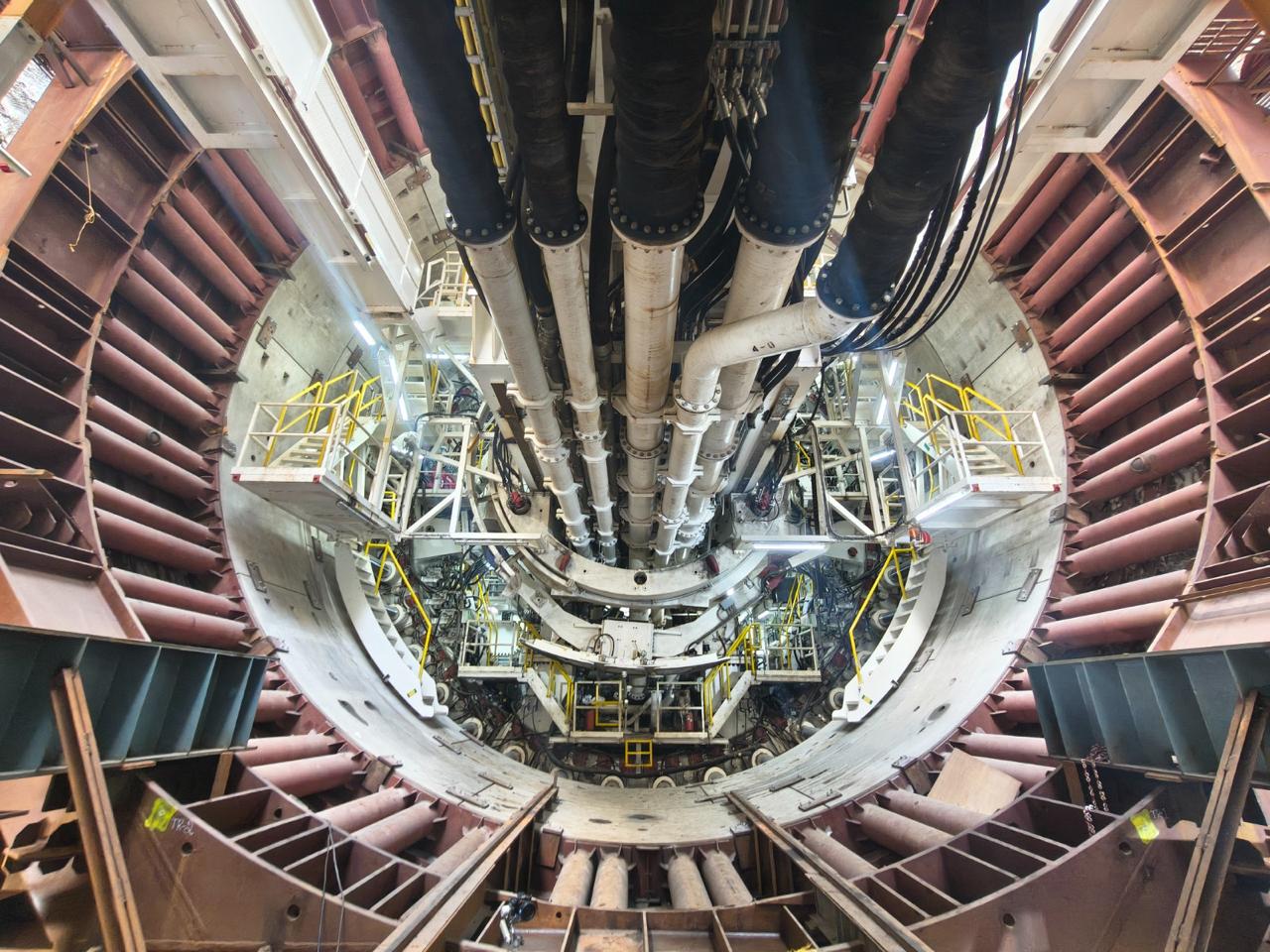
Designed to withstand tough ground conditions, the newly deployed machine is among the largest tunnel boring machines ever used in the construction of railway tunnels in India. The width of the machine’s head is 13.6 metres, which is approximately equivalent to the height of a four-storey building, while the machine weighs 3,200 tons, the equivalent of about 500 Asian elephants.
It is 96 meters long, which is approximately the length of a football field.The tunnel boring machine is equipped with a cutter head, main bearing, jaw crusher, installation tool, main shield, tail shield and four specialized gantry bridges that support tunneling operations. Configured as a Mixshield-type, semi-automatic, slurry-based machine, it uses a compressed bentonite slurry circle to stabilize the tunnel face during excavation. This technology was chosen for the Mumbai Suburban section as it provides better ground settlement control while reducing surface disturbance.It also features a semi-continuous advance (SCA) system, allowing tunneling and installation of section rings simultaneously. This allows for faster progress while maintaining safety during construction.
– A launch shaft with a depth of 39 metres
Launching the machine required the construction of a 39-metre-deep shaft at Sauli, roughly the depth of a 12-storey building below ground level. Since there is limited space inside the shaft, the TBM is lowered in separate sections.
The bridges were placed first and pushed into the already completed NATM tunnel, followed by the main shield and cutting head.Behind the machine, there are four double-deck spare bridges, each about 18 to 20 meters long, carrying systems such as the roller crusher, slurry pumps, hydraulic equipment, operator’s cabin, grouting systems, power units, emergency shelter rooms, workshop area, cable trays and hose reels.
Safety systems and waterproof design
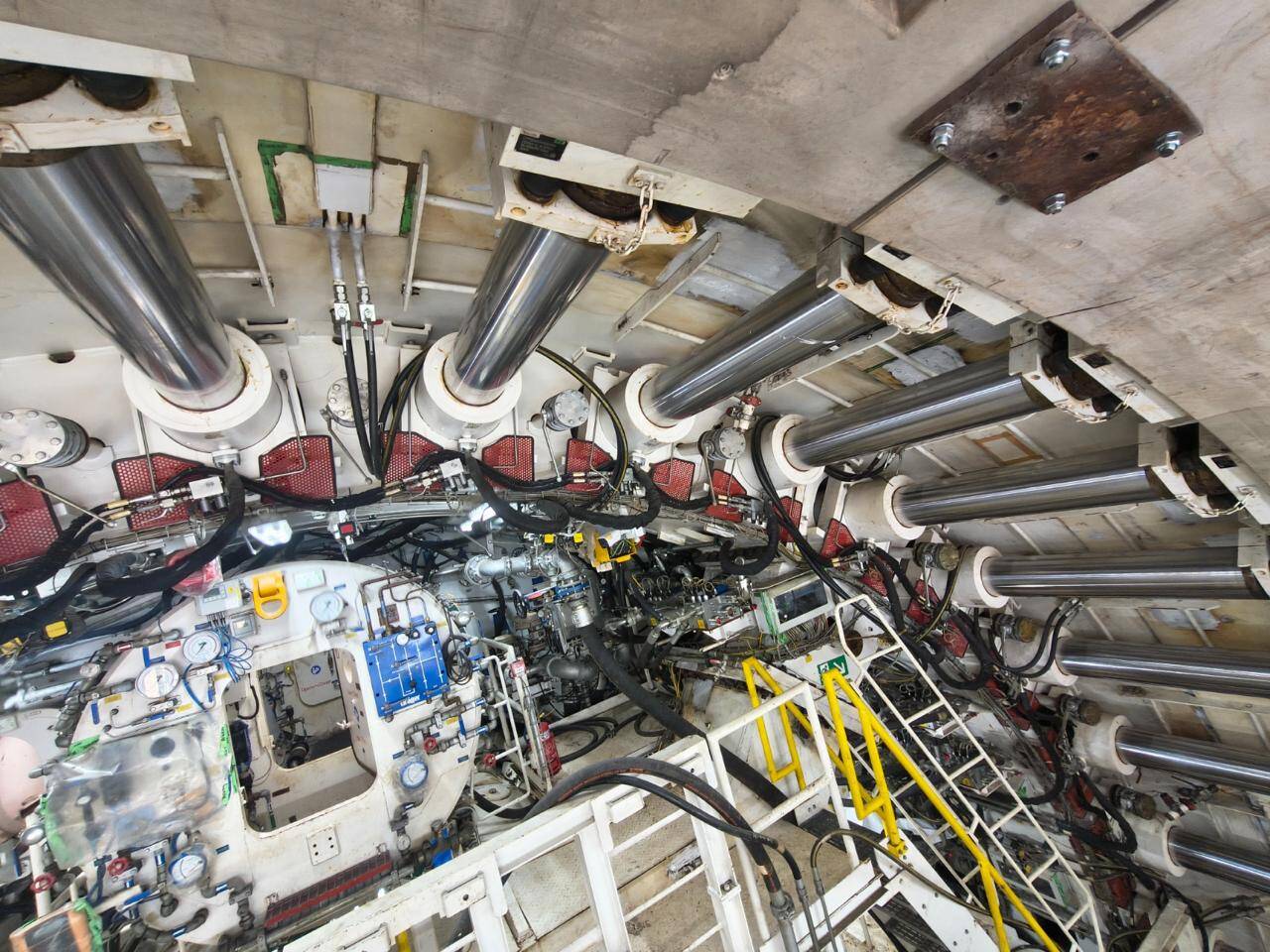
The TBM is equipped with a real-time multi-gas monitoring system to detect methane, oxygen, carbon monoxide and carbon dioxide. Fire safety measures include automatic fire detection and extinguishing systems, a secure water curtain and an active sprinkler network along the designated escape route.The launch shaft is supported by infrastructure including water treatment plant, slurry processing plant, bentonite storage tanks, dedicated power substation, standby generators, ready mix concrete plant, slurry conveying system, wastewater treatment plant and other logistics facilities.The project also includes a real-time monitoring system to track ground movement and protect nearby buildings. Instruments such as surface leveling points, optical displacement sensors, inclinometers, dual-reflection targets, strain gauges and seismometers are used throughout the excavation process.The tunnel being excavated using TBM machines is designed to be a completely waterproof structure. Continuous monitoring systems will track structural performance, groundwater behavior and overall building safety. To prevent water ingress, the tunnel lining will use double-layer ethylene propylene diene monomer (EPDM) gaskets along with hydrophilic sealants to ensure long-term durability and safety.