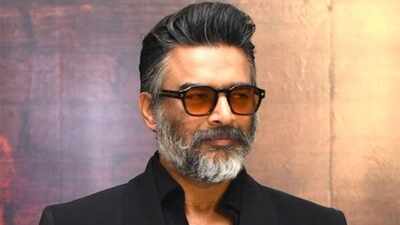
There was a moment in R Madhavan’s career, around his early 40s, when something changed radically. The actor, celebrated for his memorable performances in Alaipayuthey, Rang De Basanti and 3 Idiots, has not stopped working or signing films.
But the excitement that once drove him – the desire to immerse himself in stories and the excitement of heading to the sets every morning – has quietly disappeared.Looking back, Madhavan admitted the realization was unsettling. In an era when many actors reach the peak of their careers, he found himself operating on autopilot instead. Reflecting on that period, he said in a previous interview with Film Companion: “How do I get into cruise control in my early 40s? It wasn’t what I wanted.
There was a self-confidence that wasn’t the right kind of self-confidence.
There was a comfort zone that was actually making me disappear.What made the situation even more surprising was that he did not recognize the change himself. It was his wife, Sarita, who noticed that the spark had faded before he did. “There was a phase in my life where everything I did was met with general success. There was no exceptional recognition or leap,” he further recalls, before adding, “I lost my passion to get out of the house or think about a story at any point of time.
It was my wife who explained this to me.The actor explained that his increased comfort stems largely from financial security. By then, his earnings were no longer dependent on the success of his films. Brand endorsements, corporate appearances, public speaking, and other tasks have become reliable sources of income. As the financial pressures faded, the sense of urgency that had fueled his ambition began to fade.Determined to change that, Madhavan made a bold decision. He deliberately walked away from those lucrative commitments to force himself out of his comfort zone. Recalling that choice, he said: “I stopped that first. I said okay, I’m not doing anything now. I’m not going to do any more endorsements. Then I’ll see if I can get the hunger and insecurity back. I needed to get stressed out.”
“I needed to feel, ‘Oh my God, I’m going to lose this.’”Madhavan described the operation as a calculated risk rather than an emotional breakdown. Instead of waiting for the crisis to happen, he chose to confront himself first. As he explained: “I was smart enough to get into it before it happened on its own. I stripped away all the superficial layers and discovered my soul. And I really mean that, not in the philosophical sense. I mean it in the sense that I need to feel that nervousness again.”This decision marked the beginning of a difficult four-year period between 2011 and 2015, which he now considers one of the most transformative phases of his life. Reflecting on those years, Madhavan said, “That four-year phase taught me a lot. It was a real test of my life.”