


As the conflict in the Middle East continues to escalate, India is working to redirect crude oil supply chains to secure uninterrupted fuel imports. Oil sector officials and analysts said that Indian refiners are working to secure additional quantities of crude oil from the United States, Russia and West Africa to maintain adequate supplies if the conflict in the Middle East continues for a long time.
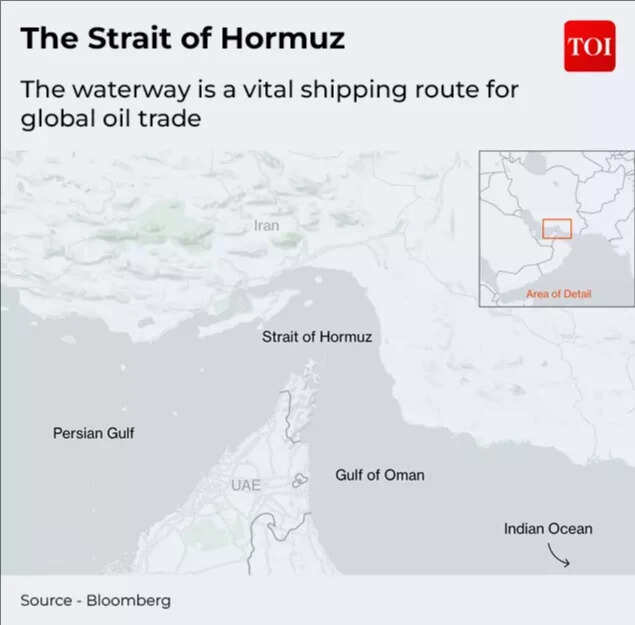
Refineries, which convert crude into gasoline, diesel and other fuels, have suspended planned maintenance operations and are operating at normal processing rates, and are building reserves to meet short-term demand to ensure domestic fuel needs are met.India’s oil basket depends on imports for about 88% of its crude, with nearly half of February’s supplies passing through the Strait of Hormuz, a narrow but vital sea route between Iran and Oman.
The recent military strikes launched by the United States and Israel on Iran, coupled with Tehran’s retaliatory attacks on US bases in neighboring countries and Israel, have sharply increased regional tensions, effectively halting tanker traffic through the strategic strait.
An Iranian Revolutionary Guard drone struck a Maltese-flagged oil ship in the Strait of Hormuz; A major oil choke point eruption in the world
A senior oil ministry official said: “Non-Strait sources are working at full capacity and we are getting more and more supplies from non-conflict areas.” Adding that non-strait sources, which represented 60% of supplies last year, rose to 70% after the conflict in the Middle East.
Diversifying the oil basket – Russia, West Africa and others
Indian refiners are increasingly importing crude oil from West Africa, Latin America and the United States. The US Treasury Department recently issued a 30-day waiver allowing the delivery of sanctioned Russian crude that has already been loaded on ships bound for India. The exemption, which is in effect until April 5, allows the sale, delivery or unloading of Russian-origin crude loaded on or before March 5, including ships subject to certain sanctions.Flows coming from RussiaIndustrial sources said that 120 million barrels of Russian crude are currently in the waters, including 15 million barrels near India in the Arabian Sea and the Bay of Bengal, and another 7 million barrels near Singapore.
Reliance Industries, Hindustan Petroleum Corporation Ltd and HPCL-Metal Energy Ltd have resumed buying Russian crude after halting imports following US sanctions on major producers Rosneft and Lukoil last year.Before the sanctions were imposed in October 2025, Reliance Industries was the largest buyer of Russian crude, importing more than 500,000 barrels per day under a long-term agreement with Rosneft.
The oil ministry official noted that India never stopped importing Russian crude completely, bringing in about 1.04 million barrels per day in February 2026, down from 1.6 to 1.8 million barrels per day in 2023-25.“We are in a very comfortable position in terms of crude oil and finished products,” he said, adding that India’s accumulated inventory can meet demand for 50 days. Onshore storage currently holds about 144 million barrels, enough for about 30 days at 2025 import levels, and supplies are constantly being replenished.India’s strategic petroleum reserves provide about 9.5 days of net import coverage, while state-run companies maintain crude oil and product inventories covering 64.5 days. Together, the total storage capacity equates to approximately 74 days of net imports.While India is already able to secure crude oil from alternative sources, analysts have warned that costs could rise due to higher prices, longer shipping routes, increased freight and higher insurance premiums.
International crude oil prices rose to more than $92 a barrel, up from about $70, after the United States and Israel struck Iran on February 28. LNG prices have doubled, reaching $24-25 per million British thermal units.
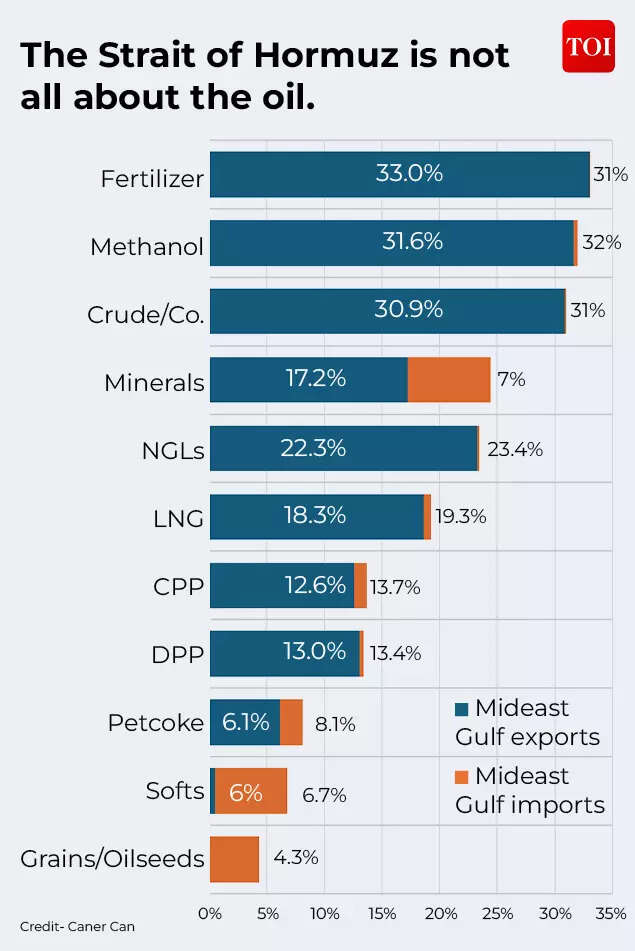
Import invoice in IndiaHigher import costs could widen India’s fiscal deficit or translate into price increases for consumers. Each $10 rise in crude oil prices could add 20 to 25 basis points to the CPI if passed, analysts said.India, the world’s third-largest importer of crude oil, depends on the Middle East for nearly half of its imports. In February 2026, India received 2.8 million barrels per day from Iraq, Saudi Arabia, the UAE, Kuwait and Qatar, representing 53% of total imports, while global flows through the Strait of Hormuz amounted to about 15 million barrels per day of crude and 5 million barrels per day of oil products in 2025.Exposure on the Hormuz route was about 41 percent in 2025, but has risen recently as Indian refiners reduce their purchases of Russian crude. Imports from Russia averaged 1.15 million bpd in the first two months of 2026, compared to about 1.7 million bpd in 2025.