The dispute between India and Nepal over Lipulekh Pass is once again making headlines. The latest comes after Nepal’s Prime Minister Balindra Shah said that the matter related to the border dispute will also be raised with the UK since the issue dates back to the British Raj in India.

The latest dispute over the corridor comes after India and China announced the 2026 Kailash Mansarovar Yatra, a pilgrimage to Mount Kailash and Lake Mansarovar in Tibet, as part of their renewed diplomatic relations.
Among the two routes used for this pilgrimage is the Lipulekh Pass in Uttarakhand. However, Nepal has staked its territorial claim over the corridor, saying it is part of Nepali territory.
Although the dispute dates back to 1816, even 210 years later, the matter is still a matter of dispute between neighboring countries.
What is the Lipulekh Pass?
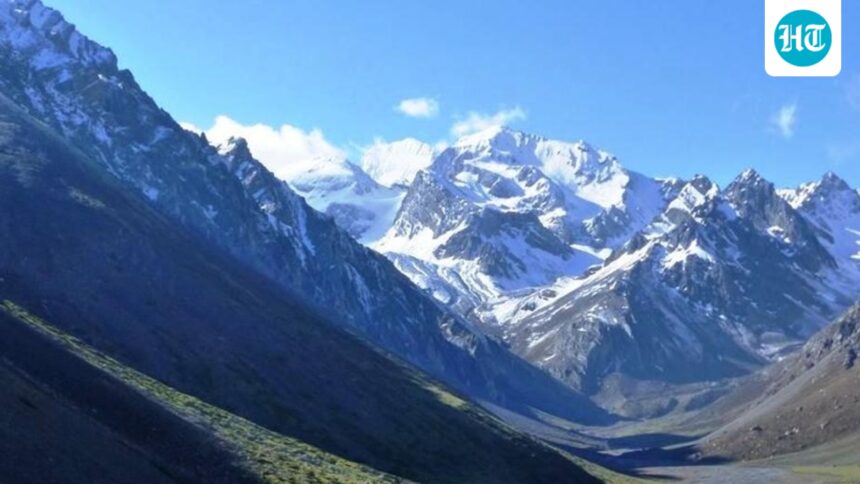
Lipulekh Pass is a Himalayan pass located at the intersection of India, Nepal and China. While the corridor passes through Tibet, due to Chinese rule in the autonomous region, it is considered part of China.
The corridor serves as a vital border for Indo-China trade and the Kailash Mansarovar Yatra pilgrimage. The pass is located at Kumaon in the Himalayas, and connects Uttarakhand with Porang (Taklakot) in Tibet.
What are territorial disputes?
The root cause of the dispute between India and Nepal over the corridor is over the exact source of the Kali River. Under the Treaty of Sogauli in 1816, the river forms a natural border between the two countries.
In an amendment made in 1865, the British in India moved the boundary near Lipulekh to the watershed of the Kalpani River, which would later be known as the Kalpani Territory.
Read also | ‘The problem belongs to British India’: Nepal joins UK and China amid dispute over Lipulekh Pass
After independence from the British, India inherited these areas and says Kalapani, Lipulekh and Limpiyadhura are part of the state of Uttarakhand. Moreover, India also claims owing to its control and administration of the region since the 1962 Indo-China War.
However, Nepal maintains that these areas lie to the east of the Kali River and therefore fall within its territory.
Key points of tension and how China gets into the mix
What exacerbates the dispute is that Nepal says that trade between India and China through this corridor often takes place without Nepal’s approval.
In 2015, India and China agreed to use Lipulekh for bilateral trade and the Kailash Mansarovar pilgrimage, sparking widespread protests in Nepal.
Five years later, in 2020, India inaugurated a newly constructed border road organization linking Darchula in Uttarakhand with Lipulekh to facilitate travel by pilgrims.
However, in response, Nepal updated its political map and constitution to include the disputed region as part of its territory.
India has strongly rejected the allegation and criticized Nepal for its “unilateral and unjustified actions”.
In 2025, tensions flared again after India and China renewed their diplomatic relations, which had been suspended due to the clash between Indian and Chinese forces in the Galwan Valley.
From 2026 onwards, India and China have announced the resumption of the Kailash Mansarovar Yatra, and Lipulekh Pass will be one of the major routes for pilgrims.
Nepal objected to this usage and lodged a formal protest with both India and China, stating that the route had been decided without consulting Nepal.