The Indian Foreign Ministry confirmed on Friday that New Delhi, not Beijing, is the party that has legitimate sovereign concerns about the occupation of the territories. This comes just days after Foreign Minister S Jaishankar met his Chinese counterpart Wang Yi in Manila.
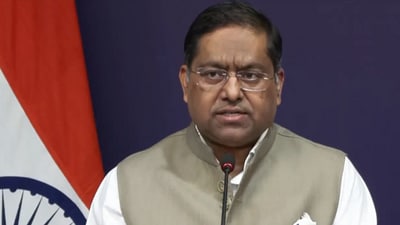
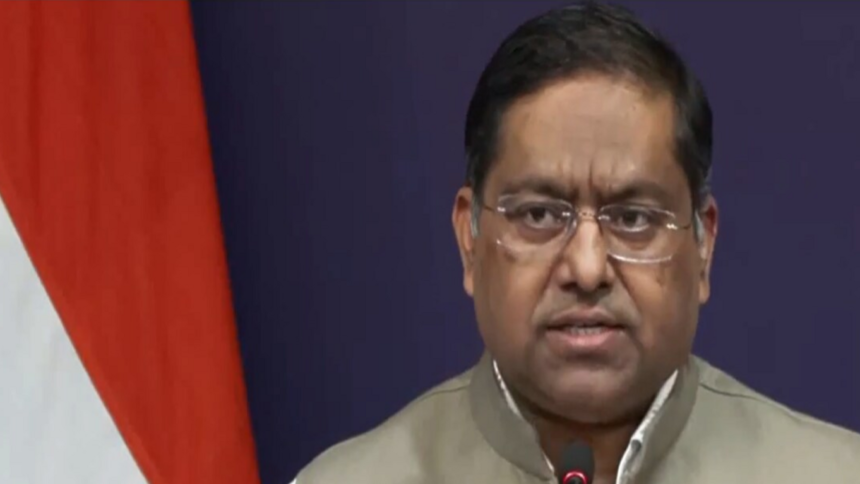
“When it comes to sovereignty issues, it is actually India that should be raising and raising them,” MEA spokesman Randhir Jaiswal said at a press conference, apparently in response to a question.
“India is not violating China’s sovereignty in any way and has been committed to doing so,” Jaiswal said.
He added that China has been “illegally occupying Indian territories in Jammu, Kashmir and Ladakh since 1963”, and that India’s right to do so is “officially recognized even by China”.
He added that the Chinese projects are located on land in Jammu and Kashmir that belongs to India, and “we object to that.”
This comes after Jaishankar’s meeting with Wang Yi on July 22 on the sidelines of the East Asia Summit and the Association of Southeast Asian Nations (ASEAN) Regional Forum in Manila, where the Indian minister, according to a report by Chinese official news agency Xinhua, said that India’s positions on Taiwan and Xizang have not changed and that India respects China’s sovereignty. It was reported that Jaishankar also described the normalization of relations, ongoing since the Narendra Modi-Xi Jinping meeting in October 2024 in Kazan, and reaffirmed in Tianjin last August, as a gradual process. He reportedly cited market access and trade balance as unresolved issues.
The statements of Middle East Airlines spokesman Jaiswal confirmed that the situation is not one-sided.
How India protested
New Delhi has repeatedly objected to the 1963 China-Pakistan Boundary Agreement, under which Pakistan ceded about 5,180 square kilometers to China — an agreement India called “illegal and invalid” and has never recognized.
MEA has separately objected to Chinese infrastructure activity in the region and to projects under the China-Pakistan Economic Corridor (CPEC), which it says passes through Indian territory under forced and illegal Pakistani occupation.
The Ministry of External Affairs also protested Beijing’s creation of new provinces in Xinjiang whose jurisdiction extends to parts of the Aksai Chin region in Ladakh, telling China through diplomatic channels that “India has never accepted China’s illegal occupation of Indian territory in this region.”
A separate row over China’s renaming of sites in Arunachal Pradesh as part of “Zangnan” emerged earlier this year, with the Middle East News Agency describing it as an attempt to manufacture “baseless narratives”.
What does China say?
Beijing’s position is that the Jammu and Kashmir issue is a “remnant of history” and must be resolved in accordance with the UN Charter and relevant Security Council resolutions. India insists that Jammu and Kashmir and Ladakh are “indivisible and inalienable” parts of India and no third country has standing to comment on it.
India and China are continuing gradual steps towards normalization, including the resumption of direct flights, an updated visa regime, the restart of the Kailash Manasarovar Yatra, and the renewal of border trade, even as the two sides continue to dispute over territorial claims along the Line of Actual Control and beyond.
The reset in relations occurred when the United States under Donald Trump took a fighting line and imposed massive trade tariffs on India, China and other countries.