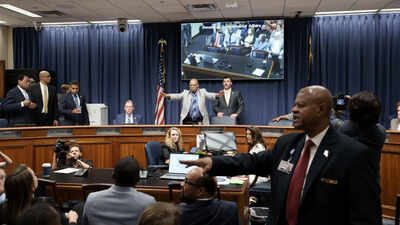
Baton Rouge, Louisiana: As a child, Leona Tate was one of… “new orleans four,” The first black students to desegregate a public school in the Deep South, they endured racist insults and death threats as armed U.S. marshals escorted them to class.On Friday, more than six decades later, Tate told Republican state lawmakers that their proposal to break up at least one majority-Black congressional district brought back horrific memories. “I want you to understand what it feels like to stand here, to walk through this mob as a kid, and to now watch elected officials do the same thing the mob was trying to do–only with better suits and parliamentary procedures,” She told a Senate committee hearing at the state Capitol in Baton Rouge.For more than eight hours, Black members of Congress, pastors, activists and voters gave testimony that was at times emotional, angry and deeply personal. Outside the hearing room, demonstrators cheered for them. “Let him talk!” they chanted at one point, after Republican Committee Chairman Caleb Kleinpeter cut off a fellow Democrat’s microphone in the middle of a fiery exchange.
Mike McClanahan, president of the state branch of the NAACP, the nation’s largest civil rights organization, was forcibly prevented from entering the room by security.
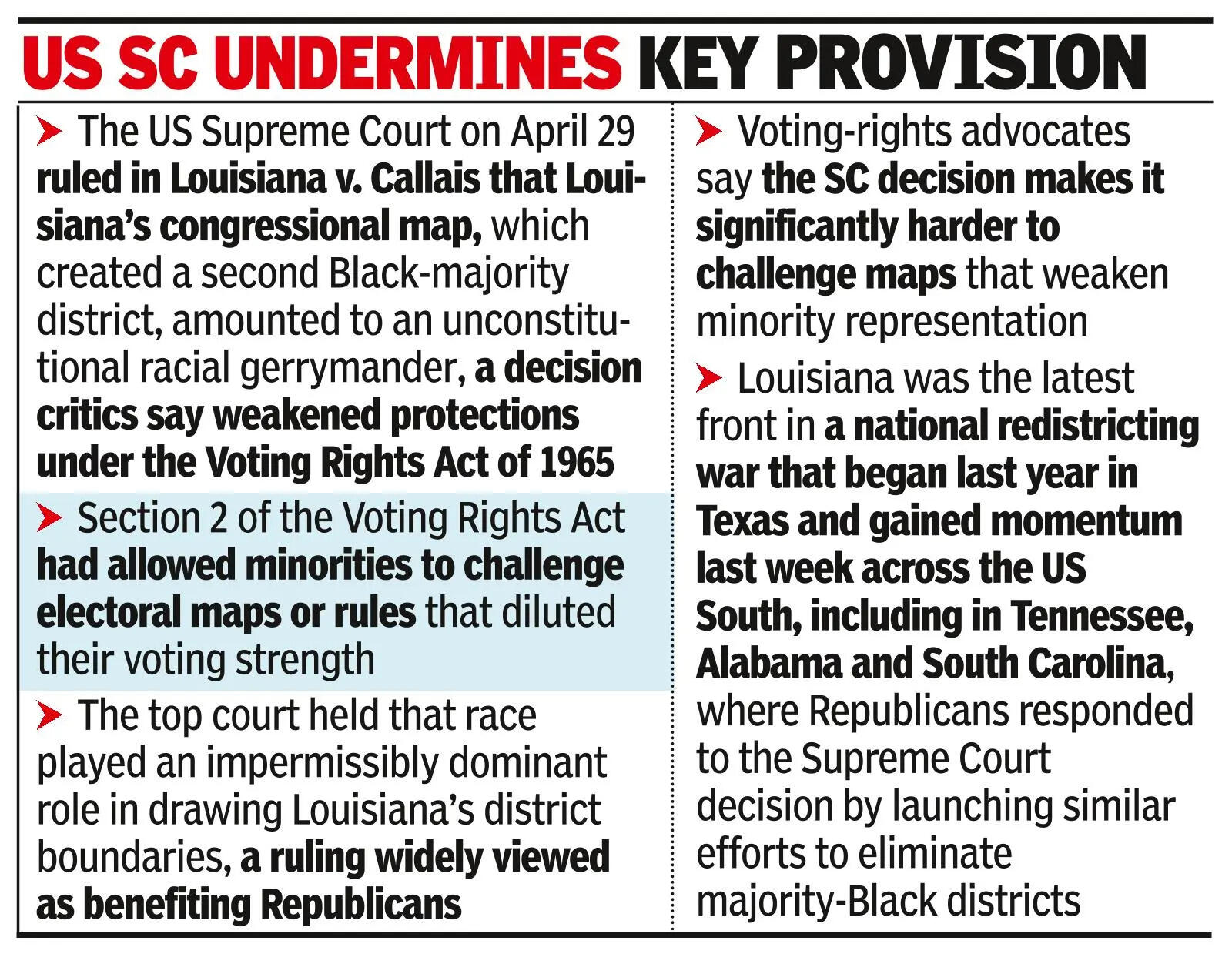
The tumultuous hearing reflected the electoral chaos sweeping Louisiana after a U.S. Supreme Court decision last week voided a landmark civil rights law, giving Republicans the opportunity to draw a new congressional map that erases one or both of the state’s two Democratic-controlled districts in the majority-Black state. Black voters make up a third of the electorate in Louisiana and typically support Democrats. Republicans already control the other four districts.The unprecedented national redistricting arms race that began last year, when President Trump pushed Texas Republicans to redraw the state’s congressional map and target five Democratic seats. With inputs from Reuters and The Associated Press