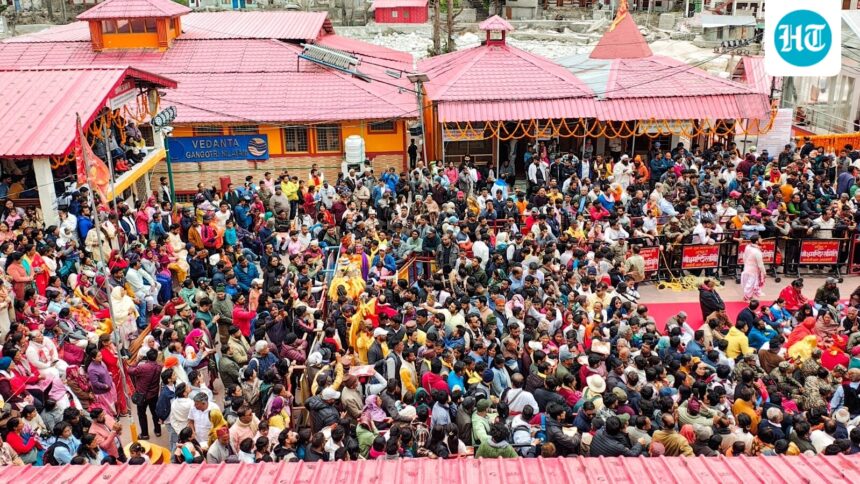
As the Char Dham Yatra begins in Uttarakhand, a ban has been imposed on the entry of non-Hindus, and they are allowed to do so only after adhering to certain rules. Among the various norms is the Gangotri Temple Committee’s decision stating that non-Hindus will be allowed entry if they take Panchgavya.

The consumption of Panchgavya, a mixture containing cow urine, will be mandatory for pilgrims entering the temple to affirm their commitment to Sanatan Dharma, the Gangotri Temple Committee said.
The Char Dham Yatra began on Friday with the opening of the gates of Yamunotri, Gangotri and Kedarnath Dham amid Vedic chants on the occasion of Akshay Tritiya.
What is Panchgavaya
Panchgavya is a mixture of cow’s milk, curd, cow urine, cow dung, and ghee – along with Ganga Jal.
Talking about Panchgavya, Yamunotri Temple Committee spokesperson Purshottam Unniyal had earlier told HT that according to Sanatan Dharam, no ritual is complete without serving Panchgavya to the devotees and we have been following this tradition since ages.
Citing the influx of people to the temple who have no connection with Sanatan Dharm, he said the move would allow “only tradition-adherent Santhists to be allowed to have darshan at the shrine.”
Read also: Char Dham row: Yamunotri considers ban on entry of non-Hindus, sparks legal controversy
Ban on non-Hindus
Earlier, on March 11, the Shri Badrinath Kedarnath Temple Committee (BKTC) had passed a proposal to ban entry of non-Hindus into Kedarnath and Badrinath temples.
The proposal was approved at the budget meeting of Shree Badrinath Kedarnath Temple Committee (BKTC) held under the chairmanship of BKTC president Hemant Dwivedi.
He said that traditionally temples were limited to this new decision, which gives them an official form.’
“Strict measures need to be taken to preserve the sanctity of Devbhoomi and its holy shrines, so that the basic character of the state remains intact,” Dwivedi said.
Also Read: Char Dham Yatra: Safety measures tightened after helicopter accidents last year
Yamnotri Samiti follows the ‘athithi devo bhava’ approach.
While the Gangotri Committee has announced a Panchgavya rule and the Badrinath Kedarnath Committee is seeking an affidavit from visitors declaring their faith, the Yamunotri Temple Committee has decided to take a different route.
He has decided to welcome all devotees irrespective of caste or religion, adhering to the tradition of ‘Atithi Devo Bhava’.
The Char Dham Yatra, which includes Badrinath, Kedarnath, Gangotri and Yamunotri, is a sacred pilgrimage for Hindus.