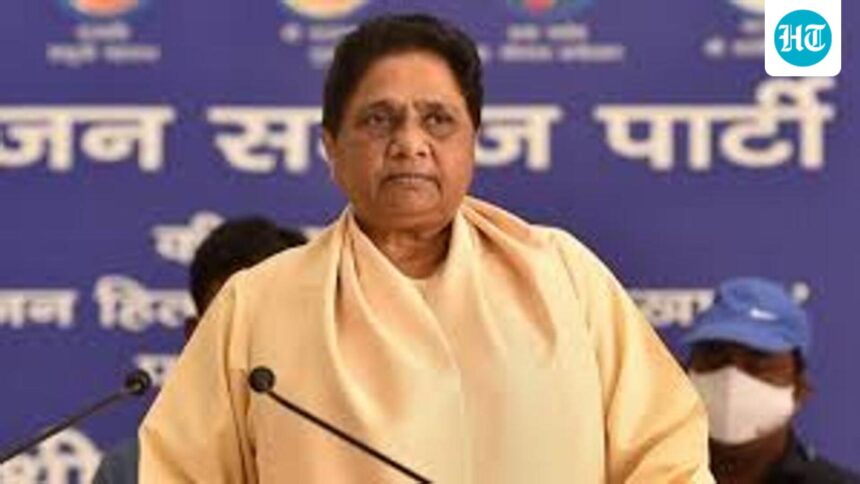
In her memoir, “Sangharshmayi Evam Bahujan Ka Savarnama Movement,” former Uttar Pradesh Chief Minister Mayawati described the Bahujan Samaj Party (BSP) as a symbol of the dignity of the Bahujan Samaj, or Scheduled Castes, Scheduled Tribes, Other Backward Classes, and religious minorities who constitute more than 75% of the population. Mayawati quotes intellectuals and says she has achieved a position in Indian politics that her rivals can criticize or condemn, but can never ignore.

Mayawati remains highly relevant, even as the BJP’s support base has eroded significantly. The BSP won just one seat in the 403-member Uttar Pradesh Assembly in 2022. The BSP has no seats in Parliament. But Mayawati remains a prominent leader of Dalits, specifically Jatavs, who are expected to play a crucial role in determining the outcome of the 2027 Assembly elections in Uttar Pradesh. Dalits represent 21% of the state’s population and have hundreds of subcastes, with Jatavs being the largest group.
Opponents are trying to keep Mayawati in good humor, given her control over the important vote bank. The ruling Bharatiya Janata Party avoids criticizing her. The Samajwadi Party (SP) and the Congress continue to seek cordial relations. Mayawati does not spare the opposition, and remains lenient with the BJP, as the parties intensify efforts to attract Dalit votes in the run-up to the 2027 elections.
Ambedkar Jayanti, which celebrates the birth anniversary of Dalit icon Bhimrao Ambedkar on April 14, is the day when political parties show their commitment to Dalits. But symbolic gestures often remind Dalits of their status on a day when they want to celebrate and assert their identity with pride.
April is the most auspicious month for Dalits as they remember Ambedkar. Their feeling is: “We exist and live a good life because of him.” Ambedkar Jayanti is a festival for them like Diwali and Holi. Celebrations take place from Parliament to villages and include seminars, lighting of lamps in homes, distribution of sweets and processions. These celebrations increased in splendor and participation. They are held in universities and villages, and cut across classes, rich and poor, educated and illiterate, young and old.
Bhimwadi, or songs dedicated to Ambedkar, include “Saiyan Neela Sadi Laida, Jaongi Sansad Mele Mein” (Get a blue sari because I am going to the gallery in Parliament) and “Kab Tak Rehbaa Ghulam Mere Bahujan” (How Long Will You Be a Slave) are played across the state throughout the month of April.
In Hapur in western Uttar Pradesh, women hold candlelight processions, which culminate at statues of Ambedkar. Other castes and communities have begun to celebrate Ambedkar, as awareness of his contribution has increased in recent years.
Dalits want more than just talk, as quotas remain their main concern. They have demanded inclusion of reservations in the Ninth Schedule of the Constitution to protect them from judicial review, introduction of quotas in the private sector and the army, and stricter law to end discrimination and violence.
The Kalyan Singh-led BJP government’s attempt to dilute the Scheduled Castes and Scheduled Tribes (Prevention of Atrocities) Act, and then Chief Minister Mulayam’s move to abolish quotas in promotions, continue to cast a heavy shadow, making Dalits wary of the initiatives. They fear constitutional changes that could deprive them of quotas. But the BSP’s loss of territory has also forced them to look for options.
At the same time, the literary movement that had contributed to the political empowerment of Dalits also began to fade away. In the 1980s, a silent literary revolution swept northern India, belying the widespread perception that Dalits were oppressed and illiterate. This revolution gave a voice to the Dalits and made them a political force to reckon with.
Since the 1980s, as many as 1,500 Dalit writers have written popular books and pamphlets. Dalit publishers have mushroomed. Books and brochures at prices from $2 l $50 was in constant demand. Writers range from former governors to bureaucrats and professionals.
Dalit literature is about freedom of thought, equality, justice and brotherhood, said Guru Prasad Madan, a lawyer and social activist who has authored several pamphlets. BSP founder Kanshi Ram wrote pamphlets that he read to masses in Pune. Mayawati wrote three volumes on the Bahujan movement and its struggle, which contributed to raising political awareness among Dalits making it difficult for political parties to take these matters seriously.