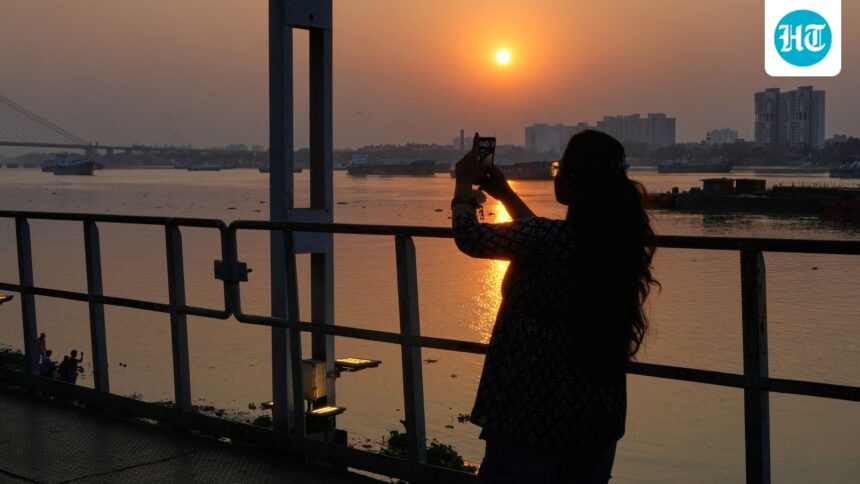
James Wilson arrived in Calcutta, then the capital of British India, in 1859. The founder of The Economist was “expressly sent from England to restore order in the financial affairs of India at a period of disastrous confusion”. He delivered the Crown Colony’s first budget, introduced an income tax system and then promptly fell dead, as his epitaph says, “the combined effects of climate anxiety and action”.

Since the Wilson era, the city has lost its capital status (in 1911), half of its Bengali hinterland (to Partition, in 1947) and its English name (to linguistic decolonization, in 2001). What it has earned is the claim of being the most liveable metropolis in India. Rents and house prices are the lowest among the largest cities in India. As well as high quality school fees and good healthcare. A rich tradition of art, music and literature supports its self-proclaimed status as the country’s cultural capital, which is liberal on matters of religion and gender relations. With a population of approximately 23 million, it is the second largest city in India, after Delhi.
They are served by cheap, diverse and expanding public transportation. A network of elevated roads was constructed to connect remote parts of the city. The streets below are bustling with commerce and chaos, but it’s still far from the gridlock that Bangalore experiences on the gold standard. The chain of cafés is joined by trendy cocktail bars and upscale restaurants. New high-rise hotels and luxury apartments add a touch of Mumbai-style glamor to the skyline, while grand old mansions are being renovated to serve as Airbnbs.
Much of the city’s improvement can be attributed to Mamata Banerjee, who as chief minister has led West Bengal, of which Kolkata is the capital, since 2011. Run by communists for the past 34 years, it has become notorious for labor unrest and hostility to business. Ms. Banerjee modernized the city and introduced social welfare schemes for minorities, women and the poor. This combination of low prices and charity made Kolkata the best large Indian city for the poor or middle class to live in.
But it is less welcoming to those with greater ambitions. Under Ms Banerjee, West Bengal’s share of the national output has continued to decline. There are few white collar jobs. Talented young Bengalis are leaving in droves. Graduates from the rest of India rarely move there. Population growth is the slowest among the five largest cities in India. That Kolkata has stopped offering direct flights to London is particularly painful for the English elite.
Ms Banerjee has no vision for the economy, complains one nobleman. Its government does not discourage business, but it also does not compete with countries that roll out the red carpet for investors. In recent years, more than half of all foreign direct investment has flowed into Maharashtra and Karnataka, home to Mumbai and Bangalore. West Bengal attracted less than 1%. “You can’t give a lot without gaining a lot,” says one local economist.
If Kolkata still seems prosperous, it is because of its virtual status as the commercial capital of India’s vast and deprived eastern region. It is a historic trading centre, a gateway to the remote northeast, and a magnet for migrants from neighboring Bihar and Jharkhand, two of India’s poorest states. The post-pandemic rise of working from home has attracted a small number of white-collar returnees. Consulting and IT services companies are working to strengthen their branch offices. But judging by its potential, Kolkata suffers from chronic underachievement. This is a tragedy not only for the city and its state, but also for the surrounding region.
This month, Ms Banerjee will ask Bengalis to grant her a fourth term. State elections in India are rarely predictable, and the outcome this time is even more uncertain after revisions to voter lists included nine million names, or nearly 12%, of voters. Voters face a difficult choice. Narendra Modi’s Bharatiya Janata Party promises to prioritize development, but will also break down religious tolerance in the state with its divisive Hindu nationalist agenda. Ms. Banerjee offers more of the same: Bengali pride, charity, and a personality-driven politics that puts even Mr. Modi in the shadows.
If Wilson returned to Kolkata today, he would also find it a convenient place to live (literally, in his case). But he might look at Mumbai, Delhi and Bangalore, collapsing under the weight of population, pollution and construction, and conclude that their problems are symptoms of rapid growth. On the other hand, Kolkata’s glamor is a sign of its stagnation.