It’s a tale as old as time: Are you a corporate titan, unhappy with the way you or your company is portrayed in the world of public opinion? Good news: you can buy media.
For a company as bad as the media, big companies sure are obsessed with it. There may be signs that a new class of trash media owners is in the making.
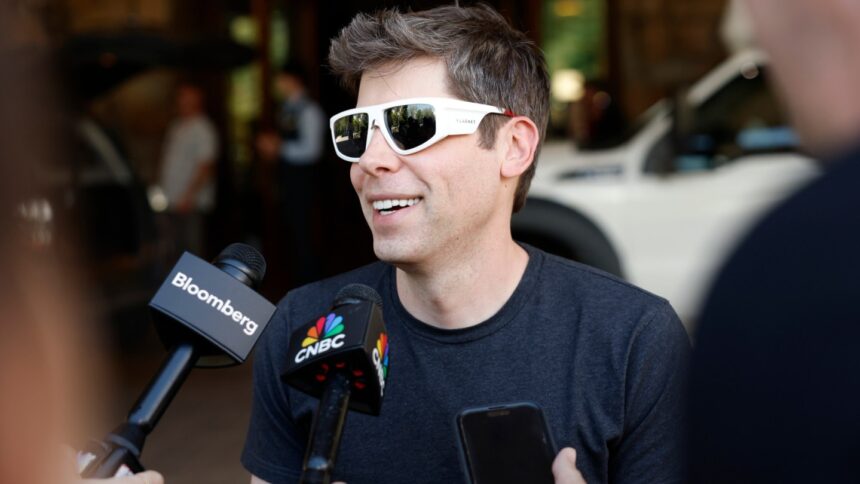
On Thursday, OpenAI took over the hot tech talk show TBBNwhich is broadcast live on YouTube, X and other platforms. Sam Altman, CEO of OpenAI, made no secret of why his company made the deal: “TBBN It is my favorite technology program. “We want them to keep it up and do what they do well,” he posted on X. “I don’t expect them to take it easy on us, I’m sure I will do my part to help enable that through sometimes stupid decisions.”
Fidji Simo, CEO of OpenAI Applications, told employees at the company TBBN Founders Geordie Hayes and John Cogan will advise OpenAI on communications and marketing. “With the mission of bringing AGI to the world comes a responsibility to help create a space for real, constructive conversation about the changes AI creates — with the builders and people using the technology at the center,” Simo wrote.
Media coverage of OpenAI isn’t constructive, so let’s buy one that will be.
Once again, the most powerful people in the world want a share of the media business. Oracle giant Larry Ellison is backing his son David’s $111 billion acquisition of CNN’s owner, Warner Bros. Discovery, after previously backing its acquisition of CBS News’ owner Paramount last year. On a smaller scale, the younger Ellison looked to Substack entrepreneur Bari Weiss and saw a nine-figure deal to pounce on the libertarian outlet, The Free Press, to push CBS into a new era.
JPMorgan Chase CEO Jamie Dimon told Axios this week that he wants to start a media business, citing poor coverage of important areas as the source of much bad politics.
He said: “I think the media is very important. The media knows everyone. The media is the big influencer.”
Industry giants are joined by fellow travelers like Elon Musk, who frequently criticizes mainstream media, encouraging his followers to “share X links” with their friends and family instead; And of course President Trump, who has made the media a near-daily target of his ire, even as he maintains his reputation as someone easily accessible to the same media.
Giant corporations have a long and complex interest in media. After all, Coca-Cola was owned by Columbia Pictures; Gulf and Western Company is owned by Paramount. General Electric was the company overseeing NBC and Universal for decades. Now Comcast owns NCBUniversal, Sony Group owns Columbia, and MGM owns Amazon.
Tech billionaires have also gotten involved in the media. Who can forget Jeff Bezos paying $250 million for it The Washington Post (How are things going these days?), Dr. Patrick Soon-Shiong’s deal for Los Angeles Timesor the acquisition of Salesforce CEO Marc Benioff time. In the mid-1990s, Microsoft (led by founder Bill Gates) teamed up with NBC to launch MSNBC, an early attempt to create technology-friendly television.
Media is exciting, fun, and, as Damon notes (his daughter is a working journalist), it carries weight and influence. In reality, dealing with reporters and managing the logistics of a newsroom or media brand is a completely different matter. Bezos laid off dozens of journalists after an ill-fated growth, and Sun-Shiong did the same. Benioff seems more interested in AI clients than he is in the magazine business currently. Then there are cautionary tales like Facebook founder Chris Hughes, who seized the opportunity New Republic With big plans, only to realize that working with journalists is not that easy.
investor and All in Jason Calacanis, one of the podcast’s hosts, posted last week: “Founders: Take my advice…don’t talk to the press, go live and do long podcasts. Wired and New York Times “They’re as biased as Fox News and MSNOW these days, and that’s because they need to please one side in order to survive, whether that’s through $3-a-month subscriptions or infuriating advertising stories.”
It’s a view that has gained significant traction in Silicon Valley: Executives should ignore the press and speak directly to the public. But in a fragmented media environment, traditional media remains among the last to attract consumer attention. Most consumers won’t spend their days listening to all the podcasts from all the corporate CEOs.
As any executive can tell you, building is much more difficult and longer than buying. Which is why both Netflix and Paramount are pursuing Warner Bros. strongly. 100 years of intellectual property does not happen in a vacuum, and neither does institutional and public credibility.
But up TBBN It also shows that it is possible to gain influence quickly, as old trappings no longer hold people back. But even there, OpenAI bought it, not built it.
But as the devastating spectacle of media companies being bought and sold by The Powers That Be at the time shows, the business, as bad as it is, has a habit of making those buyers ultimately regret it. The audience, ultimately, runs the show, as much as owners may want to shake the dog.