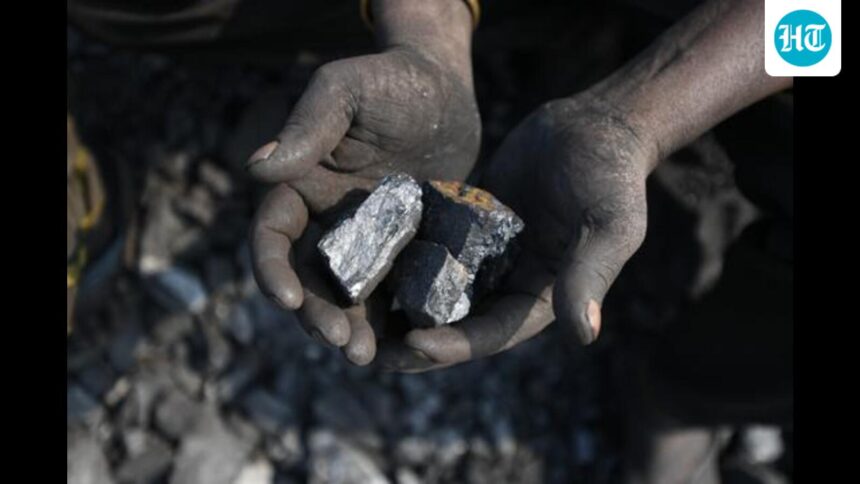
NEW DELHI: The Forest Advisory Committee (FAC) of the Union Environment Ministry has recommended in-principle approval for diversion of forest land for several major mining and infrastructure projects, including over 1,000 hectares for a coal block and around 470 hectares for a coal mine, both in Madhya Pradesh, and has allowed round-the-clock exploratory drilling in Assam.

The committee has postponed its decision on forest diversion for a 680 MW hydropower project in Arunachal Pradesh.
According to the minutes of the Disaster Monitoring Committee meeting held on February 27, seen by HT, the committee recommended in-principle approval for diversion of 469,612 hectares of reserve forest for the proposed Gondbahera Ujheni East underground coal mine to Mahan Energen Limited in Singrauli district, Madhya Pradesh.
The proposed mine is expected to cause a tensile stress – the horizontal expansion of the ground surface where underground workings cause the ground above it to move – of 2.98 mm/m, meaning one meter of surface ground would deform by approximately three millimetres. “Hence, the state government should implement appropriate mitigation measures, at the expense of the user agency, to reduce the tensile stress on the roof,” the disaster monitoring committee recommended.
If subsidence exceeds the expected level, the user agency will be required to pay net present value — a monetary estimate of the ecological services provided by the converted forest area — and carry out compensatory afforestation under the ministry’s guidelines. “If any subsidence occurs within the forest area, prompt safety measures must be implemented by the agency used in coordination with the state forest department,” he added.
The FAC has also granted in-principle approval for conversion of 1,063.1142 hectares of forest land out of the total lease area of 1,200 hectares for the proposed Marwatola-VII coal area – to be operated partly as an open pit mine and partly as an underground mine by Rama Cement Industries Private Limited in the Ghanghuti forest range, Madhya Pradesh.
The boundaries of the proposed area abut the Bandhavgarh-Achanakmar wildlife corridor, which serves as a habitat for tigers, leopards, sloth bears and cheetah. The underground portion of the mine is expected to cause a tensile stress of 4.96 mm/m – roughly five millimeters of surface deformation per metre. Appropriate mitigation measures will be implemented by the state government, the committee said.
“In most underground mines, there is some subsidence unless the mine is very deep and the thickness of the seam is not much,” said Kapil Daghat, a coal mining expert. “If you dig something out from under the soil/rock, the rock mass often subsides a little affecting the surface. There are also ways to ensure that the surface does not subside during extraction/removal operations such as using the passive view method. It is a method where you do not excavate beyond a certain limit. Other ways to reduce or eliminate the subsidence effect are by using storage materials to fill voids after extracting the mineral from the subsurface. Earth.
Regarding drilling approvals in Assam, the Forest Control Commission accepted an application submitted by the state government on behalf of the Oil and Natural Gas Corporation (ONGC), for amendments to conditions associated with previous deforestation operations for oil exploration. The request cited the need for continuous drilling – day and night – to achieve stability of drilled holes, safety of personnel, materials and the environment, and for optimal use of resources and efficiency. The committee approved continued drilling on the condition that the employing entity take all possible measures to reduce noise and not establish a work camp in the surrounding forest area; Any required camping will be limited to converted forest land.
The FAC also granted in-principle approval for diversion of 135,980 hectares of forest land for the proposed Kendudihi North Iron Ore Block, which will be managed by M/s Rungta Mines Ltd under Odisha’s Keonjhar forest division, and approved diversion of 27,887 hectares for the proposed Shree Jagannath International Airport in Puri.
The committee has deferred its decision on diversion of 261.53 hectares of unclassified forest land for the Atunli Hydropower Project (680 MW) on Tullu River in Dibang Valley, Arunachal Pradesh, seeking a copy of the Central Electricity Authority’s approval of the detailed project report, along with an undertaking to adhere to design and safety provisions and comply with norms prescribed by the National Dam Safety Authority.
The Independent Scientific Expert Committee note on unconventional gas development and large-scale coal mining has noted that any form of underground coal extraction results in some degree of deformation in the overlying layers – described as mining-induced subsidence – which can range from a few millimeters during the first extraction to much higher levels.