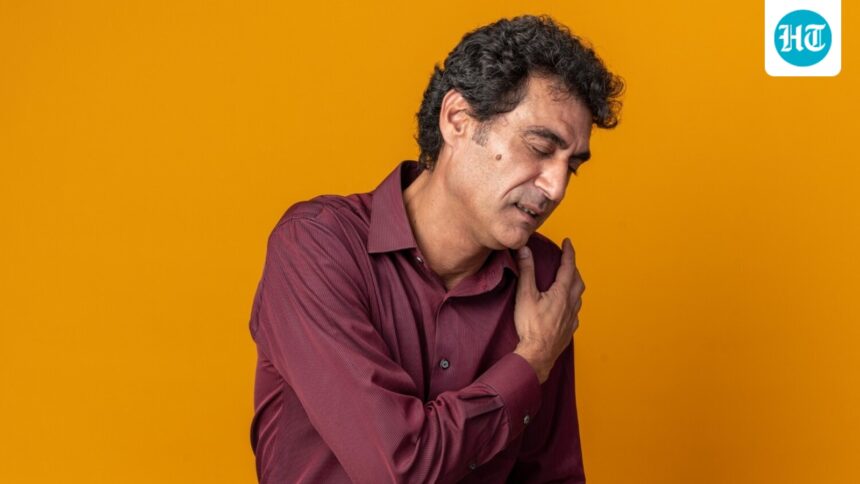
In a medical landscape often defined by emergency rooms and high-risk surgeries, one US-based cardiologist is urging the public to stop waiting for a medical emergency. His message is simple but sobering: Heart attacks rarely start with chest pain. Read also | Cardiologist shares top prevention tips for people in their 20s, 30s and 40s to reduce their risk of heart attacks and heart disease

Dr. Sanjay Bhograj, an interventional cardiologist and functional medicine expert with more than 20 years of experience, took to Instagram on February 18 to share what he calls “the biggest myth about heart attacks.”
Silent construction
According to the California-based cardiologist, the misconception that heart disease strikes suddenly like a bolt of lightning is one of the most dangerous beliefs a patient can hold. “I’ve treated enough patients to tell you this with certainty: The problem isn’t that heart disease comes on suddenly. It’s that it progresses silently. Most people don’t realize they’re at risk until something forces them to,” he says.
Dr. Bhojraj says true prevention is not about monitoring symptoms, but rather identifying microscopic damage that occurs years – or even decades – before a crisis.
Go beyond “everything seems fine”
Much of Dr. Bhograj’s Instagram post is aimed at “standard” screening. It challenges patients to demand more from their doctors and health care providers, suggesting that a quick glance at a lab report is not enough for long-term survival.
He highlights several key areas that are often overlooked in routine visits: “Let me ask you something. When was the last time someone really reviewed your numbers with you? Not just the labs required. And I didn’t just glance at the chart. And I didn’t just say ‘Everything looks fine.’ But I actually sat down and explained your cholesterol patterns. Your inflammation markers, your blood pressure trends. And what those numbers mean for your future — five, 10, 15 years from now.”
Shifting from “consequences” to “strategy”
Dr. Bhograj says his proactive approach stems from his years in the trenches of emergency medicine. Having spent the first half of his career performing late-night hospital admissions and emergency procedures, he says he was tired of hearing the same phrase from patients: “I never thought this would happen to me.“
“What I saw over and over again was: The warning signs were there. The danger was increasing. And no one could connect the dots early enough,” he adds.
Today, his practice has shifted from treating damage to preventing it through personalized strategies based on individual physiology. His parting advice to those who feel “fine” but aren’t sure about their actual inner health: “Don’t wait until your body gets louder.”
Note to readers: This report is based on user-generated content from social media. HT.com has not independently verified these claims and does not endorse them.
This article is for informational purposes only and is not a substitute for professional medical advice.





![korean-style-spicy-tofu-and-fried-brussels-sprouts-[vegetarian]-–-one-green-planet](https://globalindiabroadcastnews.com/wp-content/uploads/2026/02/21036-korean-style-spicy-tofu-and-fried-brussels-sprouts-vegetarian-one-green-planet-300x200.jpg "korean-style-spicy-tofu-and-fried-brussels-sprouts-vegetarian--one-green-planet | GIBN")