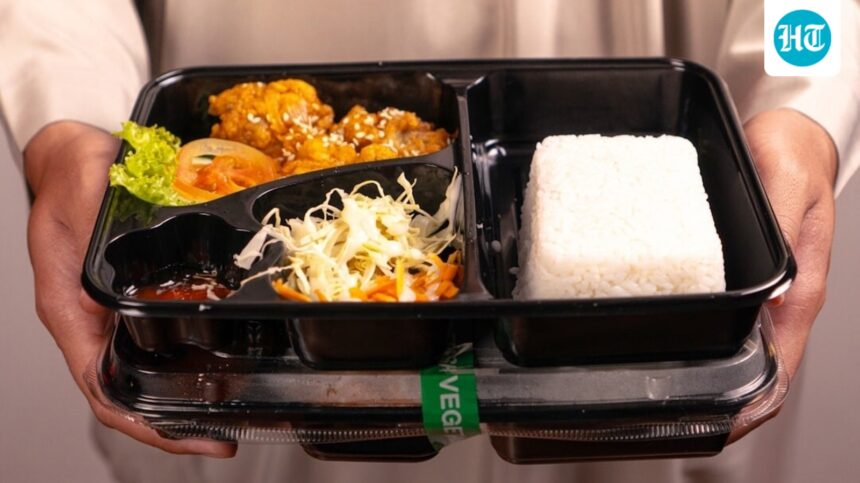
They are the essential element of the conversation Food Delivery – Lightweight, stackable, and sealed with labels that often claim “food grade.” But how safe are the ubiquitous black plastic containers used by almost every restaurant? While many people reuse them at home without a second thought, health experts have long warned against heating food with plastic, especially when it comes into contact with hot, oily or acidic dishes. So how reliable are those food safe labels on the bottom of the box?

Read also | A nutritionist explains why you shouldn’t drink coffee from disposable paper cups: ‘You’re drinking plastic with…’
Dr. Nandita Iyer, MD, MD Nutritionist and over 18 years of experience in nutrition, medical advertising, and writing, and author of The Great Indian Thali, highlights the potential health risks associated with using black plastic containers for food storage and delivery. In a video shared on Twitter (X) on February 18, she explains how these containers are often manufactured, the concerns surrounding their composition, and why they may not be considered food safe.
She highlights, “Did you receive your last food order in this type of container? If yes, stop scrolling. I’m the last person to be a fear monger. But this is one thing you should pay attention to. Almost all restaurants use this for food delivery. Some people I know are even collecting these containers for future use in their kitchen or maybe adding them to their children’s heirlooms.”
How is black plastic made?
According to Dr. Iyer, black plastic is typically made from recycled plastic waste, which may carry traces E-waste, old PVC, flame retardants and other chemicals that are not considered food safe. She explains that the black pigment is intentionally added to hide this mixed composition of materials, and to hide the mix of different plastics used to produce the containers.
She highlights, “Black plastic is often made by recycling potentially contaminated plastic waste. Some of it contains leftover electronic devices such as televisions, remote controls, old plastic and flame retardants, and is definitely not food safe. The black color pigment helps mask the mixture of plastics combined to make these boxes.”
Health effects of using black plastic containers
The doctor notes that when black plastic is heated in the microwave or comes into contact with acidic materials or… Fatty foods: Higher levels of chemicals, microplastics, harmful compounds, and even traces of heavy metals can leach into the food, increasing potential health risks.
“There is also evidence that black plastic, especially when heated in the microwave or in the presence of acids or fats found in curries, and the use of black plastic ladles or spoons in hot food attaches higher levels of harmful compounds, including brominated flame retardants and heavy metals,” she explains.“
Safer alternatives
Dr. Iyer stresses that while not every piece of black plastic is inherently harmful, many are made from recycled materials that are difficult to trace, which makes ensuring their safety difficult — and, in her view, not worth the risk. She suggests using such containers for dry storage Groceries may be acceptable, provided they are not exposed to heat or used to reheat food.
She highlights, “Although not every piece of black plastic is dangerous, many of them are made from these recycled materials that cannot be traced well, which increases the risks. So, it is definitely not worth taking the chance. I am not asking you to throw out every plastic container from your kitchen or the ones that store dry groceries. But if you are going to make one plastic swap today, do it. Replace black plastic containers with safer alternatives. Talk to restaurants that regularly ask them not to use these black plastics.” “For delivery.”
The doctor explains that even white plastic containers are generally safer than black containers. It also highlights that many paper takeaway boxes designed for hot foods are lined with a thin layer of plastic, which may similarly increase the risk of cancer. Chemical filtration when exposed to heat. For this reason, she advises against storing or reheating hot food in any plastic or plastic-lined container. Instead, she recommends transferring food to glass or stainless steel containers as soon as possible and avoiding microwaving meals in black plastic bins altogether.
“Even white plastic boxes are better,” explains Dr. Iyer. “Paper boxes are often lined with a thin layer of plastic on which hot food is placed. This is the same as using hot food in any other plastic container. But recycling is more difficult. So when you put your food in these containers, transfer it to food-safe glass or steel containers immediately. And definitely do not microwave it in these black plastic containers.”
Note to readers: This article is for informational purposes only and is not a substitute for professional medical advice. It is based on user-generated content from social media. HT.com has not independently verified these claims and does not endorse them.