As US President Donald Trump ramps up pressure on Cuba, the Latin American country continues to plunge deeper into crisis. Trump has called on ‘failed nations’ to make deals with the US amid economic, energy and health crises in the country.
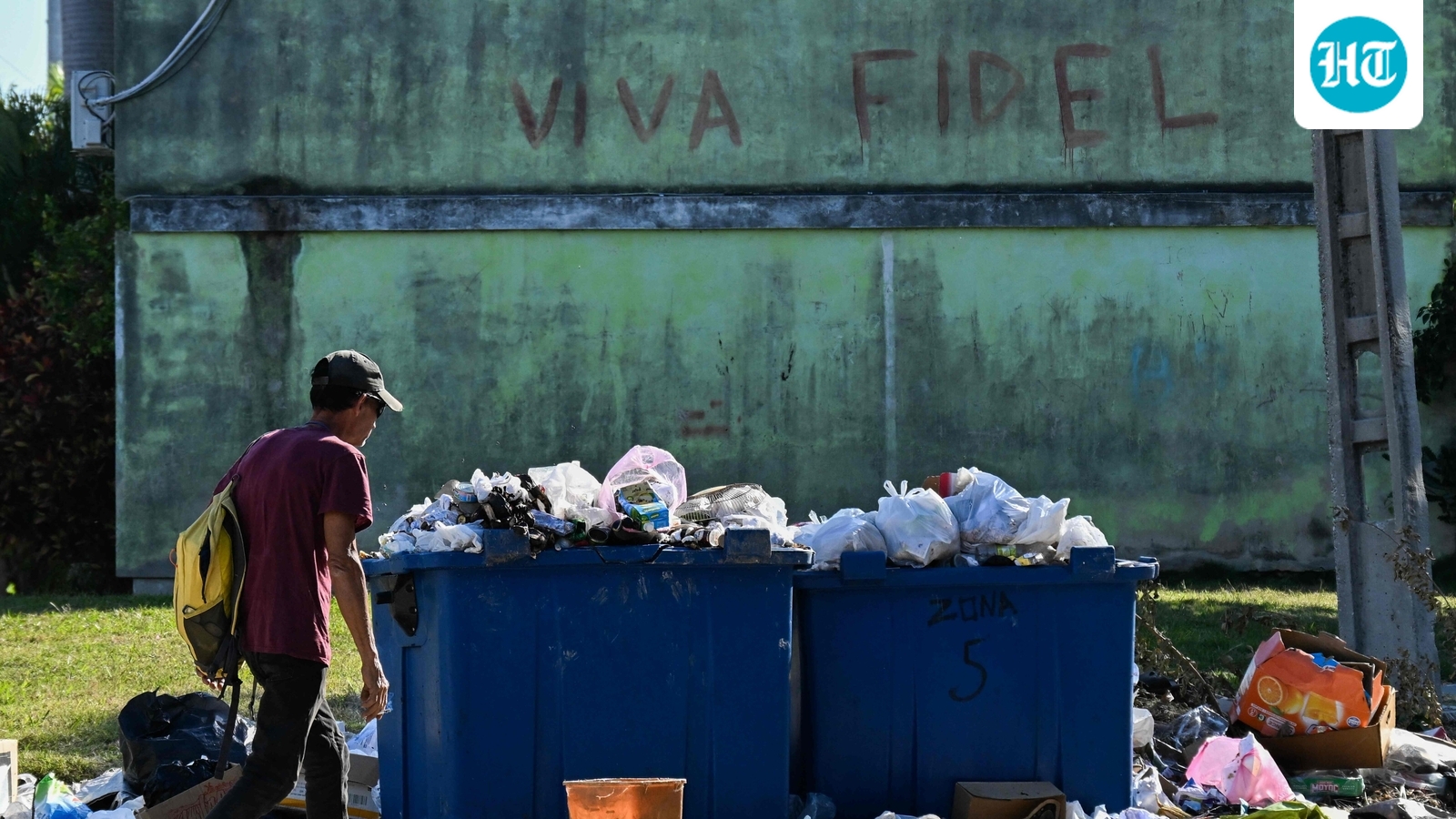
A man walks past a graffiti of late Cuban leader Fidel Castro on a street in Havana on February 16, 2026 (Photo by Yamil Lag / AFP) (AFP)For the past 60 years, the United States has maintained a strict embargo and limited diplomatic relations with Cuba, which has severely affected the Cuban economy.
US pressure mountsFollowing his recent calls for regime change in Iran and Venezuela, where the US ‘kidnapped’ current President Nicolas Maduro, Trump announced US intentions to overthrow the communist government of Cuba as it reimposed the embargo.
Although Trump said the US would remove the communist government ‘one way or another’, the US president has rejected a regime change campaign.
“Why would I answer that? If I were, it wouldn’t be a very difficult operation, as you can understand, but I don’t think it would be necessary,” he told reporters aboard Air Force One, adding that the U.S. is currently negotiating with the nation under siege.
Many crises in CubaIn January 2026, Trump signed an executive order targeting countries that trade with Cuba, threatening them with tariffs. Trump has issued similar orders to Venezuela and Russia.
With this threat, the United States imposed an energy crisis on Cuba, which has now turned into a waste and health crisis.
Also Read | Nicaragua has thus far avoided the fate of Cuba and Venezuela
Garbage and garbage began to pile up on the streets of Havana and other Cuban cities. Due to this waste crisis, many residents have taken to social media to express their concerns about the capital city’s public health.
In Havana, only 44 of 106 garbage trucks are able to continue operating due to fuel shortages, a Reuters report cited by Cuban media said. As the fuel shortage deepens, other trucks are put on empty fuel tanks.
Cuban drivers are currently facing months of waiting to refuel their cars after the Cuban government launched an app to avoid chaos at gas stations.
“I have seven thousand and something (appointment) numbers,” Jorge Reyes, 65, who downloaded the app Monday, told The Associated Press.
Cuba’s energy crisis began when the United States cut off vital oil imports from Venezuela following a U.S. military operation in Caracas.
Also Read | In fuel-starved Cuba, the e-tricycle is king
More Read
After Maduro’s fall, Cuba turned to Mexico for oil, making it Havana’s largest oil supplier. But after Trump’s tariff threats escalated, Mexico also cut off its supplies.
Cuba’s deputy foreign minister accused the United States of imposing sanctions on Cuba.
“To be clear: a. Cuba must import energy. b. The United States is using threats and coercive measures against any country. c. Lack of energy affects transportation, medical care, schooling, energy, food production, quality of life. d. Mass punishment is a crime,” he wrote on social media platform X.
A group of UN human rights experts also condemned the US oil embargo, saying it “has no basis in collective security and is a unilateral act inconsistent with international law.”
Fuel shortages in Cuba are also hampering the activities of the United Nations World Food Program across the Caribbean island. Food transportation and availability across the country is at risk due to lack of fuel.
“We are already seeing the impact on the availability of fresh produce in cities,” WFP’s country director, Etienne Labande, told the Guardian.
The energy crisis in Cuba has also affected the energy industry, triggering long blackouts across the country. A book fair and an annual cigar trade fair in Cuba have also been canceled due to the escalating problems.