NEW DELHI: India has allowed limited imports of animal feed such as dried distillers grains (DDGs) from the US, which is only 1% of its 50 million tonne annual consumption, a government official said, a move aimed at supporting livestock growth, stabilizing prices and aligning the country’s export and import objectives with food security.
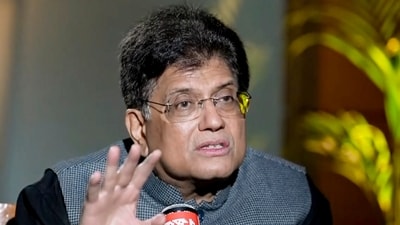
Union Commerce and Industry Minister Piyush Goyal spoke to PTI in an exclusive interview. (PTI)As India’s feed demand growth is large, a quota of only 1% of DDGs imports is a realistic and low-risk measure, the official said on condition of anonymity. “DDGs will supplement domestic food availability and help meet growing demand without diverting food grains from human consumption,” the official added. DDG is a key co-product of ethanol production from crops and is used as a protein-rich animal feed.
The India-US joint statement that announced the framework for an interim trade agreement on February 7, said India will remove or reduce tariffs on all American industrial products and a wide range of food and agricultural products, including DDG, red sorghum for animal feed.
Addressing a press conference, Union Commerce Minister Piyush Goyal said India’s standardization system has protected farmers. While sensitive agricultural sectors such as dairy, cereals and maize are “fully” protected, quota-based duty exemptions are allowed on items such as DDG that India imports anyway.
India has agreed to give quota-based duty exemptions on DDG to the US under the trade deal, as the animal husbandry and poultry industry wants the product because of its high nutritional value, Goyal told PTI on Sunday. “I have given them a quota on DDGs. It is a feed, very high in nutrients. Animal husbandry, in fact, wants it. Poultry people crave for it. It makes chickens much healthier. Very high protein,” he told a PTI video in an interview.
More Read

“India’s demand for animal products is increasing rapidly due to population growth, rising incomes and urbanization. This has led to a corresponding increase in demand for animal feed, particularly maize (20 million tonnes) and wheat (6.5 million tonnes) and soybean meal (6.2 million tonnes), which together account for about 2-50 tonnes of food. The official said in the first round.
Domestic food supply is increasingly constrained by limited arable land and productivity gaps, the official said, citing the example of 2021, when pressure on domestic prices forced India to import 1.5 million tonnes of soybean meal. India currently imports 600,000 tonnes of fodder from countries like Sri Lanka, China, the US, Thailand and Nepal, the official said. It also imports 600,000 tonnes of soybeans from Niger, Togo, Benin and Mozambique. It imports 900,000 tonnes of maize from Myanmar, Ukraine, Singapore and the United Arab Emirates, the official said.
The reason for allowing import of DDGs is to meet food shortages, which will increase rapidly with India’s economic growth. “Domestic consumption of animal feed is 500 lakh tonnes while the quota given to the US is only 5 lakh tonnes, which is equivalent to only 1% of total consumption. Imports will supplement domestic feed availability and help meet growing demand without diverting food grains from human consumption,” the official said.
More Read

Enumerating other benefits of importing DDGs from the US, the official said, “It will reduce feed cost volatility, protect poultry, dairy, aquaculture and livestock producers and help control food inflation. Low-cost, consistent feed inputs will improve livestock productivity and support India’s competitiveness and reduce pressure on domestic product exports. Markets, availability of staple food grains and Supports affordability.”