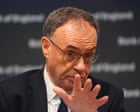
While unemployment is rising and inflation is falling, the Bank of England Under normal circumstances, it reduces the cost of borrowing.
Add in a sagging economy and people can reasonably expect a cut in interest rates to boost their spirits.
Rather, the majority The Bank’s Monetary Policy Committee (MPC) decided to keep rates at 3.75%.. If businesses and households were hoping that loans and mortgages would be a little cheaper this week, they are in for a disappointment.
Businesses need loans to invest in new equipment. Householders must remortgage to keep a roof over their heads. Had the MPC followed the evidence more closely, both would have faced financial pressure.
Professor Alan Taylor, one of the MPC’s nine members, said in a personal note attached to the bank’s main monetary policy report that the economy had been weakening for at least a year.
Taylor showed his obvious frustration when he said steady inflation and “this supports my earlier view”.
Consistent with Taylor’s view, the latest health check on the economy from Threadneedle Street suggests that the labor market has undergone a structural change — permanently improving workers’ power to demand higher wages.
Wages will fall to 3.25% by the end of the year as inflation eases, it said.
On inflation, the Bank no longer considers the UK an outlier, with food and services inflation falling to levels seen in other European countries.
Inflation in the UK It rose to 3.4% in December for the first time in five monthsup from 3.2% in November.
In a dramatic overhaul of its previous view, the monetary report said inflation would fall by one percentage point by April compared with its November forecast. That means the bank hit the 2% target earlier than expected, bringing it in line with the average for France, Germany and the EU.
Part of the reduction can be attributed to Rachel Reeves and last November’s budget. She cut fuel bills and froze regulated rail fares. The bank said Reeves could take credit for up to half of the revision after November.
However, this underlying trend is significant and is also weakening.
Unemployment rate – It was 5.1% in December – Maximum at 5.3%. The economy is expected to expand 0.9% this year, up from the 1.2% forecast in November.
Bank experts are of the opinion that housing investment will be low in 2026 and exports will also decrease.
Bank Governor, Andrew Baileyused the casting vote in a 5:4 split in favor of keeping rates at the MPC, although he noted that inflationary trends were weakening and there was a strong case for a cut in interest rates, but he considered waiting.
As chief Alawat in the committee, he commanded enormous power. Based on his statements, it seems that a rate cut at the next MPC meeting on March 19 is almost certain.
For many people this is a long wait.