More coffee is being consumed by Americans than in decades. However, not many of them are purchasing it from Starbucks.
Starbucks expects to open more than 575 new US stores over the next three years. (Reuters/Representative photo) The business that transformed the U.S. Coffee culture continues to be the largest in America, with almost 17,000 U.S. stores and intends to open hundreds more. However, it is up against unheard-of competition, which will make it challenging to regain lost clients.
According to Technomic, a food industry consulting firm, Starbucks’ share of spending at all US coffee shops decreased in 2024 and 2025, from 52% in 2023 to 48% today. A longtime rival, Dunkin’ recently opened its 10,000th U.S. location. store, increased its market share in both years.
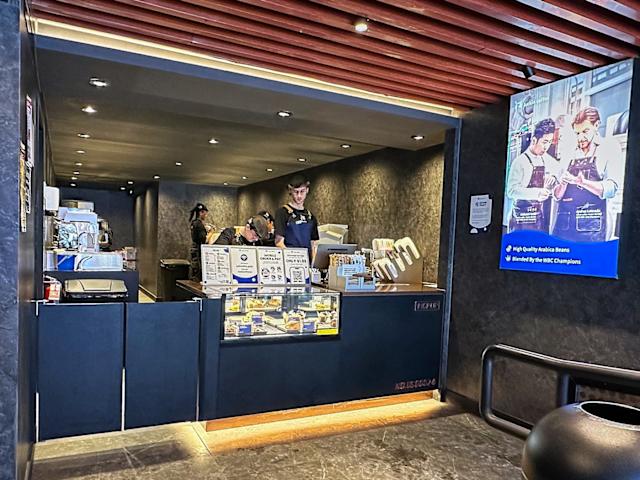
Other competitors of Starbucks include the rapidly expanding drive-through chains 7 Brew, Scooter’s Coffee, and Dutch Bros. Chinese chains Luckin Coffee and Mixu are opening locations in the United States. Blue Bottle is a high-end coffee shop with 78 U.S. stores, has added two more since the year began. Taco Bell and McDonald’s are also expanding their beverage selections.
“People haven’t fallen in love with Starbucks, but they’re more versatile in their coffee preferences,” said Chris Kayes, chair of the department of management at the George Washington University School of Business. “People are now experimenting with other coffees, and they’re seeing what’s out there.”
Also Read: Brewed to Perfection: The Rise of Gourmet Coffee in India
The caffeine raceAmericans love coffee. In both 2024 and 2025, an estimated 66% of Americans reported drinking coffee daily, up 7% from 2020, according to the National Coffee Association, an industry trade group.
Coffee chains are racing to cash in on that demand. According to Technomic, a consulting firm that researches the food service industry, the number of chain coffee stores in the U.S. has jumped 19% over the past six years to more than 34,500.
Seattle-based Starbucks was a small, regional chain when former CEO Howard Schultz acquired it in 1987. Now, other smaller chains are experiencing explosive growth. Nebraska-based Scooter’s Coffee had 200 locations in 2019; It is now more than 850 Arkansas-based 7 Brews, which had 14 locations in 2019, now has more than 600.
Neil Saunders, managing director and retail analyst at consultancy GlobalData Retail, said, “Supply is far greater than demand.
Saunders said Starbucks is at a bit of a disadvantage, because it has little ability to increase sales by opening new locations.
“To be honest, they’re pretty saturated,” Saunders said. “They are a very mature business.”
From Grand to VentiStarbucks is silent. In a conference call for investors Thursday, the company said ongoing efforts to improve service while making stores warmer and more welcoming are boosting U.S. store traffic. It plans to add 25,000 seats to its US cafes by this fall.
“Growth doesn’t require us to be new. It requires us to be exceptionally good at what we already have,” said Mike Grams, chief operating officer of Starbucks.
Starbucks expects to open more than 575 new US stores over the next three years. It created a small format store that was cheaper to build but still had indoor seating, drive-thru lanes and mobile pickup. The company said the reduced scale will allow Starbucks stores to operate in locations they previously could not.
Starbucks is also adding new products to try to win back customers, such as updated pastries and snackable foods that are higher in protein and fiber.
what’s on the menuA lack of menu innovation is one reason Starbucks struggles, especially among younger consumers who like novelty and will try new places to find it, Saunders said.
Arizona-based Dutch Bros., for example, added protein coffee drinks in January 2024, nearly two years before Starbucks. About 14 years after launching the chain, energy drinks make up 25% of Dutch Bros’ business. Starbucks offered the iced energy drink for a limited time in 2024; Executives said Thursday that customizable energy drinks will soon appear on the Starbucks menu.
Dutch Bros., which is led by former Starbucks executive Christine Barron, has just over 1,000 stores in the U.S. and hopes to double that number by 2029. It’s betting that customers want speed and convenience; Almost all of its stores are drive-throughs with walk-up windows.
Dutch Bros also focuses on quality. In a recent meeting with investors, Baron noted that the average drink at Dutch Bros. is 24 ounces; At Starbucks, a medium drink is 16 ounces.
Lakin, whose app is loaded with coupons and promotions, is also value-oriented. On a recent afternoon, News Customers pick up mobile orders at one of York’s nine stores. There was no seating in the small shop.
Xunyi Xie, who was visiting New York from her home in Delaware, said she stopped in to try a Velvet Latte because Lakin’s had a $1.99 drink promotion. Xie said he usually makes his own espresso, but if Lakin opens a shop that’s on his way to work, he’ll go there.
For Starbucks? “I think it’s overpriced,” Xie said.
The future of StarbucksIn 2024, the average customer spent $9.34 at Starbucks, compared to $8.44 at Dutch Bros. and $4.68 at Dunkin’, according to analysis by investment research firm Morningstar.
Starbucks has not raised prices in its 2025 fiscal year and has pledged to be prudent about future increases. But Ari Fellhandler, an equity analyst at Morningstar, said it would be a mistake for Starbucks to try to win customers with discounts because competitors will always go lower.
“Keep your prices the same and try to justify them,” Fellhandler says. He thinks Starbucks’ new store designs and new menu items will bring back traffic.
Grams, Starbucks’ chief operating officer, said the company strongly believes its best way forward is not drive-thru-only stores or mobile pickup kiosks. It’s building cafes with comfortable seating — “the spirit of Starbucks,” as he puts it — that also serve mobile, drive-thru and delivery customers. Customers sometimes want something convenient and they sometimes want to live, he said.
“There’s always going to be competition. We’re aware of it, we certainly keep an eye on it, but we don’t try to be them,” Grams told The Associated Press. “We offer something that most people don’t, which is a legitimate place to sit, enjoy and use it for a variety of reasons.”
But George Washington University’s Kayes wonders if that strategy will be enough to keep Starbucks over the top, or if customers who want a comfort or premium experience have already moved to independent coffee shops or upscale chains like Blue Bottle.
“In some ways, I think they’re victims of their own success,” Kayes said. “I think the aura of Starbucks as something special and unique and exciting is gone.”