

The summer solstice doesn’t come with a visual cue that you can easily spot from your roof or backyard. In New York City, the sun may appear a little higher in the sky than the day before, but traffic is still moving, trains are still running, and most people don’t realize that the moment has passed until it appears in their calendar notification.
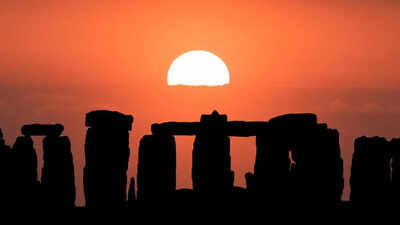
As Forbes reported, on Sunday, June 21, 2026, at 4:24 a.m. EDT, the Northern Hemisphere crosses the point that marks the summer solstice; A timestamp calculated down to the minute, not a period of daylight you can casually observe.Meanwhile, in Wiltshire, England, visitors gather at Stonehenge, waiting for a sunrise that seems symbolic even if the solstice itself had already occurred hours earlier.
Elsewhere, people in southern latitudes experience the opposite seasonal axis. The idea of the “longest day” starts to get muddy the moment you compare time zones, latitudes, and what your eyes actually see versus what celestial mechanics determines.The summer solstice is less than a geometric day, and this distinction shapes everything that follows.
What causes the summer solstice and why does it happen?
The Earth does not change seasons because of its distance from the Sun, a common misconception that is still widespread in classrooms and social media posts.
Instead, the driver has an axial tilt of about 23.5 degrees relative to the plane of Earth’s orbit. This tilt remains oriented in roughly the same direction as the planet moves around the sun, meaning that different hemispheres tilt toward or away from sunlight at different times of the year.The summer solstice marks the precise moment when the northern hemisphere is tilted directly toward the sun. At that moment, the sun appears in the far north of the sky relative to the Earth’s equator.
Astronomers determine this location using the Tropic of Cancer, an imaginary line of latitude located about 23.5 degrees north. On the solstice, the sun is directly overhead at local solar noon somewhere along this range.This alignment is what gives the inversion its accuracy. It is determined not by the duration of the day in any one city, but by the global solar position. This is why the “longest day” label, while useful, is technically incomplete.The timing also does not precisely sync with civilian clocks. The 4:24 AM EDT time stamp in 2026 reflects the Earth’s orbital geometry translated into time zones associated with UTC. For example, a person standing in California experiences the same astronomical moment at 1:24 a.m. local time, while most of the continent’s population is asleep.
How the longest day varies across countries and regions
Daylight variation is the most obvious result of the summer solstice, but it behaves differently depending on latitude.
Near the Arctic Circle, sunlight can extend into continuous daylight for several days or even weeks around the solstice. In the Arctic itself, the sun does not set at all for months. Meanwhile, Antarctica suffers from constant darkness. This contradiction is not symbolic. It is a direct result of engineering.
The hemisphere tilted toward the sun receives a more direct and prolonged exposure, while the opposite hemisphere is tilted away.Even within a single country such as the United States, the impact varies sharply. In Alaska, daylight can exceed 18-20 hours around the solstice, while in the southern states the difference between winter and summer daylight is much less extreme. New York City, located at mid-latitude, experiences noticeable but moderate shifts and long evenings in June and shorter afternoons in December.There is also a subtle detail that is often overlooked: the longest day of sunlight does not always coincide exactly with the moment of the solstice itself.
Atmospheric refraction, the Earth’s elliptical orbit, and the way sunrise and sunset are measured can actually change the “longest daylight” by a few days, depending on location.
Why does Stonehenge still attract crowds? The morning of the coup
According to a Forbes report, there are few modern sites that connect to the summer solstice as clearly as Stonehenge. A prehistoric stone circle in England corresponds to the position of the sun at sunrise during the solstice, especially the north-east rising direction.
This alignment has turned it into a gathering point for both cultural celebration and astronomical curiosity.There will reportedly be a public gathering at Stonehenge in Wiltshire, UK, from the evening of June 20 (sunset at 9:26 PM GMT) until after sunrise on June 21 (4:52 AM GMT). What makes Stonehenge interesting in this context is not just the alignment, but the interpretation. The structure may have served as a seasonal marker, but modern archeology avoids exaggerating certainty.
The builders clearly understood solar cycles, but whether the site was primarily a calendar, a ceremonial space, or both remains an open question.
What is Manhattanhenge and how does it happen?
In dense urban grids like New York City, solar alignment creates its own seasonal landscape. The so-called Manhattanhenge effect occurs when the setting sun precisely lines up with the east and west street grid, producing a corridor of light along the roads. It happens twice a year, runs roughly along the solstice, and lasts for about 44 days.The connection to the summer solstice is indirect but meaningful. As the sun’s path shifts north toward its maximum position, its angle intersects the city grid in increasingly precise ways. Unlike Stonehenge, where the alignment is fixed, Manhattanhenge relies on the rigidity of a street plan imposed on physical geography. It is a collision of design systems separated by thousands of years.
What most people get wrong about the summer solstice
One of the most persistent misunderstandings is that the summer solstice is simply the “hottest day” or “brightest day” of the year.
This is not necessarily true. Extreme temperatures often lag behind peak sunlight because the land and oceans take a long time to absorb and re-radiate heat. In many areas, July or even August brings the warmest conditions, not June. Another misconception is that the sun reaches its highest point at the same local time everywhere.
In fact, “solar noon” changes continuously across longitudes, and even the Sun’s highest daily altitude changes gradually before and after the solstice rather than peaking in a steep rise.There is also confusion about visibility. Some assume that the solstice should look dramatically different in the sky, but to an observer without instruments, the change from one day to the next is subtle. The arc of the sun is slightly higher than it was the day before, and this difference is almost impossible to detect without reference points.This is where the tension between life experience and astrological definition becomes apparent. The summer solstice can be measured using precise instruments and orbital models, but it cannot be seen entirely in real time.