

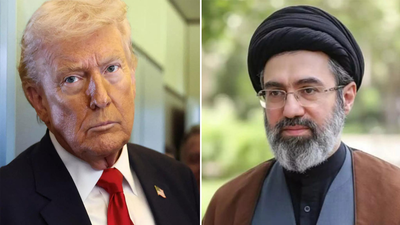
US President Donald Trump has extended a pause in strikes targeting Iran’s energy infrastructure until early April, as Washington signals that diplomacy remains its preferred path forward in the escalating conflict.
The temporary pause, announced for 10 days, comes amid claims from Trump that negotiations with Tehran are progressing, although the situation on the ground indicates continued volatility. Oil prices fell and headed towards their largest weekly decline in six months after Trump announced a 10-day halt to strikes targeting the country’s energy infrastructure.The war, now in its fourth week, has rapidly expanded beyond the initial flashpoints after the United States and Israel launched strikes on Iran following the collapse of nuclear talks.
Since then, the conflict has spread across the Middle East, drawing in numerous countries, disrupting vital oil routes and sending global energy prices soaring, with ripple effects across financial markets.However, conflicting accounts have emerged about the pause itself, with mediators noting that Iran has not requested any halt in strikes on energy sites, raising questions about the scope and purpose of the move.
As military operations continue on multiple fronts and diplomatic efforts intensify, here is a look at the latest developments shaping the crisis.
Trump seeks to attack Iran’s energy infrastructure
US President Donald Trump has extended a pause in attacks targeting Iranian energy infrastructure until early April, even as Washington continues diplomatic efforts to end the ongoing conflict. Announcing the move on social media, Trump said the moratorium would remain in place for 10 days until April 6, adding that talks with Tehran were “going very well” despite critics’ doubts.The four-week war, which began after the United States and Israel launched strikes on Iran on February 28 after nuclear negotiations failed, has spread across the Middle East, leaving thousands dead and shaking global markets. This disruption has sent energy prices soaring and heightened fears of rising inflation around the world. However, signs of a breakthrough remain uncertain. “At the request of the Iranian Government, please use this statement to indicate that I will temporarily postpone the power plant demolition period for 10 days until Monday, April 6, 2026, at 8 p.m. ET.
“The talks are continuing, and despite false statements to the contrary by the fake news media and others, they are going very well,” Trump said in a post on Truth Social.
Mediators say Iran has not requested a halt to strikes on energy sites
Iran has not requested a 10-day halt to its energy strikes, the Wall Street Journal reported, citing intermediaries. Trump had previously claimed to have given Iran a 10-day cooling-off period in response to a “gift” from Tehran, which would have allowed eight oil tankers to pass through the Strait of Hormuz, while halting planned strikes on high-value energy infrastructure.“They very kindly said to me, through my team, can we have more time?” “Because we’re talking about tomorrow night, which is very fast, and if they don’t do what they have to do, I’m going to destroy their power plants,” Trump said.However, the temporary reprieve comes with a caveat. Trump indicated that if negotiations fail to produce results, the United States could resume or even intensify strikes, while maintaining pressure on Iran while maintaining a window for dialogue.
Oil prices are falling
Oil prices fell and headed towards their largest weekly decline in six months after Trump announced a 10-day halt to strikes targeting the country’s energy infrastructure.By 0353 GMT, Brent crude futures fell 84 cents, or 0.8 percent, to $107.17 per barrel, while US West Texas Intermediate crude fell $1.02, or 1.1 percent, to $93.46 per barrel, erasing some of the gains of the previous session.Despite the rise recorded on Thursday due to fears of further escalation, both benchmarks fell by about 4.6% during the week overall.
Rubio is seeking support from the G7 after Trump criticized NATO allies
US Secretary of State Marco Rubio arrived in France to meet his G7 counterparts, as Washington looks to rally support for its approach to the Iranian conflict amid growing divisions with its allies.Rubio faces a difficult task in convincing the G7 countries to agree with the American strategy, as most countries express reservations about the war. The conflict has been met with deep skepticism by many of America’s closest partners, complicating diplomatic efforts.The challenge was exacerbated by President Donald Trump’s sharp criticism of NATO allies, accusing them of not doing enough to support the United States and Israel. Most of the G7 members – Britain, Canada, France, Germany and Italy – are part of NATO, while Japan is the only exception, which increases tension within the alliance.
Israel strikes Tehran and Beirut amid a multi-front war
Israel said it launched a “large-scale wave” of strikes targeting infrastructure in Tehran, representing a direct escalation against the Iranian capital.At the same time, Israeli raids hit the southern suburbs of Beirut, a known Hezbollah stronghold, with explosions heard throughout the area and smoke seen rising after the attacks. This reflects Israel’s ongoing operations against Iranian-backed groups outside its borders.These developments come as Israel remains engaged on multiple fronts, including Lebanon, Gaza and the West Bank, straining its military resources as the overall conflict intensifies.
Saudi Arabia intercepts drones as regional tensions continue to escalate
Saudi Arabia said its air defenses intercepted and destroyed four drones over its eastern region early Friday, underscoring how far the conflict has extended far beyond its original theater.The incident highlights the growing risks facing Gulf states, many of which host critical oil infrastructure and US military assets. Increased weather threats have raised concerns about poor energy supplies in the region.The interceptions also reflect heightened military preparedness among Gulf states, as they prepare for further escalation as they try to protect key facilities from attacks linked to the broader Iranian conflict.
The war expands with global and military repercussions
The conflict has expanded into a broader regional crisis, with fighting in Lebanon resulting in casualties among the Israeli army and increasing pressure on troop deployments. Military officials warned of manpower challenges as operations continued on several fronts.Israeli opposition leader Yair Lapid criticized the government, accusing it of dragging the country into a multi-front war without a clear strategy or sufficient resources, reflecting growing internal pressures.Away from the battlefield, the World Bank has warned of the economic repercussions and provided support to affected countries. Meanwhile, G7 countries are pushing for a diplomatic solution and the reopening of key routes such as the Strait of Hormuz to stabilize global energy markets.