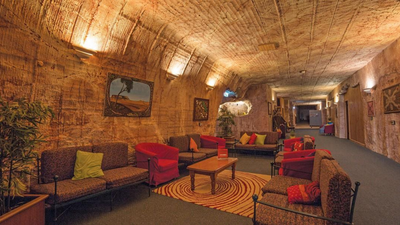
Coober Pedy is one of Australia’s strangest and most famous outback towns, a place where much of daily life takes place below the surface because the desert heat above ground can be brutal.
Located in South Australia, about 950 kilometers northwest of Adelaide, it arose from opal mining after its discovery in 1915 sparked a rush to the area. Today, it is known as the world’s largest producer of precious opals, and is known for its hidden houses, underground churches, subterranean hotels and other subterranean spaces that have helped residents make life in the desert more bearable.
The origins of underground life beneath the desert in Australia
The history of Coober Pedy is inseparable from opals. According to the local town plan, the modern settlement began after 14-year-old William Hutchison discovered opal in 1915, attracting miners to the remote desert.
It is a mining town located in central South Australia, and official South Australian tourism materials continue to describe it as the opal capital of the outback. By the 1980s, city records indicate it was the world’s largest opal producer, and while mining has declined since then, the industry still defines the city’s identity.Moving underground was nothing new. It was a practical answer to the desert climate. Community planning documents show that the first bunkers began as mines, then evolved into purpose-built underground homes, where the sandstone insulation helps keep temperatures more constant.
South Australian Tourism describes Coober Pedy as a twisted underground city in the heart of the desert, while Bureau of Meteorology climate records show the area experiencing hot, dry conditions typical of inland South Australia.
The underground design made everyday life more livable and transformed survival into a unique architectural style.
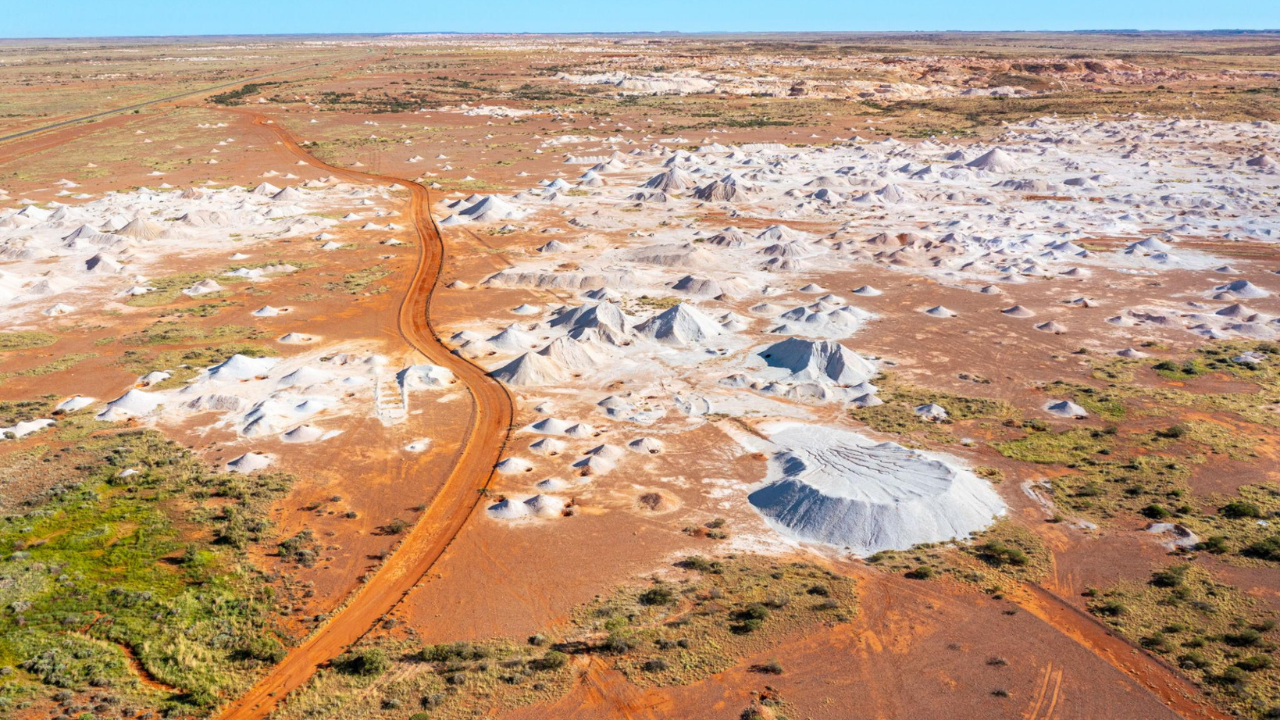
An aerial view of Coober Pedy Opal Mines, Australia
What is life like underground?
In Coober Pedy, underground living is not limited to homes.
Local tourism and planning sources describe restaurants, shops, cafes, campgrounds, underground motels, and even churches. South Australian tourism materials say visitors can tour underground houses, churches, mines and shops, while a local planning document says many residents live in fully furnished and decorated bunkers. Some of these homes are entered through cutouts in the hills, giving the city a sparse and industrial-looking surface while much of the real living space lies hidden underground.
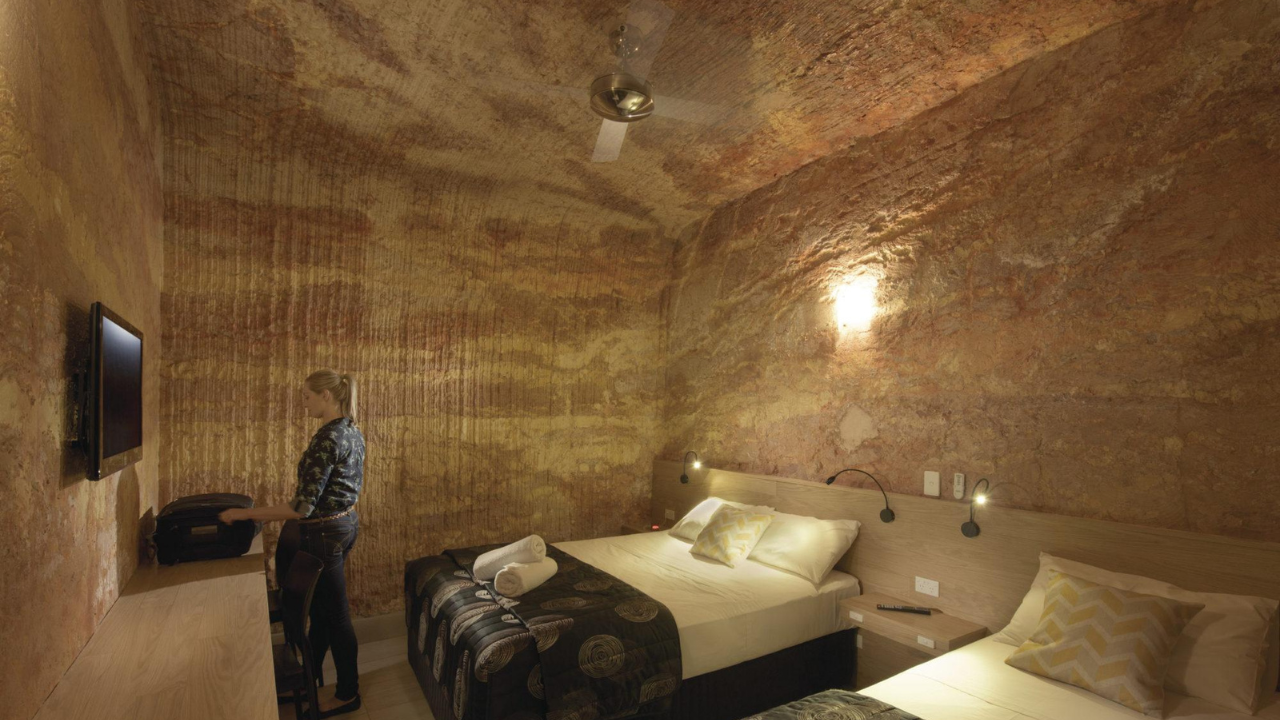
The city’s churches and hotels
One of the most distinctive features of Coober Pedy is the way in which its spiritual and commercial life adapted to the underground environment. A heritage assessment indicates that the first official underground church in South Australia was built in 1967, confirming how long this architectural style has been present in the city. Underground accommodations such as the Opal Inn and travel guides to the area highlight underground churches and motels as part of the standard visitor experience.
In Coober Pedy, the idea of an underground hotel or church is not symbolic. It’s simply natural.
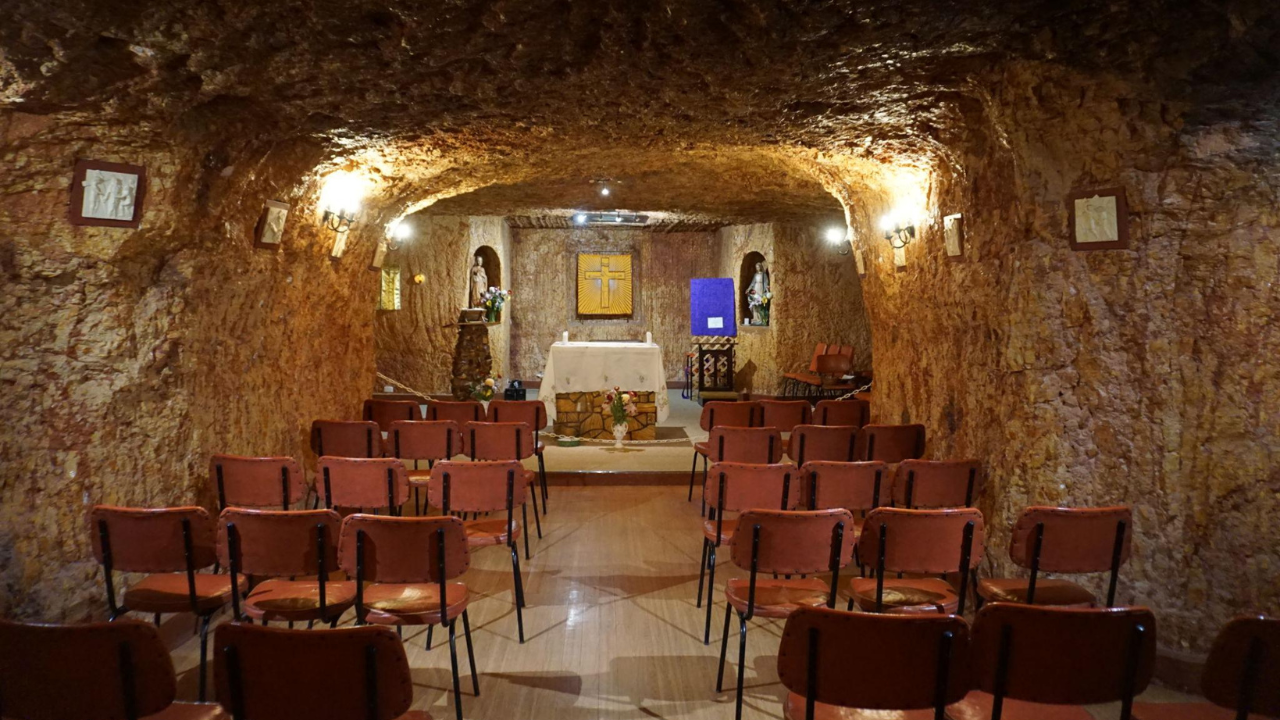
Underground church in Coober Pedy.
What visitors can still see today
Visitors who go to Coober Pedy find a city built on contrast. Above ground, the landscape is open and dusty, marked by tailings piles, mine shafts and low-rise buildings scattered across the desert. Underground there are exquisite interiors, carved rock walls, unusual chapels and underground residences that allow travelers to experience the city’s original survival strategy first-hand.
Official tourism sources recommend underground stays, mine tours, and stops at local attractions such as the town’s churches and mining areas, which is why Coober Pedy is often described as more of an experience than a destination.
A desert city that has become a global curiosity
Coober Pedy continues to amaze because it is both radical and practical. Here, geology, climate and human ingenuity have shaped the entire city plan. What started as a remote mining camp has evolved into a settlement designed to provide comfort in harsh desert conditions. Over time, this adaptation turned Coober Pedy into one of the most unique remote communities, where living underground seemed like the most logical way to endure the environment.